

community structure, PLFA profiles were frequently used. Moreover, the highthroughput pyrosequencing and bioinformatic analysis provide additional insights
to microbial taxonomic information at species or even at gene levels (Handelsman
2004; Fierer et al. 2014). Based on these approaches, emerging N addition experiments examined the effect on soil microbial diversity in China’s forests. The
experimental results indicate divergent responses of microbial diversity to N deposition. For example, in an old-growth subtropical forest at Dinghushan reserve in
southern China, 4-year N additions significantly improved the relative abundance of
fungal PLFAs, decreased bacteria (G
À ) PLFAs and increased fungi/bacteria (F/B)
ratios (Liu et al. 2013b). These responses were attributed to soil N saturation and P
limitation. Likewise in a subtropical Chinese fir plantation, N additions increased
remarkably not only fungal PLFAs but also bacterial and actinomycic PLFAs (Dong
et al. 2015; Liu et al. 2015a). In a temperate poplar plantation, 2-year N addition
increased bacterial (G-) PLFAs but did not change fungal PLFAs. A cross-site study
indicated that N deposition (50 and 100 kg N ha
À1 year
À1 ) significantly decreased
the relative abundance of fungal PLFAs, especially arbuscular mycorrhizal fungi
(AMF), and shifted the microbial community structures in subtropical forests, while
N deposition showed no significant effect in temperate forests (Tian et al. 2017b).
These divergent results highlight the context-dependent effects of N deposition. In
addition, significant effects of N deposition on nitrifying and denitrifying bacteria
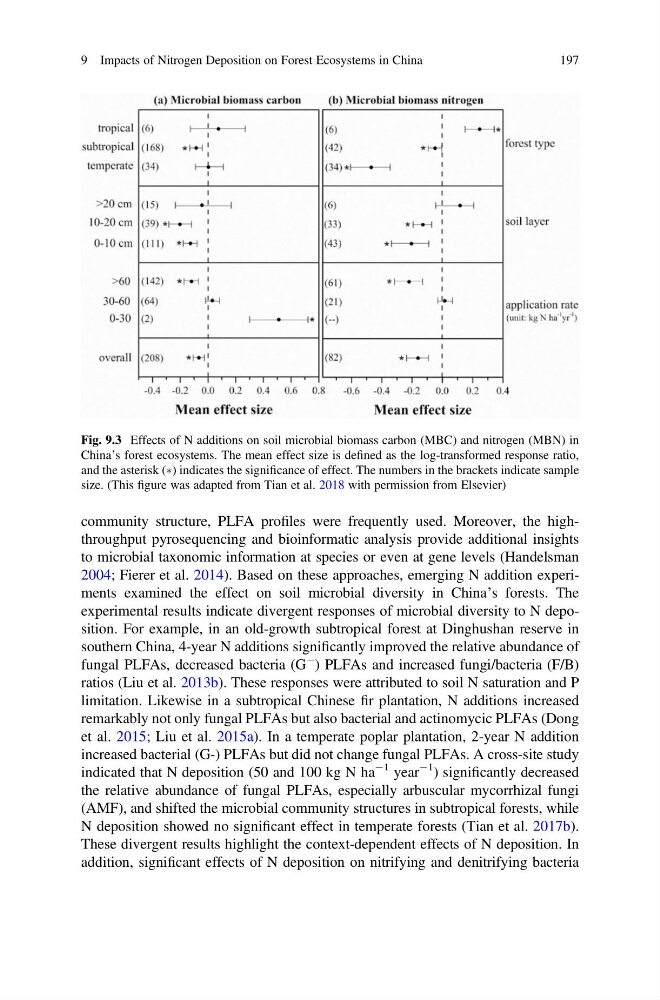
Fig. 9.3 Effects of N additions on soil microbial biomass carbon (MBC) and nitrogen (MBN) in
China’s forest ecosystems. The mean effect size is defined as the log-transformed response ratio,
and the asterisk (Ã) indicates the significance of effect. The numbers in the brackets indicate sample
size. (This figure was adapted from Tian et al. 2018 with permission from Elsevier)
9 Impacts of Nitrogen Deposition on Forest Ecosystems in China
197
to microbial taxonomic information at species or even at gene levels (Handelsman
2004; Fierer et al. 2014). Based on these approaches, emerging N addition experiments examined the effect on soil microbial diversity in China’s forests. The
experimental results indicate divergent responses of microbial diversity to N deposition. For example, in an old-growth subtropical forest at Dinghushan reserve in
southern China, 4-year N additions significantly improved the relative abundance of
fungal PLFAs, decreased bacteria (G
À ) PLFAs and increased fungi/bacteria (F/B)
ratios (Liu et al. 2013b). These responses were attributed to soil N saturation and P
limitation. Likewise in a subtropical Chinese fir plantation, N additions increased
remarkably not only fungal PLFAs but also bacterial and actinomycic PLFAs (Dong
et al. 2015; Liu et al. 2015a). In a temperate poplar plantation, 2-year N addition
increased bacterial (G-) PLFAs but did not change fungal PLFAs. A cross-site study
indicated that N deposition (50 and 100 kg N ha
À1 year
À1 ) significantly decreased
the relative abundance of fungal PLFAs, especially arbuscular mycorrhizal fungi
(AMF), and shifted the microbial community structures in subtropical forests, while
N deposition showed no significant effect in temperate forests (Tian et al. 2017b).
These divergent results highlight the context-dependent effects of N deposition. In
addition, significant effects of N deposition on nitrifying and denitrifying bacteria
Fig. 9.3 Effects of N additions on soil microbial biomass carbon (MBC) and nitrogen (MBN) in
China’s forest ecosystems. The mean effect size is defined as the log-transformed response ratio,
and the asterisk (Ã) indicates the significance of effect. The numbers in the brackets indicate sample
size. (This figure was adapted from Tian et al. 2018 with permission from Elsevier)
9 Impacts of Nitrogen Deposition on Forest Ecosystems in China
197