

North China Plain was one of the regions with severe regional haze pollution in
the world. The annual concentration of SO 4
2À decreased from 15.8 μg∙m
À3 in
2005–2006 (Yang et al. 2011) to 11.9 μg∙m
À3 in 2012–2013 (Liu et al. 2018b),
indicating that the energy structure adjustment (e.g., replacing coal fuel with natural
gas) has great effect on the decreasing SO 2 and further SO 4
2À
. SO 4
2À concentration
in winter (16.5 μg∙m
À3 ) was comparable to that in summer (13.4 μg∙m
À3 ), which
further supports this point. After 2013, with the success in SO 2 emission reduction,
NO 3
À became a dominant composition of PM 2.5 , especially in winter across North
China, highlighting the need to reduce NO x emissions.
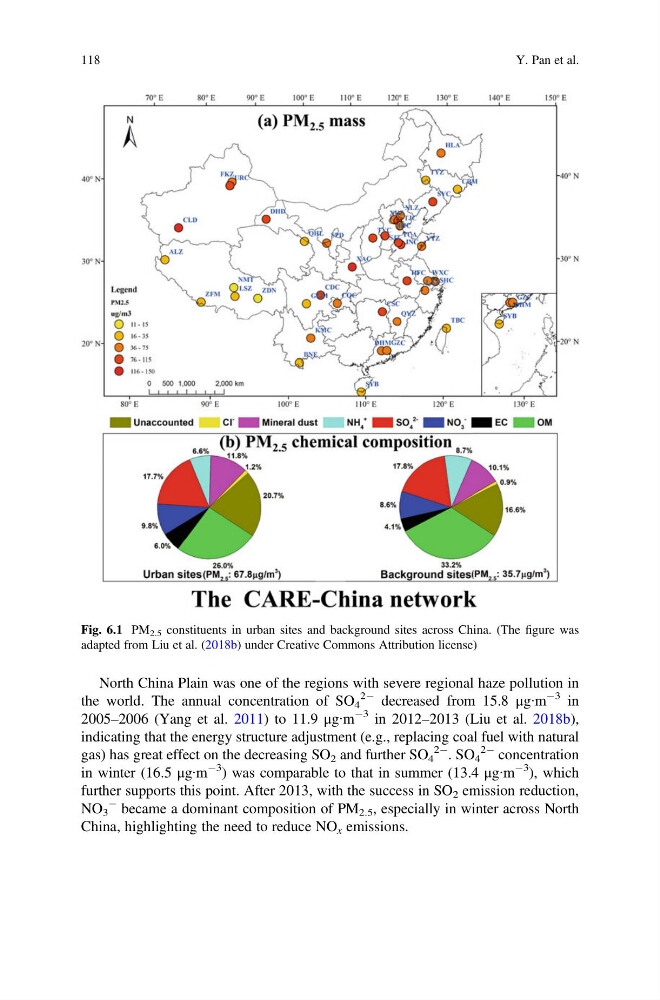
Fig. 6.1 PM 2.5 constituents in urban sites and background sites across China. (The figure was
adapted from Liu et al. (2018b) under Creative Commons Attribution license)
118
Y. Pan et al.
the world. The annual concentration of SO 4
2À decreased from 15.8 μg∙m
À3 in
2005–2006 (Yang et al. 2011) to 11.9 μg∙m
À3 in 2012–2013 (Liu et al. 2018b),
indicating that the energy structure adjustment (e.g., replacing coal fuel with natural
gas) has great effect on the decreasing SO 2 and further SO 4
2À
. SO 4
2À concentration
in winter (16.5 μg∙m
À3 ) was comparable to that in summer (13.4 μg∙m
À3 ), which
further supports this point. After 2013, with the success in SO 2 emission reduction,
NO 3
À became a dominant composition of PM 2.5 , especially in winter across North
China, highlighting the need to reduce NO x emissions.
Fig. 6.1 PM 2.5 constituents in urban sites and background sites across China. (The figure was
adapted from Liu et al. (2018b) under Creative Commons Attribution license)
118
Y. Pan et al.