

16.5.1 Supramolecular Polymer with Photoisomerism Based on
Calixarene
According to the host–guest recognition, Ma et al. (2014) [33] prepared a supramolecular polymer formed by sulfonated biphenyl[4]arene and dithiophene ethylene
derivatives. In this supramolecular complex, the resulting polymer exhibits significant color changes and morphological changes at different wavelengths of light.
In advance, it can achieve a variety of functions by combining different functional
units, which is an important develop direction of supramolecular polymer.
Tian et al. (2013) [34] successfully constructed a novel light-driven, linear,
helical, chiral supramolecular polymer in water by noncovalent host–guest
molecular recognition between the calixarene bis-SC4A and the pseudorotaxane R
containing an axially chiral 1,1
0 -binaphthyl unit and two α-CD-included azobenzene
arms terminated with 4,4
0 -bipyridinium units, shown in Fig. 14. More interestingly,
dynamically self-assembled, light-driven, single-helical supramolecular polymer
molecules with lengths of hundreds of nanometers to micrometers in water were
for the first time observed in the native state using cryo-TEM measurements.
Preliminary molecular modeling was performed to substantiate this photoresponsive
supramolecular structure. This work provides an exciting impetus for building
controllable supramolecular polymers with tailored functionalities.
16.5.2 Networks and Self-Assemblies of Supramolecular Polymer
Based on Calixarene
Pappalardo et al. (2016) [35] synthesized a poly( p-phenyleneethynylene) polymer
(PCF [5]), bearing two π-rich cone-like calix[5]arene cavities (assembling cores)
attached to a rigid p-phenyleneethynylene spacer by a Pd-catalyzed cross-coupling
reaction. UV-vis absorption and fluorescence spectroscopies combined with
dynamic light scattering measurements provided evidence for the self-assembly
of PCF [5](homopolytopic host molecule) with a complementary C 60 fulleropyrrolidine (C 60 -Pyr) guest in solution, in the construction of a supramolecular polymer
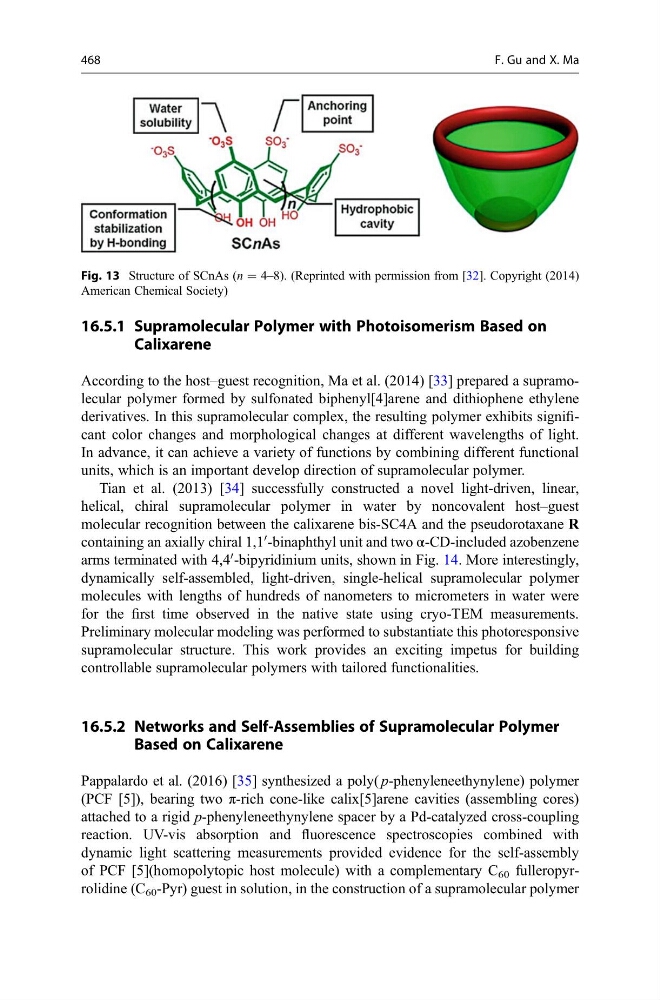
Fig. 13 Structure of SCnAs (n = 4–8). (Reprinted with permission from [32]. Copyright (2014)
American Chemical Society)
468
F. Gu and X. Ma