

rich conjugation and additional anchoring points offered by ethylene glycol chains
and sulfonate groups, H4 and H5 display especially high binding strength and
molecular selectivity for given organic cations, which originates mainly from the
cooperation of π-stacking and electrostatic attractions. Up to now, more than 18
kinds of organic cations have been investigated in the complexation with H4 or H5.
Table 4 lists their K a values and enthalpy and entropy changes for these host-guest
complexation.
In 2012, Liu et al. studied the highly affinitive complexation of bipyridinium
(G8–G10) and monopyridinium ions (G17) with H4 and H5 in aqueous solution by
ITC experiments [24]. The thermodynamic parameters clearly indicate that the
complexation of H4 with the four guests was mainly driven by the negative enthalpy
changes accompanied by a little entropic gain. Although the lengths of flexible alkyl
group on G8–G10 are different from each other, it shows little influence to the
O
O
O
O
O
H5
H4
O
O
O
O
O
SO 3
SO 3
SO 3
SO 3
O
O
O
O
O
O
O
O
SO 3
SO 3
SO 3
SO 3
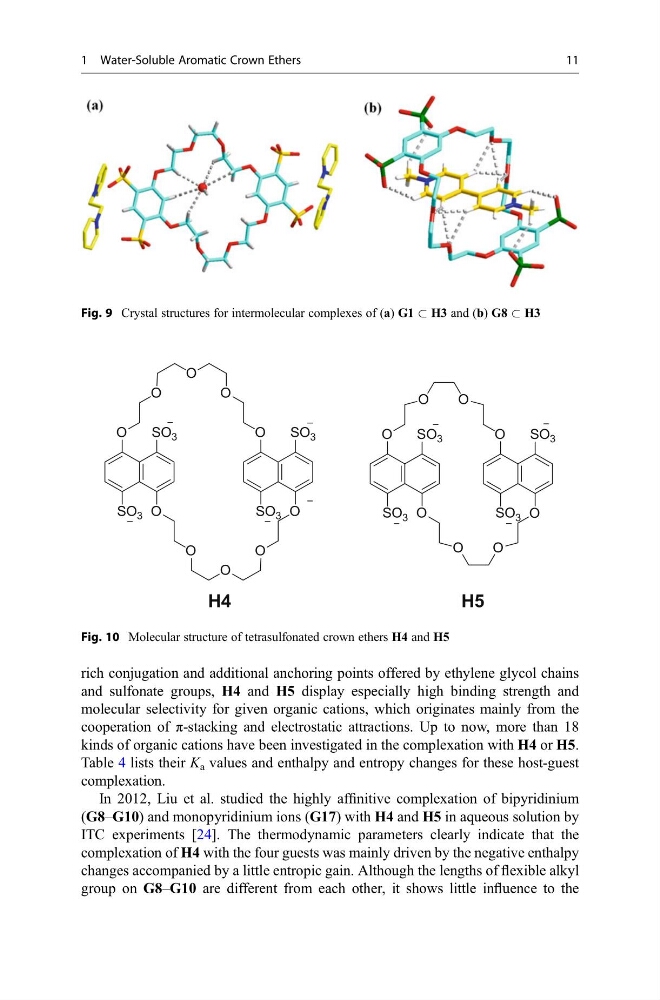
Fig. 10 Molecular structure of tetrasulfonated crown ethers H4 and H5
Fig. 9 Crystal structures for intermolecular complexes of (a) G1 & H3 and (b) G8 & H3
1 Water-Soluble Aromatic Crown Ethers
11
and sulfonate groups, H4 and H5 display especially high binding strength and
molecular selectivity for given organic cations, which originates mainly from the
cooperation of π-stacking and electrostatic attractions. Up to now, more than 18
kinds of organic cations have been investigated in the complexation with H4 or H5.
Table 4 lists their K a values and enthalpy and entropy changes for these host-guest
complexation.
In 2012, Liu et al. studied the highly affinitive complexation of bipyridinium
(G8–G10) and monopyridinium ions (G17) with H4 and H5 in aqueous solution by
ITC experiments [24]. The thermodynamic parameters clearly indicate that the
complexation of H4 with the four guests was mainly driven by the negative enthalpy
changes accompanied by a little entropic gain. Although the lengths of flexible alkyl
group on G8–G10 are different from each other, it shows little influence to the
O
O
O
O
O
H5
H4
O
O
O
O
O
SO 3
SO 3
SO 3
SO 3
O
O
O
O
O
O
O
O
SO 3
SO 3
SO 3
SO 3
Fig. 10 Molecular structure of tetrasulfonated crown ethers H4 and H5
Fig. 9 Crystal structures for intermolecular complexes of (a) G1 & H3 and (b) G8 & H3
1 Water-Soluble Aromatic Crown Ethers
11