

blocks can provide an efficient and direct way to construct chiral macrocyclic arenes,
but no such examples have been reported before.
It was known 2,6-dihydroxy substituted triptycene is an easily available chiral
compound. Based on this chiral triptycene building block, a new class of chiral
macrocyclic arene composed of 2,6-dihydroxyltriptycene subunits bridged by methylene groups could be obtained. Since the macrocycle adopts a hex nut-like structure
with a helical chiral cavity, we can name them as helicarenes [42].
6.3.1 Synthesis
Starting from commercially available 2,6-dimethoxyanthracene, we first prepared
triptycene derivative (Æ)-65 on a gram scale by Diels–Alder cycloaddition, aldehyde reaction, and reduction reaction. Then, treatment of (Æ)-65 in tetrachloroethane with a catalytic amount of p-toluenesulfonic acid gave macrocycle
(Æ)-66 in 15% isolated yield. Finally, the demethylation of (Æ)-66 by BBr 3 in
dichloromethane produced the target macrocycle (Æ)-65 in 98% yield, which
showed good solubility in polar solvents including acetone, acetonitrile, and
methanol. Efficient resolution of (Æ)-67 was performed by introducing the chiral
auxiliary, separation with common column chromatography, and then hydrolysis to
give enantiopure (+)-67 and (À)-67 (Scheme 13), which were evidenced by their
CD spectra with mirror images. Recently, we [43] also performed the chiral
resolution of (Æ)-65 by HPLC on chiral column, and with (+)-65 and (À)-65 as
the precursors, we could conveniently obtain enantiomers (+)-66 and (À)-66,
respectively, in gram scales (Scheme 14).
Aryl bromides were very useful precursors for organic synthesis, and they could
be easily obtained by bromination of aromatic compound. Hence, we tested the
bromination of (Æ)-66 with Br 2 gave (Æ)-69 in 88% yield, which was demethylated
by BBr 3 in dichloromethane to give hexabromo-substituted helix[6]arene derivative
(Æ)-70 in 95% yield. By Suzuki coupling reactions of (Æ)-70 with aryl boronic acids
gave a series of helix[6]arene derivatives (Æ)-71a-f in 55–71% yields. Similarly,
starting from (+)-66 and (À)-66, (+)-70 and (À)-70 could be conveniently synthesized and obtained enantiomers (+)-71a-f and (À)-71a-f in good yields through
Suzuki coupling reactions (Scheme 15) [44].
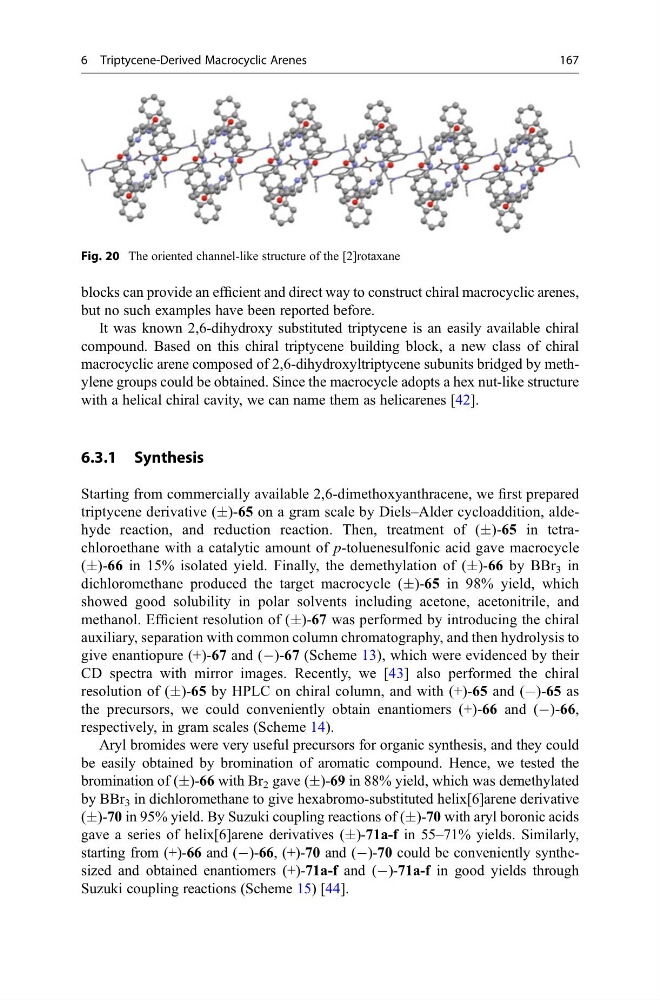
Fig. 20 The oriented channel-like structure of the [2]rotaxane
6 Triptycene-Derived Macrocyclic Arenes
167
but no such examples have been reported before.
It was known 2,6-dihydroxy substituted triptycene is an easily available chiral
compound. Based on this chiral triptycene building block, a new class of chiral
macrocyclic arene composed of 2,6-dihydroxyltriptycene subunits bridged by methylene groups could be obtained. Since the macrocycle adopts a hex nut-like structure
with a helical chiral cavity, we can name them as helicarenes [42].
6.3.1 Synthesis
Starting from commercially available 2,6-dimethoxyanthracene, we first prepared
triptycene derivative (Æ)-65 on a gram scale by Diels–Alder cycloaddition, aldehyde reaction, and reduction reaction. Then, treatment of (Æ)-65 in tetrachloroethane with a catalytic amount of p-toluenesulfonic acid gave macrocycle
(Æ)-66 in 15% isolated yield. Finally, the demethylation of (Æ)-66 by BBr 3 in
dichloromethane produced the target macrocycle (Æ)-65 in 98% yield, which
showed good solubility in polar solvents including acetone, acetonitrile, and
methanol. Efficient resolution of (Æ)-67 was performed by introducing the chiral
auxiliary, separation with common column chromatography, and then hydrolysis to
give enantiopure (+)-67 and (À)-67 (Scheme 13), which were evidenced by their
CD spectra with mirror images. Recently, we [43] also performed the chiral
resolution of (Æ)-65 by HPLC on chiral column, and with (+)-65 and (À)-65 as
the precursors, we could conveniently obtain enantiomers (+)-66 and (À)-66,
respectively, in gram scales (Scheme 14).
Aryl bromides were very useful precursors for organic synthesis, and they could
be easily obtained by bromination of aromatic compound. Hence, we tested the
bromination of (Æ)-66 with Br 2 gave (Æ)-69 in 88% yield, which was demethylated
by BBr 3 in dichloromethane to give hexabromo-substituted helix[6]arene derivative
(Æ)-70 in 95% yield. By Suzuki coupling reactions of (Æ)-70 with aryl boronic acids
gave a series of helix[6]arene derivatives (Æ)-71a-f in 55–71% yields. Similarly,
starting from (+)-66 and (À)-66, (+)-70 and (À)-70 could be conveniently synthesized and obtained enantiomers (+)-71a-f and (À)-71a-f in good yields through
Suzuki coupling reactions (Scheme 15) [44].
Fig. 20 The oriented channel-like structure of the [2]rotaxane
6 Triptycene-Derived Macrocyclic Arenes
167