

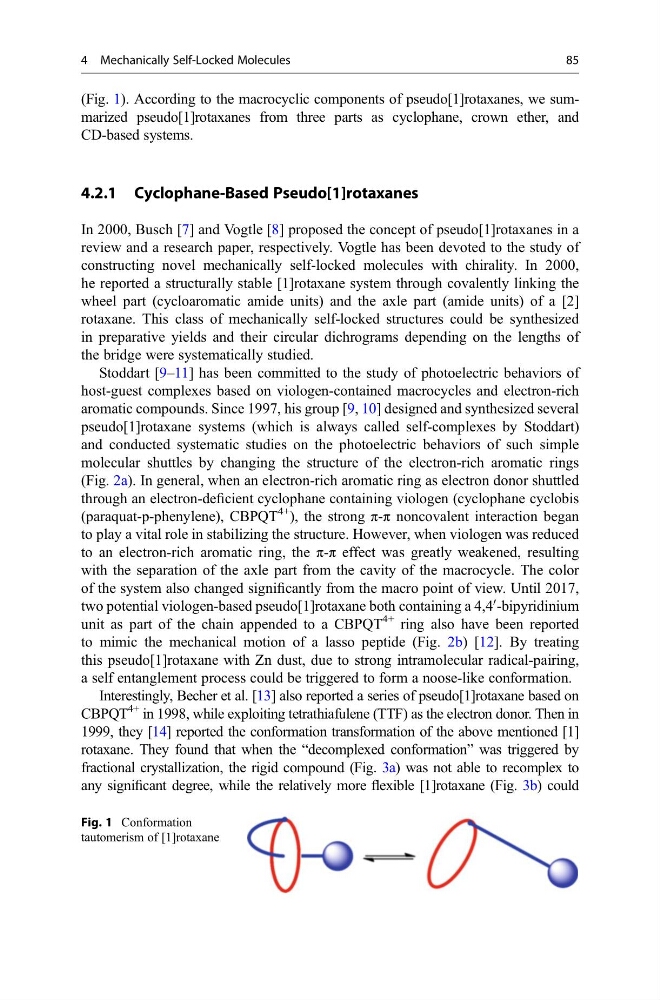
(Fig. 1). According to the macrocyclic components of pseudo[1]rotaxanes, we summarized pseudo[1]rotaxanes from three parts as cyclophane, crown ether, and
CD-based systems.
4.2.1 Cyclophane-Based Pseudo[1]rotaxanes
In 2000, Busch [7] and Vogtle [8] proposed the concept of pseudo[1]rotaxanes in a
review and a research paper, respectively. Vogtle has been devoted to the study of
constructing novel mechanically self-locked molecules with chirality. In 2000,
he reported a structurally stable [1]rotaxane system through covalently linking the
wheel part (cycloaromatic amide units) and the axle part (amide units) of a [2]
rotaxane. This class of mechanically self-locked structures could be synthesized
in preparative yields and their circular dichrograms depending on the lengths of
the bridge were systematically studied.
Stoddart [9–11] has been committed to the study of photoelectric behaviors of
host-guest complexes based on viologen-contained macrocycles and electron-rich
aromatic compounds. Since 1997, his group [9, 10] designed and synthesized several
pseudo[1]rotaxane systems (which is always called self-complexes by Stoddart)
and conducted systematic studies on the photoelectric behaviors of such simple
molecular shuttles by changing the structure of the electron-rich aromatic rings
(Fig. 2a). In general, when an electron-rich aromatic ring as electron donor shuttled
through an electron-deficient cyclophane containing viologen (cyclophane cyclobis
(paraquat-p-phenylene), CBPQT
4+ ), the strong π-π noncovalent interaction began
to play a vital role in stabilizing the structure. However, when viologen was reduced
to an electron-rich aromatic ring, the π-π effect was greatly weakened, resulting
with the separation of the axle part from the cavity of the macrocycle. The color
of the system also changed significantly from the macro point of view. Until 2017,
two potential viologen-based pseudo[1]rotaxane both containing a 4,4
0 -bipyridinium
unit as part of the chain appended to a CBPQT
4+ ring also have been reported
to mimic the mechanical motion of a lasso peptide (Fig. 2b) [12]. By treating
this pseudo[1]rotaxane with Zn dust, due to strong intramolecular radical-pairing,
a self entanglement process could be triggered to form a noose-like conformation.
Interestingly, Becher et al. [13] also reported a series of pseudo[1]rotaxane based on
CBPQT
4+ in 1998, while exploiting tetrathiafulene (TTF) as the electron donor. Then in
1999, they [14] reported the conformation transformation of the above mentioned [1]
rotaxane. They found that when the “decomplexed conformation” was triggered by
fractional crystallization, the rigid compound (Fig. 3a) was not able to recomplex to
any significant degree, while the relatively more flexible [1]rotaxane (Fig. 3b) could
Fig. 1 Conformation
tautomerism of [1]rotaxane
4 Mechanically Self-Locked Molecules
85
CD-based systems.
4.2.1 Cyclophane-Based Pseudo[1]rotaxanes
In 2000, Busch [7] and Vogtle [8] proposed the concept of pseudo[1]rotaxanes in a
review and a research paper, respectively. Vogtle has been devoted to the study of
constructing novel mechanically self-locked molecules with chirality. In 2000,
he reported a structurally stable [1]rotaxane system through covalently linking the
wheel part (cycloaromatic amide units) and the axle part (amide units) of a [2]
rotaxane. This class of mechanically self-locked structures could be synthesized
in preparative yields and their circular dichrograms depending on the lengths of
the bridge were systematically studied.
Stoddart [9–11] has been committed to the study of photoelectric behaviors of
host-guest complexes based on viologen-contained macrocycles and electron-rich
aromatic compounds. Since 1997, his group [9, 10] designed and synthesized several
pseudo[1]rotaxane systems (which is always called self-complexes by Stoddart)
and conducted systematic studies on the photoelectric behaviors of such simple
molecular shuttles by changing the structure of the electron-rich aromatic rings
(Fig. 2a). In general, when an electron-rich aromatic ring as electron donor shuttled
through an electron-deficient cyclophane containing viologen (cyclophane cyclobis
(paraquat-p-phenylene), CBPQT
4+ ), the strong π-π noncovalent interaction began
to play a vital role in stabilizing the structure. However, when viologen was reduced
to an electron-rich aromatic ring, the π-π effect was greatly weakened, resulting
with the separation of the axle part from the cavity of the macrocycle. The color
of the system also changed significantly from the macro point of view. Until 2017,
two potential viologen-based pseudo[1]rotaxane both containing a 4,4
0 -bipyridinium
unit as part of the chain appended to a CBPQT
4+ ring also have been reported
to mimic the mechanical motion of a lasso peptide (Fig. 2b) [12]. By treating
this pseudo[1]rotaxane with Zn dust, due to strong intramolecular radical-pairing,
a self entanglement process could be triggered to form a noose-like conformation.
Interestingly, Becher et al. [13] also reported a series of pseudo[1]rotaxane based on
CBPQT
4+ in 1998, while exploiting tetrathiafulene (TTF) as the electron donor. Then in
1999, they [14] reported the conformation transformation of the above mentioned [1]
rotaxane. They found that when the “decomplexed conformation” was triggered by
fractional crystallization, the rigid compound (Fig. 3a) was not able to recomplex to
any significant degree, while the relatively more flexible [1]rotaxane (Fig. 3b) could
Fig. 1 Conformation
tautomerism of [1]rotaxane
4 Mechanically Self-Locked Molecules
85