

593
appraisal was commissioned by the donor to verify whether the proposed framework would lead to the intended results. Through PSF, the EPINAV story would
have the donor as part of the PAs after having decided to support the programme. In
the beginning, however, when SUA first presented the request for funding, the donor
would have played the AAs role. It is for this reason that an appraisal was commissioned by the financier to verify whether the proposed framework would lead to the
intended results. However, the appraisal report presented concerns from the beneficiaries. The PSF would have recipients offering their views and concerns themselves, as part of the PAs or AAs. The setting would open the opportunity for adding
realities about the programme to the funder. More important is the role of the
EPINAV story in creating the connection between the donor, the implementation
team, and the recipients in realising the agreed results (Merla 2009; Mkwizu 2016).
Main Beneficiaries
EPINAV’s primary beneficiaries were farmers. Other beneficiaries included
researchers, postgraduate students, local authorities, policymakers, and private
companies. On the one hand, recipients present the supporting and opposing views
offered by the programme implementation team (PIT). They had a reason to support
the intentions of the PIT, thereby ensuring that the project with affiliated benefits
materialises. On the other hand, based on their reserved assumptions and the risks
surrounding the connection between proposed activities and expected outcomes and
impacts, they will also be inclined to challenge, thereby checking the realism of the
results framework.
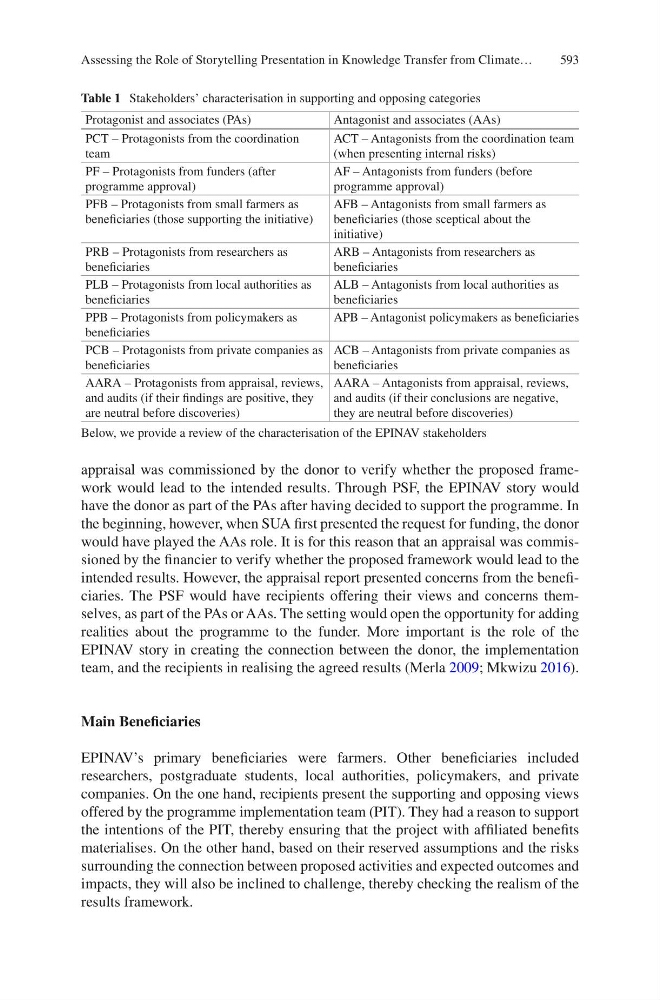
Table 1 Stakeholders’ characterisation in supporting and opposing categories
Protagonist and associates (PAs)
Antagonist and associates (AAs)
PCT – Protagonists from the coordination
team
ACT – Antagonists from the coordination team
(when presenting internal risks)
PF – Protagonists from funders (after
programme approval)
AF – Antagonists from funders (before
programme approval)
PFB – Protagonists from small farmers as
beneficiaries (those supporting the initiative)
AFB – Antagonists from small farmers as
beneficiaries (those sceptical about the
initiative)
PRB – Protagonists from researchers as
beneficiaries
ARB – Antagonists from researchers as
beneficiaries
PLB – Protagonists from local authorities as
beneficiaries
ALB – Antagonists from local authorities as
beneficiaries
PPB – Protagonists from policymakers as
beneficiaries
APB – Antagonist policymakers as beneficiaries
PCB – Protagonists from private companies as
beneficiaries
ACB – Antagonists from private companies as
beneficiaries
AARA – Protagonists from appraisal, reviews,
and audits (if their findings are positive, they
are neutral before discoveries)
AARA – Antagonists from appraisal, reviews,
and audits (if their conclusions are negative,
they are neutral before discoveries)
Below, we provide a review of the characterisation of the EPINAV stakeholders
Assessing the Role of Storytelling Presentation in Knowledge Transfer from Climate…