

280
used, milk composition, processing parameters and amount of salt explain the differences in the ripening of the cheese and the physical quality of the cheese (Elgaml
et al. 2017; Milci et al. 2005; Miloradovic et al. 2017). Studies were made to compare the properties of Halloumi cheese made from the ovine, goat and bovine milk
or a mix of these types of milk (Elgaml et al. 2017; Milci et al. 2005). According to
Kaminarides et al. (2000), Halloumi cheese made from ovine milk, goat milk and
the mix of the two did not differ in moisture content (MC), fat in dry matter (FDM)
and salt contents, with values close to the recommended amount (46 and 43% for
MC and FDM, respectively) according to Cypriot (Cyprus) standards for Halloumi
cheese (Papademas and Robinson 1998). However, a higher cheese yield and harder
Halloumi cheese were obtained from the ovine milk compared to the cheese made
from goat milk. This was attributed to the differences in chemical composition
between the two milks (Theophilou and Wilbey 2007). Egyptian studies showed
that Halloumi cheese (fresh cheese) made from goat milk exhibited a higher yield
compared to Halloumi cheese made from bovine milk (Elgaml et al. 2017).
3 Nutritional Aspects of Goat Milk and Goat Milk Products
Milk hypersensitivity is one of the challenges affecting the consumption of dairy
foods globally. This is due to the body reaction towards a certain type of food (e.g.
milk) after consumption. If the food is of milk origin, these reactions can be grouped
Raw milk receiving
Pasteurization - 63ºC for 30 min
Coagulation – with rennet at 33 ± 1 ºC
Cheese curd
Whey
Heating to 72 ºC
Addition of milk (10% of volume used in cheese making)
Heat and stirring up to 82º
Further heating to 94-96 ºC for 30 min
Hot whey – reduced protein content
Cutting of the curd – 1 cm 2 grains
Coagulum rest and precipitate for 10 min
Apply pressure of 550 pa on the curd
Cut the curd into blocks (10x15x3 cm)
Transfer the curds into hot whey
Cook the curd - 94-96ºC 1h
Cool and drain the curd
Dry salting (3% w/w), using dry Mentha virdis leaves and leave overnight to chill
Storage in 11% Nacl whey or shrink wrap
Whey protein
precipitates
Raw material for
Anari cheese
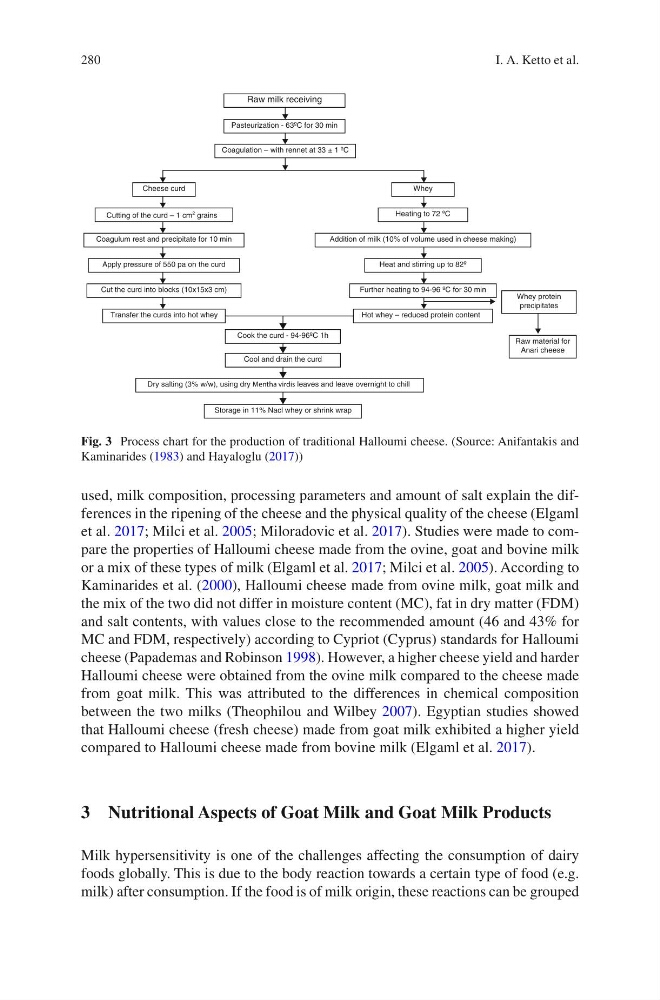
Fig. 3 Process chart for the production of traditional Halloumi cheese. (Source: Anifantakis and
Kaminarides (1983) and Hayaloglu (2017))
I. A. Ketto et al.
used, milk composition, processing parameters and amount of salt explain the differences in the ripening of the cheese and the physical quality of the cheese (Elgaml
et al. 2017; Milci et al. 2005; Miloradovic et al. 2017). Studies were made to compare the properties of Halloumi cheese made from the ovine, goat and bovine milk
or a mix of these types of milk (Elgaml et al. 2017; Milci et al. 2005). According to
Kaminarides et al. (2000), Halloumi cheese made from ovine milk, goat milk and
the mix of the two did not differ in moisture content (MC), fat in dry matter (FDM)
and salt contents, with values close to the recommended amount (46 and 43% for
MC and FDM, respectively) according to Cypriot (Cyprus) standards for Halloumi
cheese (Papademas and Robinson 1998). However, a higher cheese yield and harder
Halloumi cheese were obtained from the ovine milk compared to the cheese made
from goat milk. This was attributed to the differences in chemical composition
between the two milks (Theophilou and Wilbey 2007). Egyptian studies showed
that Halloumi cheese (fresh cheese) made from goat milk exhibited a higher yield
compared to Halloumi cheese made from bovine milk (Elgaml et al. 2017).
3 Nutritional Aspects of Goat Milk and Goat Milk Products
Milk hypersensitivity is one of the challenges affecting the consumption of dairy
foods globally. This is due to the body reaction towards a certain type of food (e.g.
milk) after consumption. If the food is of milk origin, these reactions can be grouped
Raw milk receiving
Pasteurization - 63ºC for 30 min
Coagulation – with rennet at 33 ± 1 ºC
Cheese curd
Whey
Heating to 72 ºC
Addition of milk (10% of volume used in cheese making)
Heat and stirring up to 82º
Further heating to 94-96 ºC for 30 min
Hot whey – reduced protein content
Cutting of the curd – 1 cm 2 grains
Coagulum rest and precipitate for 10 min
Apply pressure of 550 pa on the curd
Cut the curd into blocks (10x15x3 cm)
Transfer the curds into hot whey
Cook the curd - 94-96ºC 1h
Cool and drain the curd
Dry salting (3% w/w), using dry Mentha virdis leaves and leave overnight to chill
Storage in 11% Nacl whey or shrink wrap
Whey protein
precipitates
Raw material for
Anari cheese
Fig. 3 Process chart for the production of traditional Halloumi cheese. (Source: Anifantakis and
Kaminarides (1983) and Hayaloglu (2017))
I. A. Ketto et al.