

6
agricultural produce, including food, fiber, and fuel. There is a great potential for
SSA to trade within the region, considering the comparative advantages in natural
resources and climate. Areas with high potential for crop production (humid and
sub-humid areas) can trade with areas of high potential for extensive livestock keeping (semi-arid areas) of SSA. Developing agriculture begins with increasing its productivity and profitability, followed by distribution and agro-processing for value
addition and preservation. This has been evidenced in a study by Dorosh and
Thurlow (2018), who showed that non-agriculture sector, especially trade, transportation, and manufacturing (especially agro-processing), can effectively contribute to
poverty reduction. However, Jayne et al. (2017) urge that agriculture is the major
driver of development for the non-farming economy because if made profitable, it
will provide higher income to a large population, resulting into high demand of
goods and services. Therefore, agriculture and population growth are potentially
major drivers of other sectors through provision of market, ensuring the availability
of agro-produce as raw materials for agro-processing, and access and affordability
of food to the growing population. Thus, the agricultural and non-agricultural sectors in SSA depend on each other for development.
The major challenge that remains in SSA is to increase agricultural productivity
to meet the requirement of the growing population, in the face of climate change.
Food insecurity is still prevalent in SSA with about 33.8% of population appearing
to have severe prevalence of food insecurity in 2017, which represents an increase
of 18% from 2016 (FAO and NECA 2018). Food supply from domestic agricultural
production is not sufficient to meet the domestic demand in most of the SSA countries due to low yields and declining productivity, caused by low input use (Jayne
et al. 2010). Thus, intensification of agriculture to increase yield per unit area is
inevitable. Many SSA countries have attempted to increase productivity through
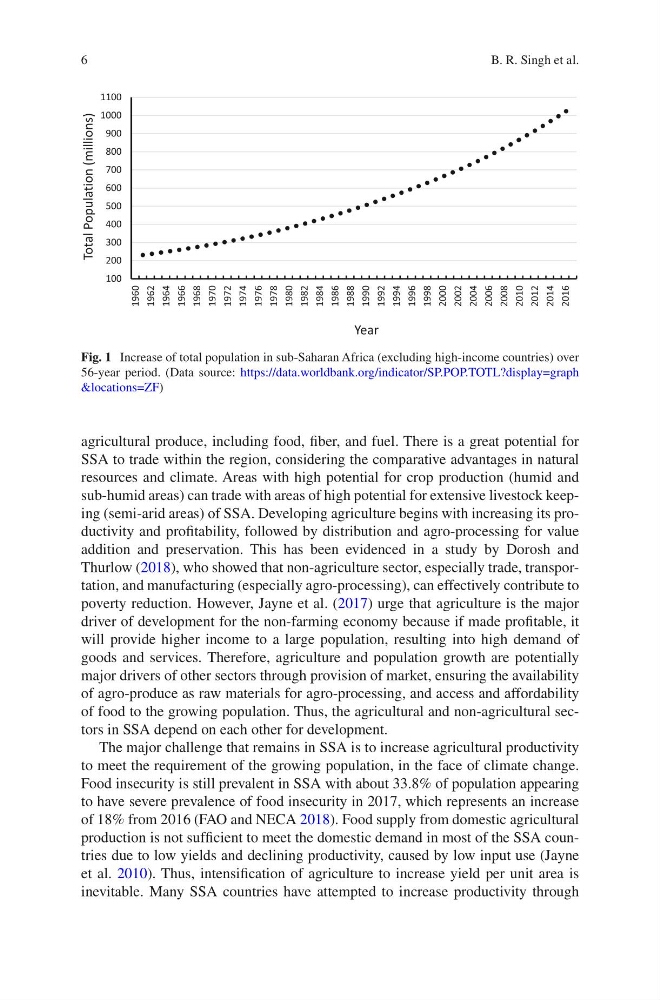
Fig. 1 Increase of total population in sub-Saharan Africa (excluding high-income countries) over
56-year period. (Data source: https://data.worldbank.org/indicator/SP.POP.TOTL?display=graph
&locations=ZF)
B. R. Singh et al.
agricultural produce, including food, fiber, and fuel. There is a great potential for
SSA to trade within the region, considering the comparative advantages in natural
resources and climate. Areas with high potential for crop production (humid and
sub-humid areas) can trade with areas of high potential for extensive livestock keeping (semi-arid areas) of SSA. Developing agriculture begins with increasing its productivity and profitability, followed by distribution and agro-processing for value
addition and preservation. This has been evidenced in a study by Dorosh and
Thurlow (2018), who showed that non-agriculture sector, especially trade, transportation, and manufacturing (especially agro-processing), can effectively contribute to
poverty reduction. However, Jayne et al. (2017) urge that agriculture is the major
driver of development for the non-farming economy because if made profitable, it
will provide higher income to a large population, resulting into high demand of
goods and services. Therefore, agriculture and population growth are potentially
major drivers of other sectors through provision of market, ensuring the availability
of agro-produce as raw materials for agro-processing, and access and affordability
of food to the growing population. Thus, the agricultural and non-agricultural sectors in SSA depend on each other for development.
The major challenge that remains in SSA is to increase agricultural productivity
to meet the requirement of the growing population, in the face of climate change.
Food insecurity is still prevalent in SSA with about 33.8% of population appearing
to have severe prevalence of food insecurity in 2017, which represents an increase
of 18% from 2016 (FAO and NECA 2018). Food supply from domestic agricultural
production is not sufficient to meet the domestic demand in most of the SSA countries due to low yields and declining productivity, caused by low input use (Jayne
et al. 2010). Thus, intensification of agriculture to increase yield per unit area is
inevitable. Many SSA countries have attempted to increase productivity through
Fig. 1 Increase of total population in sub-Saharan Africa (excluding high-income countries) over
56-year period. (Data source: https://data.worldbank.org/indicator/SP.POP.TOTL?display=graph
&locations=ZF)
B. R. Singh et al.