

182
standard procedure for organic farmers in the area. Except for the innovative practices, the management of treatments followed the standard practices and recommended practices of farmers in the region. Organic and conventional plots were
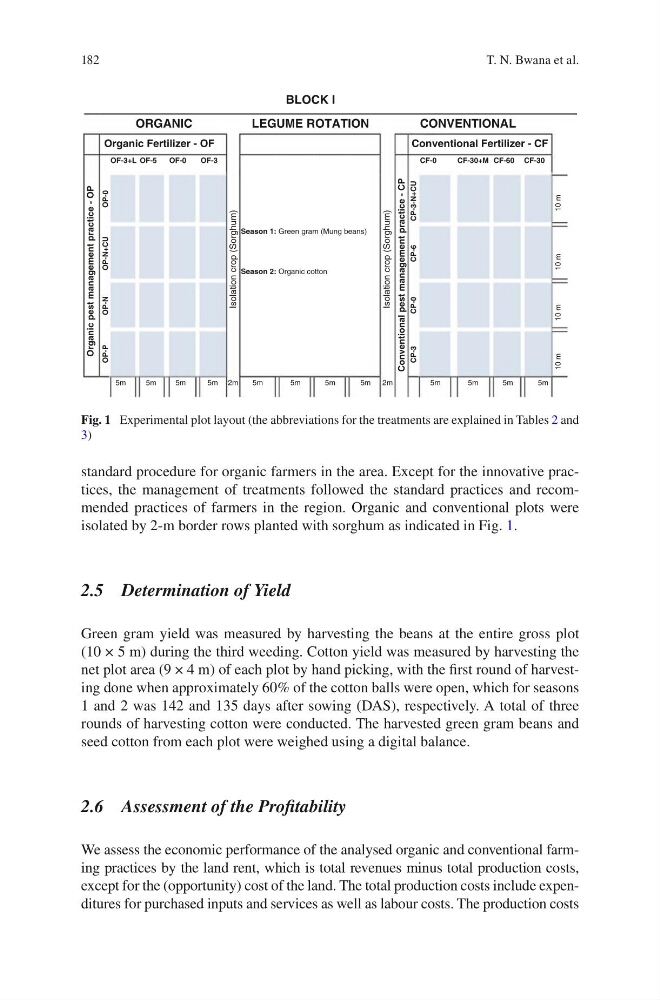
isolated by 2-m border rows planted with sorghum as indicated in Fig. 1.
2.5 Determination of Yield
Green gram yield was measured by harvesting the beans at the entire gross plot
(10 × 5 m) during the third weeding. Cotton yield was measured by harvesting the
net plot area (9 × 4 m) of each plot by hand picking, with the first round of harvesting done when approximately 60% of the cotton balls were open, which for seasons
1 and 2 was 142 and 135 days after sowing (DAS), respectively. A total of three
rounds of harvesting cotton were conducted. The harvested green gram beans and
seed cotton from each plot were weighed using a digital balance.
2.6 Assessment of the Profitability
We assess the economic performance of the analysed organic and conventional farming practices by the land rent, which is total revenues minus total production costs,
except for the (opportunity) cost of the land. The total production costs include expenditures for purchased inputs and services as well as labour costs. The production costs
BLOCK I
Organic Fertilizer - OF
OF-3+L
OP-0
OP-N+CU
OP-N
Organic pest management practice - OP
OP-P
CP-3-N+CU
CP-6
CP-0
CP-3
OF-5
OF-0
OF-3
5m
5m
5m
5m 2m
5m
5m
5m
5m
5m
5m
5m
5m
10 m
1 0 m
1 0 m
1 0 m
2m
CF-0
CF-30+M CF-60 CF-30
Conventional Fertilizer - CF
ORGANIC
LEGUME ROTATION
CONVENTIONAL
Season 1: Green gram (Mung beans)
Season 2: Organic cotton
Isolation crop (Sorghum)
Isolation crop (Sorghum)
Conventional pest management practice - CP
Fig. 1 Experimental plot layout (the abbreviations for the treatments are explained in Tables 2 and
3)
T. N. Bwana et al.
standard procedure for organic farmers in the area. Except for the innovative practices, the management of treatments followed the standard practices and recommended practices of farmers in the region. Organic and conventional plots were
isolated by 2-m border rows planted with sorghum as indicated in Fig. 1.
2.5 Determination of Yield
Green gram yield was measured by harvesting the beans at the entire gross plot
(10 × 5 m) during the third weeding. Cotton yield was measured by harvesting the
net plot area (9 × 4 m) of each plot by hand picking, with the first round of harvesting done when approximately 60% of the cotton balls were open, which for seasons
1 and 2 was 142 and 135 days after sowing (DAS), respectively. A total of three
rounds of harvesting cotton were conducted. The harvested green gram beans and
seed cotton from each plot were weighed using a digital balance.
2.6 Assessment of the Profitability
We assess the economic performance of the analysed organic and conventional farming practices by the land rent, which is total revenues minus total production costs,
except for the (opportunity) cost of the land. The total production costs include expenditures for purchased inputs and services as well as labour costs. The production costs
BLOCK I
Organic Fertilizer - OF
OF-3+L
OP-0
OP-N+CU
OP-N
Organic pest management practice - OP
OP-P
CP-3-N+CU
CP-6
CP-0
CP-3
OF-5
OF-0
OF-3
5m
5m
5m
5m 2m
5m
5m
5m
5m
5m
5m
5m
5m
10 m
1 0 m
1 0 m
1 0 m
2m
CF-0
CF-30+M CF-60 CF-30
Conventional Fertilizer - CF
ORGANIC
LEGUME ROTATION
CONVENTIONAL
Season 1: Green gram (Mung beans)
Season 2: Organic cotton
Isolation crop (Sorghum)
Isolation crop (Sorghum)
Conventional pest management practice - CP
Fig. 1 Experimental plot layout (the abbreviations for the treatments are explained in Tables 2 and
3)
T. N. Bwana et al.