

165
3 Ways Through Which Climate Influences Pesticide Use
and Exposure
3.1 Pest Occurrence
Climate-induced changes alter both pest development and levels of infestation. Wet
and humid conditions favour the proliferation of fungal and bacterial diseases.
Climate-induced aridity may increase the incidence of sugarcane diseases such as
ratoon stunting disease, which causes shortening of sugarcane stems, and smut disease, which results in the blackening of shoot apices (Matthieson 2007). Although
these are important diseases of sugarcane in Malawi, increase in their incidence will
not affect pesticide exposure since these diseases are controlled using cultural methods. Higher temperatures may also increase the incidence and severity of insect
pests. The severity of infestation of sugarcane by plant sap-sucking red spider mites
in Chikwawa is closely linked to periods of dry, hot weather with low humidity and
high evapotranspiration (Koloko 2016). Fipronil, a highly toxic pesticide, has been
used in Malawi to manage an outbreak of African migratory locusts in the Lower
Shire River Valley. During the 2014/2015 cropping season, additional amounts of
acetamiprid and cypermethrin were sprayed to manage an outbreak of yellow sugarcane aphids.
Fipronil is highly toxic to terrestrial and aquatic life, does not dissociate and has
high potential for bioaccumulation (PPDB 2017). These few examples illustrate the
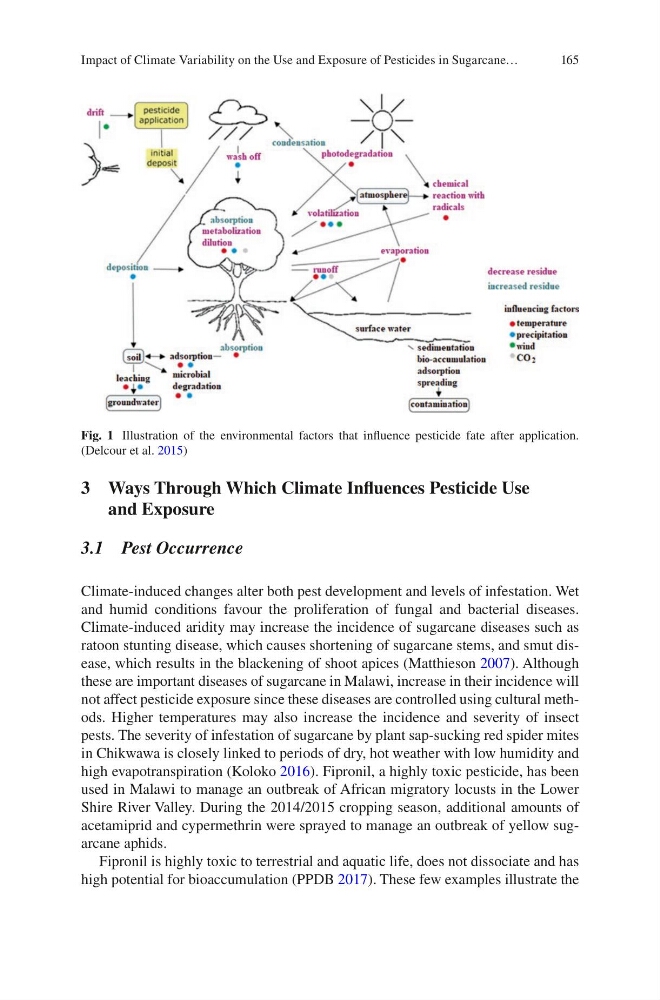
Fig. 1 Illustration of the environmental factors that influence pesticide fate after application.
(Delcour et al. 2015)
Impact of Climate Variability on the Use and Exposure of Pesticides in Sugarcane…
3 Ways Through Which Climate Influences Pesticide Use
and Exposure
3.1 Pest Occurrence
Climate-induced changes alter both pest development and levels of infestation. Wet
and humid conditions favour the proliferation of fungal and bacterial diseases.
Climate-induced aridity may increase the incidence of sugarcane diseases such as
ratoon stunting disease, which causes shortening of sugarcane stems, and smut disease, which results in the blackening of shoot apices (Matthieson 2007). Although
these are important diseases of sugarcane in Malawi, increase in their incidence will
not affect pesticide exposure since these diseases are controlled using cultural methods. Higher temperatures may also increase the incidence and severity of insect
pests. The severity of infestation of sugarcane by plant sap-sucking red spider mites
in Chikwawa is closely linked to periods of dry, hot weather with low humidity and
high evapotranspiration (Koloko 2016). Fipronil, a highly toxic pesticide, has been
used in Malawi to manage an outbreak of African migratory locusts in the Lower
Shire River Valley. During the 2014/2015 cropping season, additional amounts of
acetamiprid and cypermethrin were sprayed to manage an outbreak of yellow sugarcane aphids.
Fipronil is highly toxic to terrestrial and aquatic life, does not dissociate and has
high potential for bioaccumulation (PPDB 2017). These few examples illustrate the
Fig. 1 Illustration of the environmental factors that influence pesticide fate after application.
(Delcour et al. 2015)
Impact of Climate Variability on the Use and Exposure of Pesticides in Sugarcane…