

142
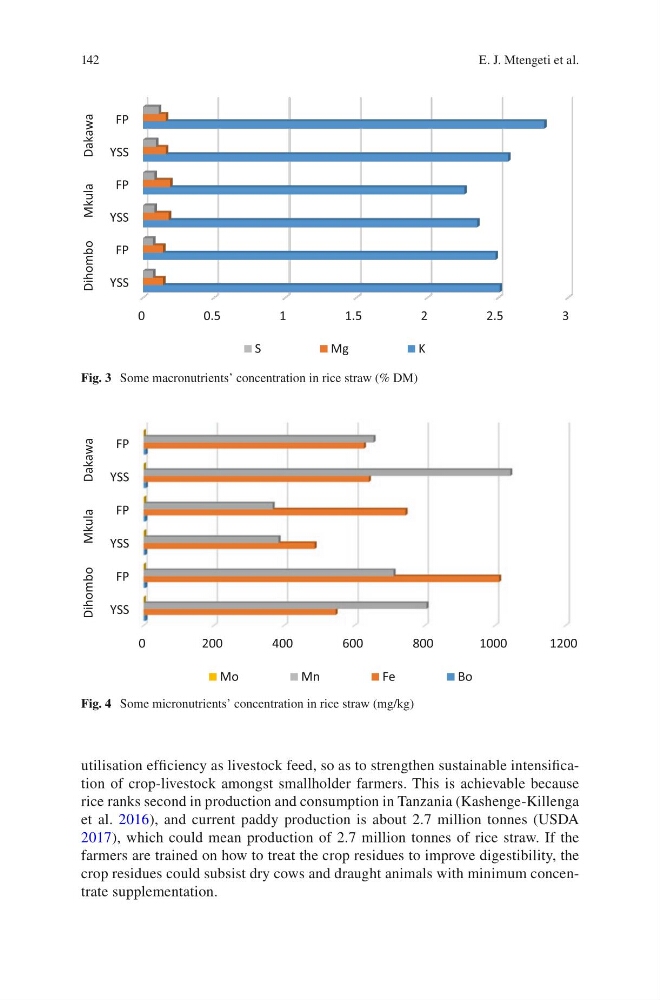
Fig. 4 Some micronutrients’ concentration in rice straw (mg/kg)
Fig. 3 Some macronutrients’ concentration in rice straw (% DM)
utilisation efficiency as livestock feed, so as to strengthen sustainable intensification of crop-livestock amongst smallholder farmers. This is achievable because
rice ranks second in production and consumption in Tanzania (Kashenge-Killenga
et al. 2016), and current paddy production is about 2.7 million tonnes (USDA
2017), which could mean production of 2.7 million tonnes of rice straw. If the
farmers are trained on how to treat the crop residues to improve digestibility, the
crop residues could subsist dry cows and draught animals with minimum concentrate supplementation.
E. J. Mtengeti et al.
Fig. 4 Some micronutrients’ concentration in rice straw (mg/kg)
Fig. 3 Some macronutrients’ concentration in rice straw (% DM)
utilisation efficiency as livestock feed, so as to strengthen sustainable intensification of crop-livestock amongst smallholder farmers. This is achievable because
rice ranks second in production and consumption in Tanzania (Kashenge-Killenga
et al. 2016), and current paddy production is about 2.7 million tonnes (USDA
2017), which could mean production of 2.7 million tonnes of rice straw. If the
farmers are trained on how to treat the crop residues to improve digestibility, the
crop residues could subsist dry cows and draught animals with minimum concentrate supplementation.
E. J. Mtengeti et al.