

277
solubilization of lipophilic drugs in water-containing semisolid formulations and to ameliorate drug photostability [115].
The interaction between β-CD-NSs and UV stabilizers in the
photooxidation of polypropylene has been investigated. For this
aim, two different kinds of stabilizers (2-hydroxy-4(octyloxy)-benzophenone and triphenyl phosphite, TPP) have been mixed with a
β-CD-NS, and the synergistic effect of these two species has been
assessed in order to understand the possible chemical or physical
interactions occurring between them and the influence of each
component on the oxidation of the polymer matrix. Photooxidation
of NS and NS/stabilizer-based PP composites was recorded via
FTIR spectra. Oxidation induction time (OIT) and the subsequent
rate of photooxidation collected for formulations under study were
measured from absorbance vs. irradiation time plots. The main
results were collected: (1) a significant reduction of the oxidation
induction time in the presence of the β-CD-NS alone; (2) a remarkable OIT increase when the NS is combined with 2-hydroxy4(octyloxy)-benzophenone; (3) a possible synergistic effect
between the two species, probably due to some chemical interactions; and (4) a low OIT when TPP is employed in combination
with the NS, which turned out to be less efficient than TPP alone
[116].
The encapsulation of caffeine (Caf) inside CDNS hydrogels was
systematically investigated by using UV Raman scattering experiments. The UV Raman spectra of the hydrogels, analyzed as a
function of temperature, concentration of the guest molecule
2.19 Cyclodextrin
Nanosponges
for Miscellaneous
Uses
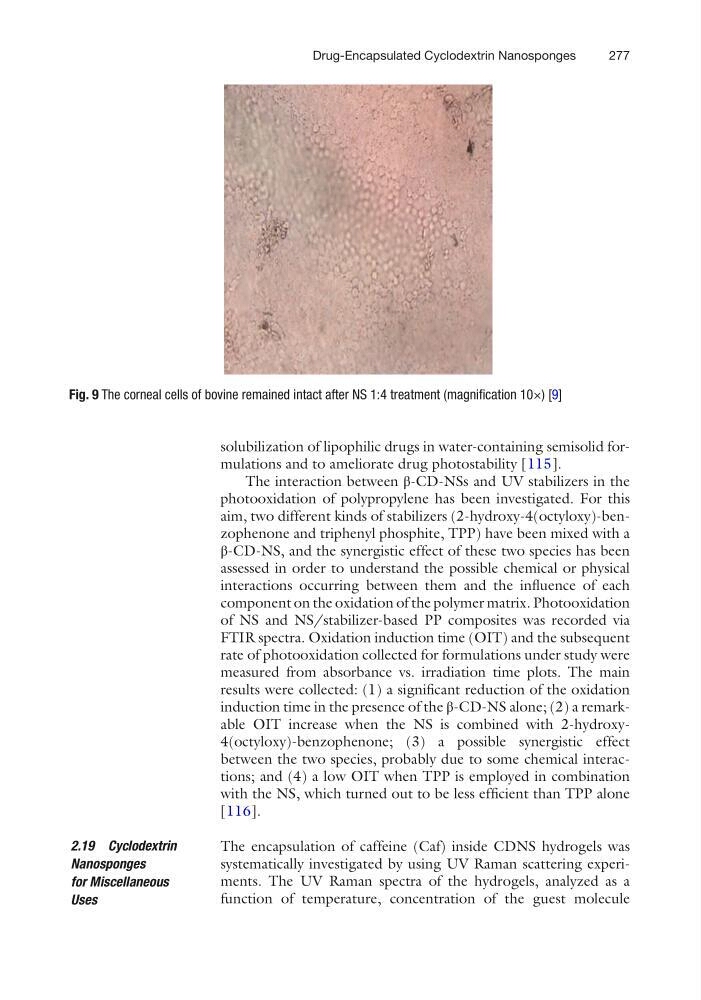
Fig. 9 The corneal cells of bovine remained intact after NS 1:4 treatment (magnification 10×) [9]
Drug-Encapsulated Cyclodextrin Nanosponges
solubilization of lipophilic drugs in water-containing semisolid formulations and to ameliorate drug photostability [115].
The interaction between β-CD-NSs and UV stabilizers in the
photooxidation of polypropylene has been investigated. For this
aim, two different kinds of stabilizers (2-hydroxy-4(octyloxy)-benzophenone and triphenyl phosphite, TPP) have been mixed with a
β-CD-NS, and the synergistic effect of these two species has been
assessed in order to understand the possible chemical or physical
interactions occurring between them and the influence of each
component on the oxidation of the polymer matrix. Photooxidation
of NS and NS/stabilizer-based PP composites was recorded via
FTIR spectra. Oxidation induction time (OIT) and the subsequent
rate of photooxidation collected for formulations under study were
measured from absorbance vs. irradiation time plots. The main
results were collected: (1) a significant reduction of the oxidation
induction time in the presence of the β-CD-NS alone; (2) a remarkable OIT increase when the NS is combined with 2-hydroxy4(octyloxy)-benzophenone; (3) a possible synergistic effect
between the two species, probably due to some chemical interactions; and (4) a low OIT when TPP is employed in combination
with the NS, which turned out to be less efficient than TPP alone
[116].
The encapsulation of caffeine (Caf) inside CDNS hydrogels was
systematically investigated by using UV Raman scattering experiments. The UV Raman spectra of the hydrogels, analyzed as a
function of temperature, concentration of the guest molecule
2.19 Cyclodextrin
Nanosponges
for Miscellaneous
Uses
Fig. 9 The corneal cells of bovine remained intact after NS 1:4 treatment (magnification 10×) [9]
Drug-Encapsulated Cyclodextrin Nanosponges