

275
complexes. In diabetic rats, intestinal administration of P-bis-CD
nanocomplexes resulted in a prominent hypoglycemic effect which
lasted for 6 h with maximum inhibitory rate at 60%. The relative
pharmacological availability and bioavailability of P-bis-CD nanocomplexes were 10.6% and 7.1%, which were 3.0-fold and 2.3-fold
higher than those of penetratin nanocomplexes, respectively.
Results demonstrated that P-bis-CD was a promising epithelium
permeation enhancer for insulin and suggested that the chemical
modification of cell penetration peptides was a feasible strategy to
enhance their potential [111].
Cationic amphiphilic cyclodextrin (click propyl-amine cyclodextrin) as the primary complexing agent in nanoparticles (NPs)
developed entrapping insulin glulisine for intestinal administration. NPs exhibited colloidal stability in intestinal-biorelevant
media (SIF, supplemented-SIF 1% (w/v) and FaSSIF-V2) for up
to 4 h. Proteolysis studies indicated that the NPs conferred protection to the entrapped insulin relative to free insulin. In vivo rat
jejunum instillation studies demonstrated that the NPs mediated
systemic insulin absorption, accompanied by a decrease in blood
glucose levels. The relative bioavailability of the instilled insulin
(50 IU/kg) from the NP was 5.5% compared to subcutaneous
administration of insulin solution (1 IU/kg). The pharmacodynamic and pharmacokinetic data indicate that this amphiphilic
cyclodextrin formulation may have potential for further research as
an oral insulin dosage form [112].
Dexamethasone (DEX), a type of corticosteroid, is extensively
used as an analgesic and an anti-inflammatory agent. Due to its
β-CD
CDNS
b,c
NH 3
a
CDNS-Ab
CDNS-Ab-HRP
(OH) 7
(OH) 14
HOOC
HOOC
COOH
COOH
O
O
O
O
O
O
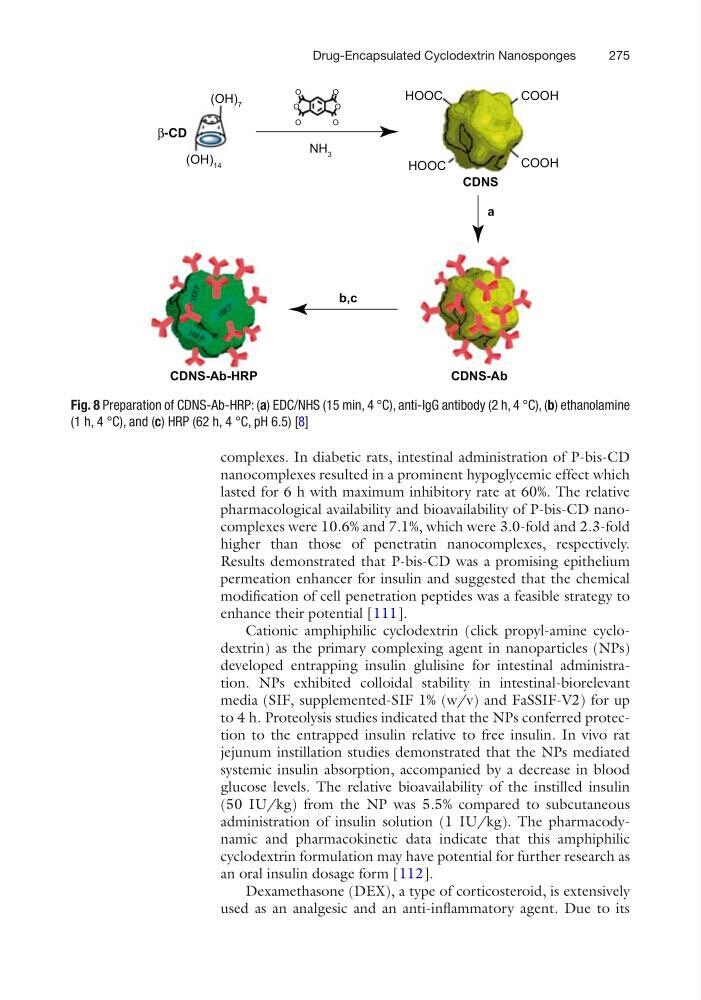
Fig. 8 Preparation of CDNS-Ab-HRP: (a) EDC/NHS (15 min, 4 °C), anti-IgG antibody (2 h, 4 °C), (b) ethanolamine
(1 h, 4 °C), and (c) HRP (62 h, 4 °C, pH 6.5) [8]
Drug-Encapsulated Cyclodextrin Nanosponges
complexes. In diabetic rats, intestinal administration of P-bis-CD
nanocomplexes resulted in a prominent hypoglycemic effect which
lasted for 6 h with maximum inhibitory rate at 60%. The relative
pharmacological availability and bioavailability of P-bis-CD nanocomplexes were 10.6% and 7.1%, which were 3.0-fold and 2.3-fold
higher than those of penetratin nanocomplexes, respectively.
Results demonstrated that P-bis-CD was a promising epithelium
permeation enhancer for insulin and suggested that the chemical
modification of cell penetration peptides was a feasible strategy to
enhance their potential [111].
Cationic amphiphilic cyclodextrin (click propyl-amine cyclodextrin) as the primary complexing agent in nanoparticles (NPs)
developed entrapping insulin glulisine for intestinal administration. NPs exhibited colloidal stability in intestinal-biorelevant
media (SIF, supplemented-SIF 1% (w/v) and FaSSIF-V2) for up
to 4 h. Proteolysis studies indicated that the NPs conferred protection to the entrapped insulin relative to free insulin. In vivo rat
jejunum instillation studies demonstrated that the NPs mediated
systemic insulin absorption, accompanied by a decrease in blood
glucose levels. The relative bioavailability of the instilled insulin
(50 IU/kg) from the NP was 5.5% compared to subcutaneous
administration of insulin solution (1 IU/kg). The pharmacodynamic and pharmacokinetic data indicate that this amphiphilic
cyclodextrin formulation may have potential for further research as
an oral insulin dosage form [112].
Dexamethasone (DEX), a type of corticosteroid, is extensively
used as an analgesic and an anti-inflammatory agent. Due to its
β-CD
CDNS
b,c
NH 3
a
CDNS-Ab
CDNS-Ab-HRP
(OH) 7
(OH) 14
HOOC
HOOC
COOH
COOH
O
O
O
O
O
O
Fig. 8 Preparation of CDNS-Ab-HRP: (a) EDC/NHS (15 min, 4 °C), anti-IgG antibody (2 h, 4 °C), (b) ethanolamine
(1 h, 4 °C), and (c) HRP (62 h, 4 °C, pH 6.5) [8]
Drug-Encapsulated Cyclodextrin Nanosponges