

254
observed in Dox-treated animals, and the experiments performed
on rat cardiomyocytes, using same doses, showed that the toxicity
of these two formulations was similar. All these characteristics suggest that GSH-NSs can be a suitable drug delivery carrier for future
applications in cancer therapy [43].
Natural compounds with therapeutic activity are exploited for
cancer treatment as they are biocompatible and have wellcharacterized functions. Various plant-derived bioactive compounds have been shown to inhibit cancer cell growth and
survival.
Strigolactones (SLs) are carotenoid-derived plant hormones
that are synthesized by plant roots and released into the rhizosphere. SLs have a four-ring structure consisting of a tricyclic lactone (ABC rings) linked to a methyl butenolide (D ring) through
an enol ether bridge, and they are indispensable for the establishment of arbuscular mycorrhizae. Two SL analogs, namely MEB55
and ST362, could induce G2/M cell cycle arrest and apoptosis in
a variety of human cancer cell lines in vitro and inhibited growth of
breast cancer stem cell-enriched mammospheres and human breast
cancer xenograft tumors in vivo; however these compounds have
low aqueous solubility and stability at physiological pH [44].
GSH/pH-NS previously designed to deliver anticancer drugs
to cells with high GSH levels could enable the targeted delivery
and controlled release of SL analogs (MEB55 and ST362) in prostate cancer cells, thereby enhancing the therapeutic efficacy. The
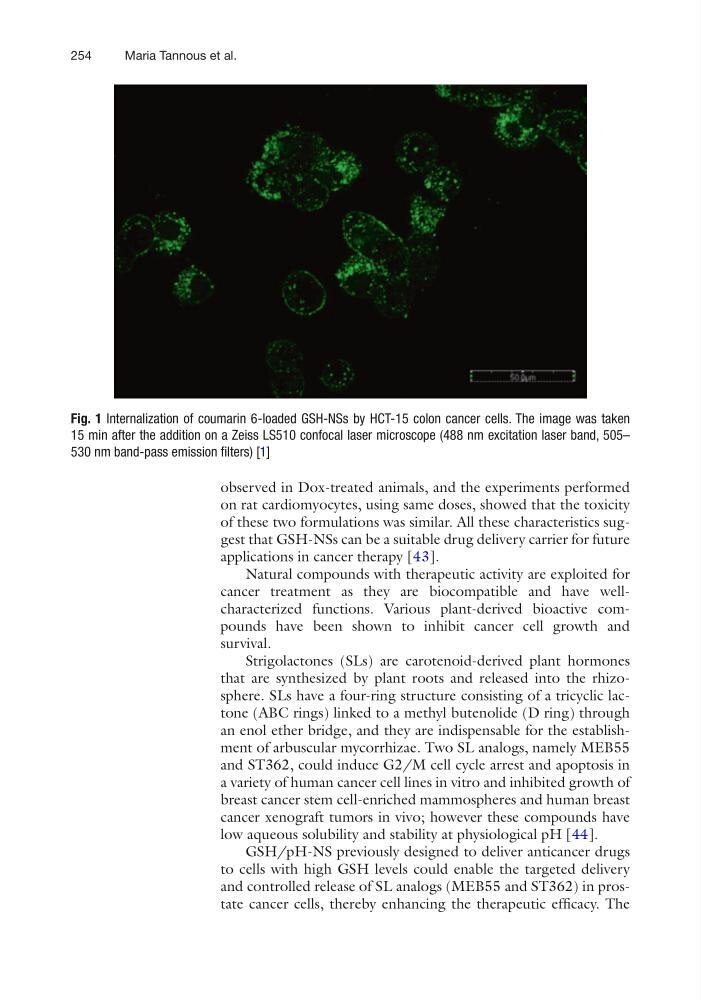
Fig. 1 Internalization of coumarin 6-loaded GSH-NSs by HCT-15 colon cancer cells. The image was taken
15 min after the addition on a Zeiss LS510 confocal laser microscope (488 nm excitation laser band, 505–
530 nm band-pass emission filters) [1]
Maria Tannous et al.
observed in Dox-treated animals, and the experiments performed
on rat cardiomyocytes, using same doses, showed that the toxicity
of these two formulations was similar. All these characteristics suggest that GSH-NSs can be a suitable drug delivery carrier for future
applications in cancer therapy [43].
Natural compounds with therapeutic activity are exploited for
cancer treatment as they are biocompatible and have wellcharacterized functions. Various plant-derived bioactive compounds have been shown to inhibit cancer cell growth and
survival.
Strigolactones (SLs) are carotenoid-derived plant hormones
that are synthesized by plant roots and released into the rhizosphere. SLs have a four-ring structure consisting of a tricyclic lactone (ABC rings) linked to a methyl butenolide (D ring) through
an enol ether bridge, and they are indispensable for the establishment of arbuscular mycorrhizae. Two SL analogs, namely MEB55
and ST362, could induce G2/M cell cycle arrest and apoptosis in
a variety of human cancer cell lines in vitro and inhibited growth of
breast cancer stem cell-enriched mammospheres and human breast
cancer xenograft tumors in vivo; however these compounds have
low aqueous solubility and stability at physiological pH [44].
GSH/pH-NS previously designed to deliver anticancer drugs
to cells with high GSH levels could enable the targeted delivery
and controlled release of SL analogs (MEB55 and ST362) in prostate cancer cells, thereby enhancing the therapeutic efficacy. The
Fig. 1 Internalization of coumarin 6-loaded GSH-NSs by HCT-15 colon cancer cells. The image was taken
15 min after the addition on a Zeiss LS510 confocal laser microscope (488 nm excitation laser band, 505–
530 nm band-pass emission filters) [1]
Maria Tannous et al.