

Sustainable Campuses as Living Labs for Sustainable …
89
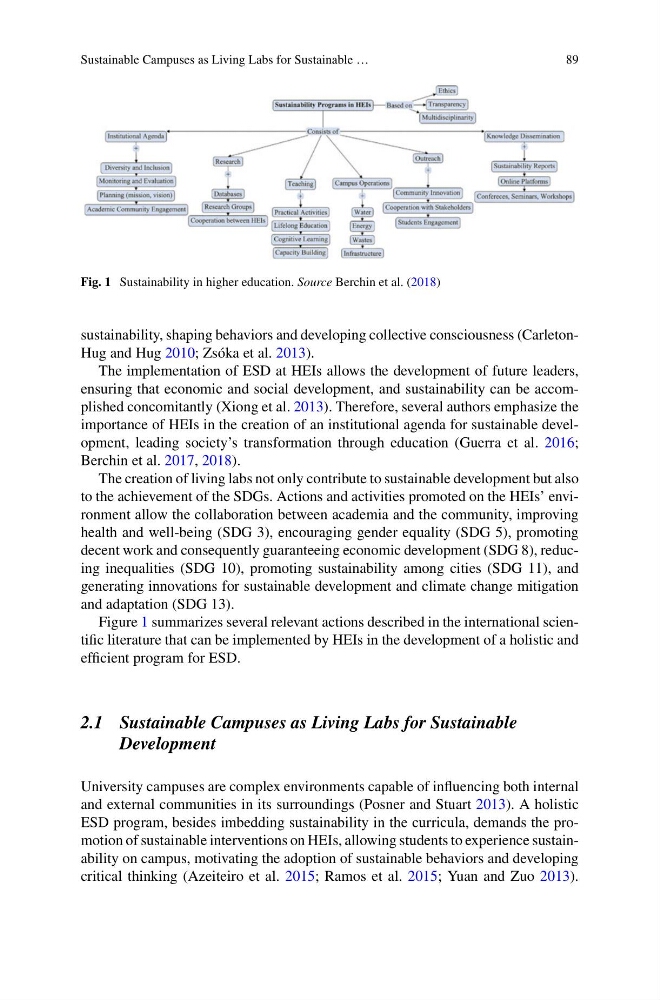
Fig. 1 Sustainability in higher education. Source Berchin et al. (2018)
sustainability, shaping behaviors and developing collective consciousness (CarletonHug and Hug 2010; Zsóka et al. 2013).
The implementation of ESD at HEIs allows the development of future leaders,
ensuring that economic and social development, and sustainability can be accomplished concomitantly (Xiong et al. 2013). Therefore, several authors emphasize the
importance of HEIs in the creation of an institutional agenda for sustainable development, leading society’s transformation through education (Guerra et al. 2016;
Berchin et al. 2017, 2018).
The creation of living labs not only contribute to sustainable development but also
to the achievement of the SDGs. Actions and activities promoted on the HEIs’ environment allow the collaboration between academia and the community, improving
health and well-being (SDG 3), encouraging gender equality (SDG 5), promoting
decent work and consequently guaranteeing economic development (SDG 8), reducing inequalities (SDG 10), promoting sustainability among cities (SDG 11), and
generating innovations for sustainable development and climate change mitigation
and adaptation (SDG 13).
Figure 1 summarizes several relevant actions described in the international scientific literature that can be implemented by HEIs in the development of a holistic and
efficient program for ESD.
2.1 Sustainable Campuses as Living Labs for Sustainable
Development
University campuses are complex environments capable of influencing both internal
and external communities in its surroundings (Posner and Stuart 2013). A holistic
ESD program, besides imbedding sustainability in the curricula, demands the promotion of sustainable interventions on HEIs, allowing students to experience sustainability on campus, motivating the adoption of sustainable behaviors and developing
critical thinking (Azeiteiro et al. 2015; Ramos et al. 2015; Yuan and Zuo 2013).
89
Fig. 1 Sustainability in higher education. Source Berchin et al. (2018)
sustainability, shaping behaviors and developing collective consciousness (CarletonHug and Hug 2010; Zsóka et al. 2013).
The implementation of ESD at HEIs allows the development of future leaders,
ensuring that economic and social development, and sustainability can be accomplished concomitantly (Xiong et al. 2013). Therefore, several authors emphasize the
importance of HEIs in the creation of an institutional agenda for sustainable development, leading society’s transformation through education (Guerra et al. 2016;
Berchin et al. 2017, 2018).
The creation of living labs not only contribute to sustainable development but also
to the achievement of the SDGs. Actions and activities promoted on the HEIs’ environment allow the collaboration between academia and the community, improving
health and well-being (SDG 3), encouraging gender equality (SDG 5), promoting
decent work and consequently guaranteeing economic development (SDG 8), reducing inequalities (SDG 10), promoting sustainability among cities (SDG 11), and
generating innovations for sustainable development and climate change mitigation
and adaptation (SDG 13).
Figure 1 summarizes several relevant actions described in the international scientific literature that can be implemented by HEIs in the development of a holistic and
efficient program for ESD.
2.1 Sustainable Campuses as Living Labs for Sustainable
Development
University campuses are complex environments capable of influencing both internal
and external communities in its surroundings (Posner and Stuart 2013). A holistic
ESD program, besides imbedding sustainability in the curricula, demands the promotion of sustainable interventions on HEIs, allowing students to experience sustainability on campus, motivating the adoption of sustainable behaviors and developing
critical thinking (Azeiteiro et al. 2015; Ramos et al. 2015; Yuan and Zuo 2013).