

82
E. Pallant et al.
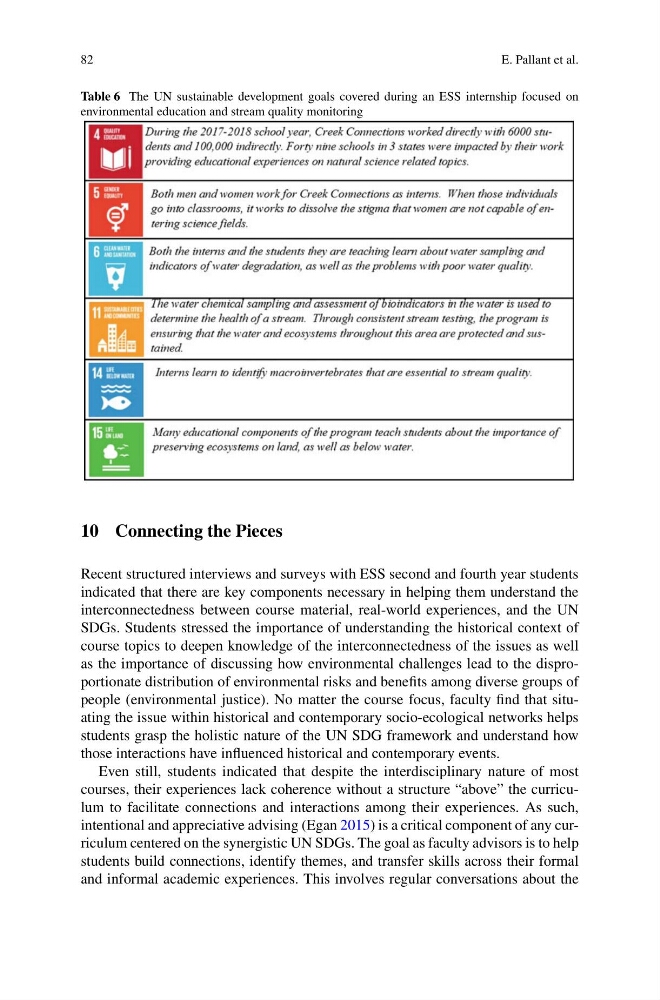
Table 6 The UN sustainable development goals covered during an ESS internship focused on
environmental education and stream quality monitoring
10 Connecting the Pieces
Recent structured interviews and surveys with ESS second and fourth year students
indicated that there are key components necessary in helping them understand the
interconnectedness between course material, real-world experiences, and the UN
SDGs. Students stressed the importance of understanding the historical context of
course topics to deepen knowledge of the interconnectedness of the issues as well
as the importance of discussing how environmental challenges lead to the disproportionate distribution of environmental risks and benefits among diverse groups of
people (environmental justice). No matter the course focus, faculty find that situating the issue within historical and contemporary socio-ecological networks helps
students grasp the holistic nature of the UN SDG framework and understand how
those interactions have influenced historical and contemporary events.
Even still, students indicated that despite the interdisciplinary nature of most
courses, their experiences lack coherence without a structure “above” the curriculum to facilitate connections and interactions among their experiences. As such,
intentional and appreciative advising (Egan 2015) is a critical component of any curriculum centered on the synergistic UN SDGs. The goal as faculty advisors is to help
students build connections, identify themes, and transfer skills across their formal
and informal academic experiences. This involves regular conversations about the
E. Pallant et al.
Table 6 The UN sustainable development goals covered during an ESS internship focused on
environmental education and stream quality monitoring
10 Connecting the Pieces
Recent structured interviews and surveys with ESS second and fourth year students
indicated that there are key components necessary in helping them understand the
interconnectedness between course material, real-world experiences, and the UN
SDGs. Students stressed the importance of understanding the historical context of
course topics to deepen knowledge of the interconnectedness of the issues as well
as the importance of discussing how environmental challenges lead to the disproportionate distribution of environmental risks and benefits among diverse groups of
people (environmental justice). No matter the course focus, faculty find that situating the issue within historical and contemporary socio-ecological networks helps
students grasp the holistic nature of the UN SDG framework and understand how
those interactions have influenced historical and contemporary events.
Even still, students indicated that despite the interdisciplinary nature of most
courses, their experiences lack coherence without a structure “above” the curriculum to facilitate connections and interactions among their experiences. As such,
intentional and appreciative advising (Egan 2015) is a critical component of any curriculum centered on the synergistic UN SDGs. The goal as faculty advisors is to help
students build connections, identify themes, and transfer skills across their formal
and informal academic experiences. This involves regular conversations about the