

Sustainable Alternative Water Sources Use for Lowering …
831
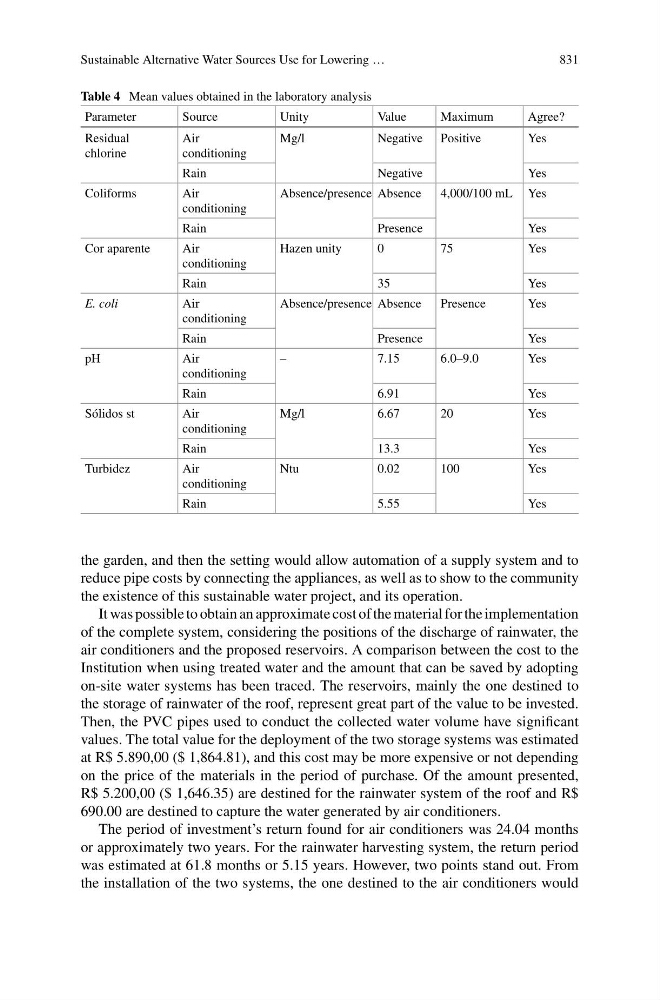
Table 4 Mean values obtained in the laboratory analysis
Parameter
Source
Unity
Value
Maximum
Agree?
Residual
chlorine
Air
conditioning
Mg/l
Negative Positive
Yes
Rain
Negative
Yes
Coliforms
Air
conditioning
Absence/presence Absence
4,000/100 mL Yes
Rain
Presence
Yes
Cor aparente
Air
conditioning
Hazen unity
0
75
Yes
Rain
35
Yes
E. coli
Air
conditioning
Absence/presence Absence
Presence
Yes
Rain
Presence
Yes
pH
Air
conditioning
–
7.15
6.0–9.0
Yes
Rain
6.91
Yes
Sólidos st
Air
conditioning
Mg/l
6.67
20
Yes
Rain
13.3
Yes
Turbidez
Air
conditioning
Ntu
0.02
100
Yes
Rain
5.55
Yes
the garden, and then the setting would allow automation of a supply system and to
reduce pipe costs by connecting the appliances, as well as to show to the community
the existence of this sustainable water project, and its operation.
It was possible to obtain an approximate cost of the material for the implementation
of the complete system, considering the positions of the discharge of rainwater, the
air conditioners and the proposed reservoirs. A comparison between the cost to the
Institution when using treated water and the amount that can be saved by adopting
on-site water systems has been traced. The reservoirs, mainly the one destined to
the storage of rainwater of the roof, represent great part of the value to be invested.
Then, the PVC pipes used to conduct the collected water volume have significant
values. The total value for the deployment of the two storage systems was estimated
at R$ 5.890,00 ($ 1,864.81), and this cost may be more expensive or not depending
on the price of the materials in the period of purchase. Of the amount presented,
R$ 5.200,00 ($ 1,646.35) are destined for the rainwater system of the roof and R$
690.00 are destined to capture the water generated by air conditioners.
The period of investment’s return found for air conditioners was 24.04 months
or approximately two years. For the rainwater harvesting system, the return period
was estimated at 61.8 months or 5.15 years. However, two points stand out. From
the installation of the two systems, the one destined to the air conditioners would