

Composting and Anaerobic Digestion as Biotechnological …
797
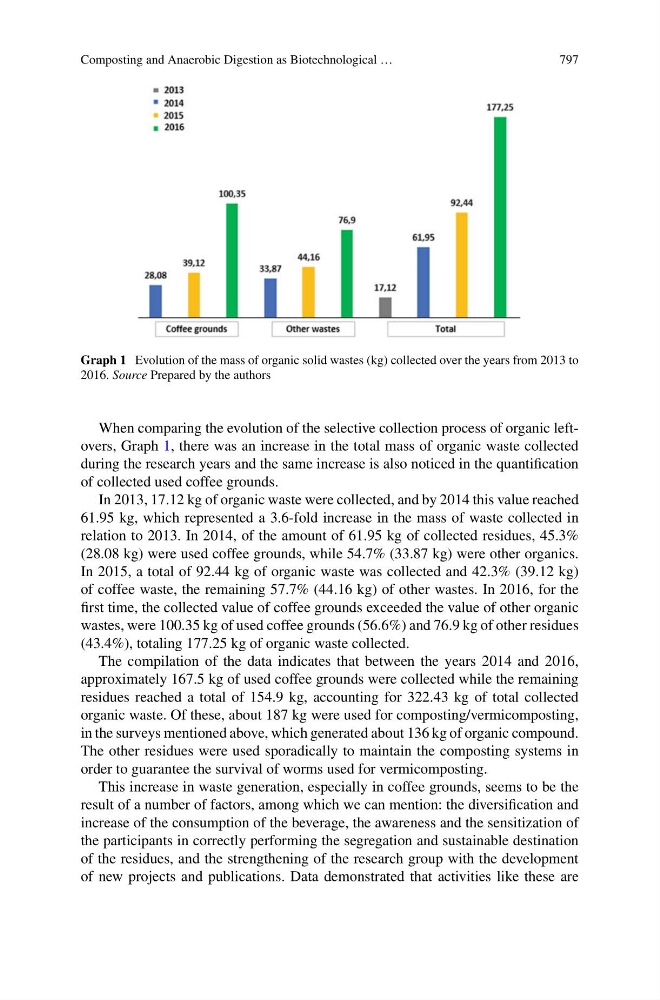
Graph 1 Evolution of the mass of organic solid wastes (kg) collected over the years from 2013 to
2016. Source Prepared by the authors
When comparing the evolution of the selective collection process of organic leftovers, Graph 1, there was an increase in the total mass of organic waste collected
during the research years and the same increase is also noticed in the quantification
of collected used coffee grounds.
In 2013, 17.12 kg of organic waste were collected, and by 2014 this value reached
61.95 kg, which represented a 3.6-fold increase in the mass of waste collected in
relation to 2013. In 2014, of the amount of 61.95 kg of collected residues, 45.3%
(28.08 kg) were used coffee grounds, while 54.7% (33.87 kg) were other organics.
In 2015, a total of 92.44 kg of organic waste was collected and 42.3% (39.12 kg)
of coffee waste, the remaining 57.7% (44.16 kg) of other wastes. In 2016, for the
first time, the collected value of coffee grounds exceeded the value of other organic
wastes, were 100.35 kg of used coffee grounds (56.6%) and 76.9 kg of other residues
(43.4%), totaling 177.25 kg of organic waste collected.
The compilation of the data indicates that between the years 2014 and 2016,
approximately 167.5 kg of used coffee grounds were collected while the remaining
residues reached a total of 154.9 kg, accounting for 322.43 kg of total collected
organic waste. Of these, about 187 kg were used for composting/vermicomposting,
in the surveys mentioned above, which generated about 136 kg of organic compound.
The other residues were used sporadically to maintain the composting systems in
order to guarantee the survival of worms used for vermicomposting.
This increase in waste generation, especially in coffee grounds, seems to be the
result of a number of factors, among which we can mention: the diversification and
increase of the consumption of the beverage, the awareness and the sensitization of
the participants in correctly performing the segregation and sustainable destination
of the residues, and the strengthening of the research group with the development
of new projects and publications. Data demonstrated that activities like these are