

Sustainable Energy Model in Tecnocampus Higher Education …
785
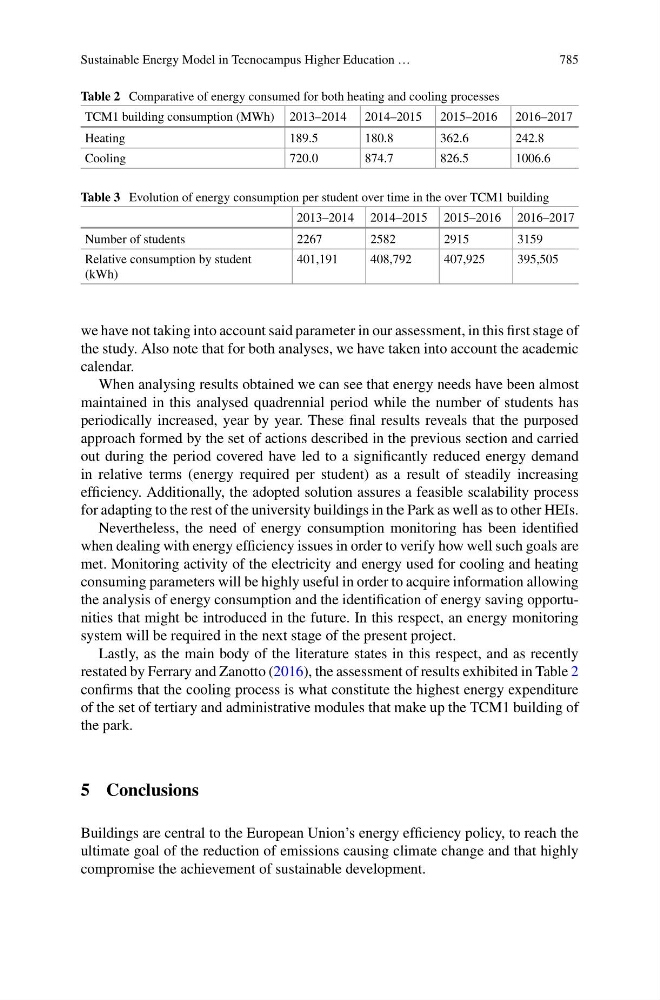
Table 2 Comparative of energy consumed for both heating and cooling processes
TCM1 building consumption (MWh) 2013–2014 2014–2015 2015–2016 2016–2017
Heating
189.5
180.8
362.6
242.8
Cooling
720.0
874.7
826.5
1006.6
Table 3 Evolution of energy consumption per student over time in the over TCM1 building
2013–2014 2014–2015 2015–2016 2016–2017
Number of students
2267
2582
2915
3159
Relative consumption by student
(kWh)
401,191
408,792
407,925
395,505
we have not taking into account said parameter in our assessment, in this first stage of
the study. Also note that for both analyses, we have taken into account the academic
calendar.
When analysing results obtained we can see that energy needs have been almost
maintained in this analysed quadrennial period while the number of students has
periodically increased, year by year. These final results reveals that the purposed
approach formed by the set of actions described in the previous section and carried
out during the period covered have led to a significantly reduced energy demand
in relative terms (energy required per student) as a result of steadily increasing
efficiency. Additionally, the adopted solution assures a feasible scalability process
for adapting to the rest of the university buildings in the Park as well as to other HEIs.
Nevertheless, the need of energy consumption monitoring has been identified
when dealing with energy efficiency issues in order to verify how well such goals are
met. Monitoring activity of the electricity and energy used for cooling and heating
consuming parameters will be highly useful in order to acquire information allowing
the analysis of energy consumption and the identification of energy saving opportunities that might be introduced in the future. In this respect, an energy monitoring
system will be required in the next stage of the present project.
Lastly, as the main body of the literature states in this respect, and as recently
restated by Ferrary and Zanotto (2016), the assessment of results exhibited in Table 2
confirms that the cooling process is what constitute the highest energy expenditure
of the set of tertiary and administrative modules that make up the TCM1 building of
the park.
5 Conclusions
Buildings are central to the European Union’s energy efficiency policy, to reach the
ultimate goal of the reduction of emissions causing climate change and that highly
compromise the achievement of sustainable development.