

Vortex-Assisted Liquid-Liquid Microextraction for Steroid …
755
5 mL water spiked with
endogenous steroid and
deuterated internal standards
150 μL of solvent was
added to the mixture,
vortexed for 40 s
Mixture was
centrifuged at 1000g
for 1 min
Solvent was pipetted out
into 1.5 mL eppendorf
tube
Solvent was dried
using a vacuum
concentrator
The tube was reconstituted with
mobile phase and transferred into
autosampler vials for LC-MS/MS
analysis
0.5 mL E.coli
in phosphate
buffer (pH 6.4)
was added,
mixed and
sonicated (50
°C) for 30 min
for hydrolysis
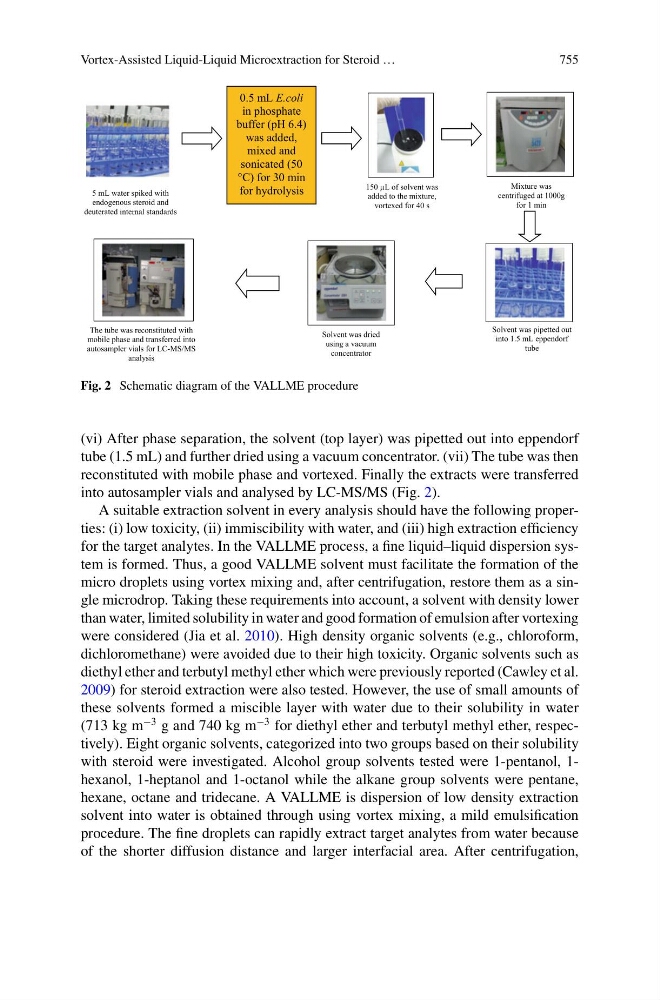
Fig. 2 Schematic diagram of the VALLME procedure
(vi) After phase separation, the solvent (top layer) was pipetted out into eppendorf
tube (1.5 mL) and further dried using a vacuum concentrator. (vii) The tube was then
reconstituted with mobile phase and vortexed. Finally the extracts were transferred
into autosampler vials and analysed by LC-MS/MS (Fig. 2).
A suitable extraction solvent in every analysis should have the following properties: (i) low toxicity, (ii) immiscibility with water, and (iii) high extraction efficiency
for the target analytes. In the VALLME process, a fine liquid–liquid dispersion system is formed. Thus, a good VALLME solvent must facilitate the formation of the
micro droplets using vortex mixing and, after centrifugation, restore them as a single microdrop. Taking these requirements into account, a solvent with density lower
than water, limited solubility in water and good formation of emulsion after vortexing
were considered (Jia et al. 2010). High density organic solvents (e.g., chloroform,
dichloromethane) were avoided due to their high toxicity. Organic solvents such as
diethyl ether and terbutyl methyl ether which were previously reported (Cawley et al.
2009) for steroid extraction were also tested. However, the use of small amounts of
these solvents formed a miscible layer with water due to their solubility in water
(713 kg m
−3 g and 740 kg m
−3 for diethyl ether and terbutyl methyl ether, respectively). Eight organic solvents, categorized into two groups based on their solubility
with steroid were investigated. Alcohol group solvents tested were 1-pentanol, 1hexanol, 1-heptanol and 1-octanol while the alkane group solvents were pentane,
hexane, octane and tridecane. A VALLME is dispersion of low density extraction
solvent into water is obtained through using vortex mixing, a mild emulsification
procedure. The fine droplets can rapidly extract target analytes from water because
of the shorter diffusion distance and larger interfacial area. After centrifugation,