

712
A. Gelpi et al.
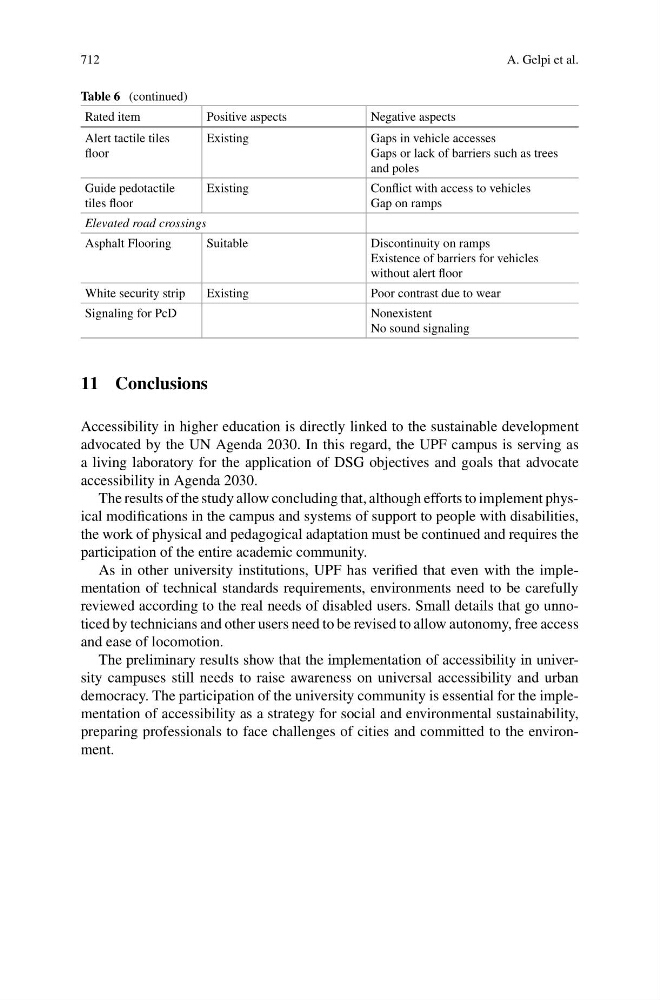
Table 6 (continued)
Rated item
Positive aspects
Negative aspects
Alert tactile tiles
floor
Existing
Gaps in vehicle accesses
Gaps or lack of barriers such as trees
and poles
Guide pedotactile
tiles floor
Existing
Conflict with access to vehicles
Gap on ramps
Elevated road crossings
Asphalt Flooring
Suitable
Discontinuity on ramps
Existence of barriers for vehicles
without alert floor
White security strip
Existing
Poor contrast due to wear
Signaling for PcD
Nonexistent
No sound signaling
11 Conclusions
Accessibility in higher education is directly linked to the sustainable development
advocated by the UN Agenda 2030. In this regard, the UPF campus is serving as
a living laboratory for the application of DSG objectives and goals that advocate
accessibility in Agenda 2030.
The results of the study allow concluding that, although efforts to implement physical modifications in the campus and systems of support to people with disabilities,
the work of physical and pedagogical adaptation must be continued and requires the
participation of the entire academic community.
As in other university institutions, UPF has verified that even with the implementation of technical standards requirements, environments need to be carefully
reviewed according to the real needs of disabled users. Small details that go unnoticed by technicians and other users need to be revised to allow autonomy, free access
and ease of locomotion.
The preliminary results show that the implementation of accessibility in university campuses still needs to raise awareness on universal accessibility and urban
democracy. The participation of the university community is essential for the implementation of accessibility as a strategy for social and environmental sustainability,
preparing professionals to face challenges of cities and committed to the environment.