

674
Y. Rasyid
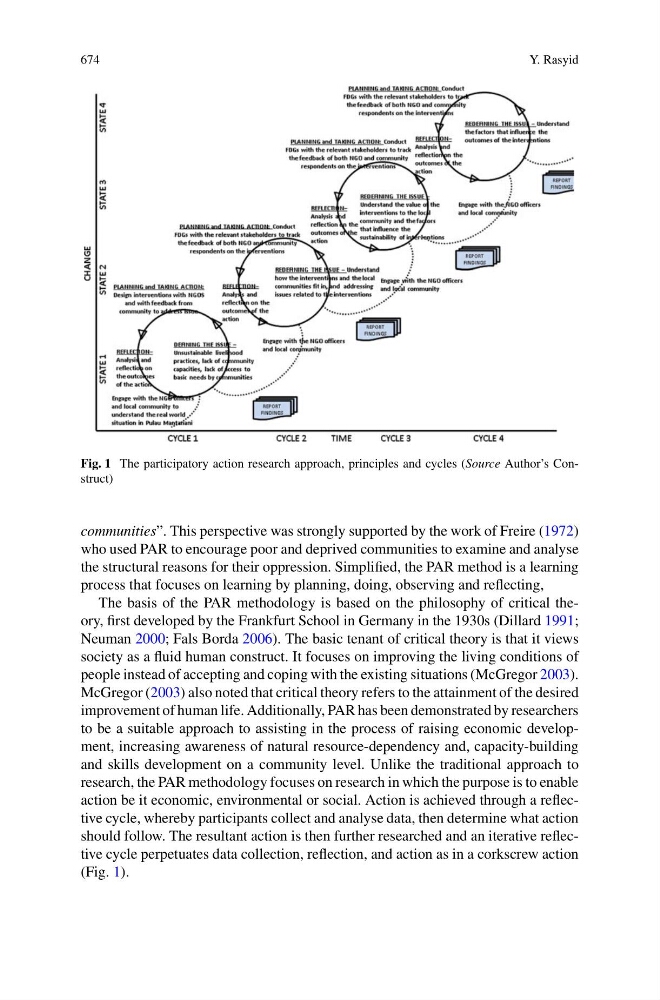
Fig. 1 The participatory action research approach, principles and cycles (Source Author’s Construct)
communities”. This perspective was strongly supported by the work of Freire (1972)
who used PAR to encourage poor and deprived communities to examine and analyse
the structural reasons for their oppression. Simplified, the PAR method is a learning
process that focuses on learning by planning, doing, observing and reflecting,
The basis of the PAR methodology is based on the philosophy of critical theory, first developed by the Frankfurt School in Germany in the 1930s (Dillard 1991;
Neuman 2000; Fals Borda 2006). The basic tenant of critical theory is that it views
society as a fluid human construct. It focuses on improving the living conditions of
people instead of accepting and coping with the existing situations (McGregor 2003).
McGregor (2003) also noted that critical theory refers to the attainment of the desired
improvement of human life. Additionally, PAR has been demonstrated by researchers
to be a suitable approach to assisting in the process of raising economic development, increasing awareness of natural resource-dependency and, capacity-building
and skills development on a community level. Unlike the traditional approach to
research, the PAR methodology focuses on research in which the purpose is to enable
action be it economic, environmental or social. Action is achieved through a reflective cycle, whereby participants collect and analyse data, then determine what action
should follow. The resultant action is then further researched and an iterative reflective cycle perpetuates data collection, reflection, and action as in a corkscrew action
(Fig. 1).