

Building Collaborative Partnerships: An Example …
633
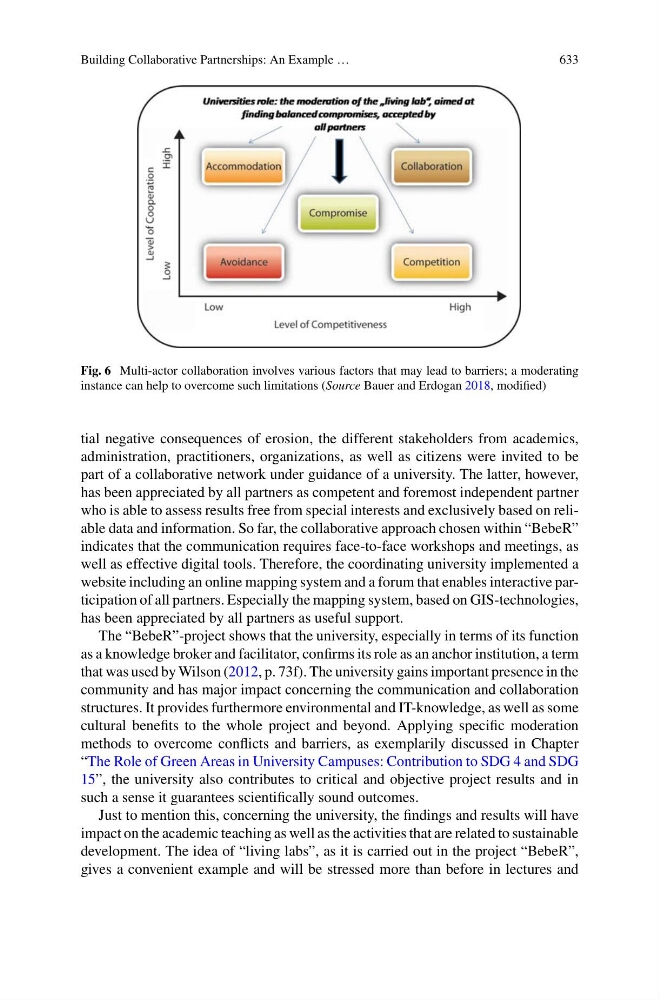
Fig. 6 Multi-actor collaboration involves various factors that may lead to barriers; a moderating
instance can help to overcome such limitations (Source Bauer and Erdogan 2018, modified)
tial negative consequences of erosion, the different stakeholders from academics,
administration, practitioners, organizations, as well as citizens were invited to be
part of a collaborative network under guidance of a university. The latter, however,
has been appreciated by all partners as competent and foremost independent partner
who is able to assess results free from special interests and exclusively based on reliable data and information. So far, the collaborative approach chosen within “BebeR”
indicates that the communication requires face-to-face workshops and meetings, as
well as effective digital tools. Therefore, the coordinating university implemented a
website including an online mapping system and a forum that enables interactive participation of all partners. Especially the mapping system, based on GIS-technologies,
has been appreciated by all partners as useful support.
The “BebeR”-project shows that the university, especially in terms of its function
as a knowledge broker and facilitator, confirms its role as an anchor institution, a term
that was used by Wilson (2012, p. 73f). The university gains important presence in the
community and has major impact concerning the communication and collaboration
structures. It provides furthermore environmental and IT-knowledge, as well as some
cultural benefits to the whole project and beyond. Applying specific moderation
methods to overcome conflicts and barriers, as exemplarily discussed in Chapter
“The Role of Green Areas in University Campuses: Contribution to SDG 4 and SDG
15”, the university also contributes to critical and objective project results and in
such a sense it guarantees scientifically sound outcomes.
Just to mention this, concerning the university, the findings and results will have
impact on the academic teaching as well as the activities that are related to sustainable
development. The idea of “living labs”, as it is carried out in the project “BebeR”,
gives a convenient example and will be stressed more than before in lectures and