

Building Collaborative Partnerships: An Example …
631
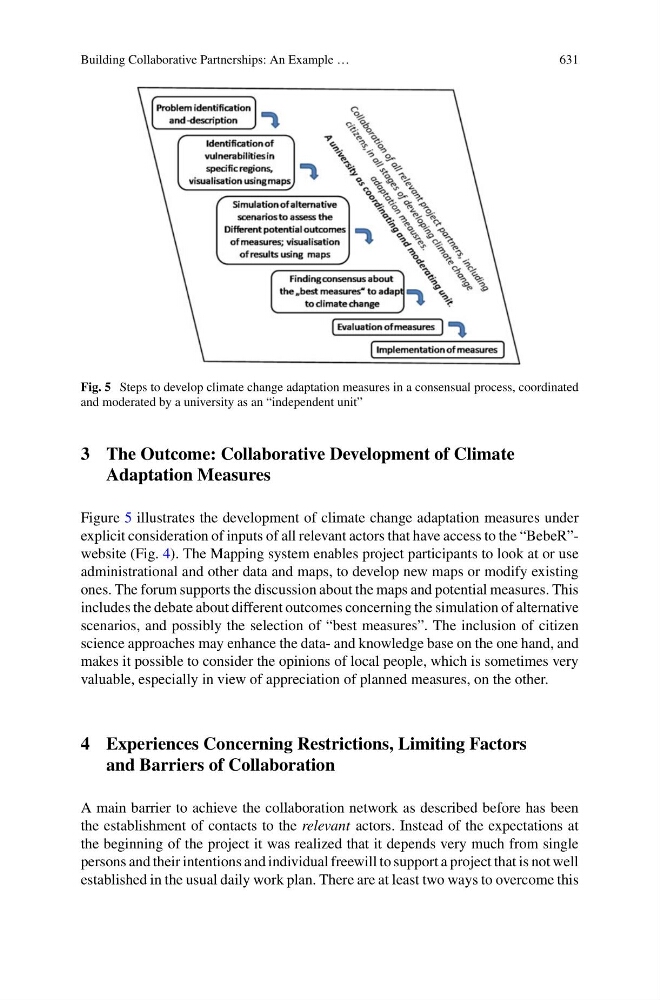
Fig. 5 Steps to develop climate change adaptation measures in a consensual process, coordinated
and moderated by a university as an “independent unit”
3 The Outcome: Collaborative Development of Climate
Adaptation Measures
Figure 5 illustrates the development of climate change adaptation measures under
explicit consideration of inputs of all relevant actors that have access to the “BebeR”website (Fig. 4). The Mapping system enables project participants to look at or use
administrational and other data and maps, to develop new maps or modify existing
ones. The forum supports the discussion about the maps and potential measures. This
includes the debate about different outcomes concerning the simulation of alternative
scenarios, and possibly the selection of “best measures”. The inclusion of citizen
science approaches may enhance the data- and knowledge base on the one hand, and
makes it possible to consider the opinions of local people, which is sometimes very
valuable, especially in view of appreciation of planned measures, on the other.
4 Experiences Concerning Restrictions, Limiting Factors
and Barriers of Collaboration
A main barrier to achieve the collaboration network as described before has been
the establishment of contacts to the relevant actors. Instead of the expectations at
the beginning of the project it was realized that it depends very much from single
persons and their intentions and individual freewill to support a project that is not well
established in the usual daily work plan. There are at least two ways to overcome this