

624
H. Pundt and A. Heilmann
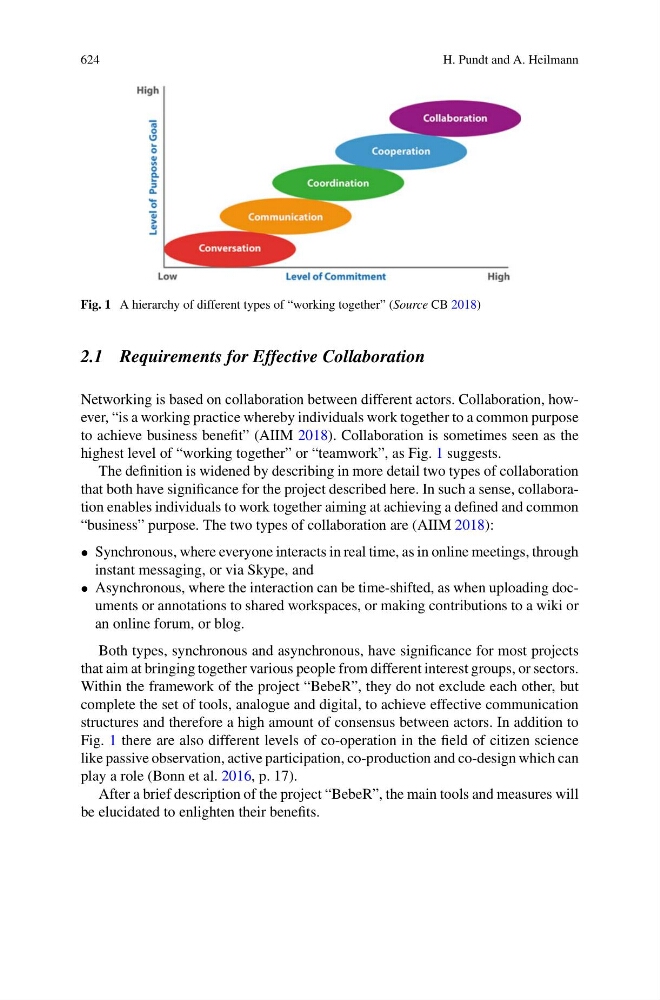
Fig. 1 A hierarchy of different types of “working together” (Source CB 2018)
2.1 Requirements for Effective Collaboration
Networking is based on collaboration between different actors. Collaboration, however, “is a working practice whereby individuals work together to a common purpose
to achieve business benefit” (AIIM 2018). Collaboration is sometimes seen as the
highest level of “working together” or “teamwork”, as Fig. 1 suggests.
The definition is widened by describing in more detail two types of collaboration
that both have significance for the project described here. In such a sense, collaboration enables individuals to work together aiming at achieving a defined and common
“business” purpose. The two types of collaboration are (AIIM 2018):
• Synchronous, where everyone interacts in real time, as in online meetings, through
instant messaging, or via Skype, and
• Asynchronous, where the interaction can be time-shifted, as when uploading documents or annotations to shared workspaces, or making contributions to a wiki or
an online forum, or blog.
Both types, synchronous and asynchronous, have significance for most projects
that aim at bringing together various people from different interest groups, or sectors.
Within the framework of the project “BebeR”, they do not exclude each other, but
complete the set of tools, analogue and digital, to achieve effective communication
structures and therefore a high amount of consensus between actors. In addition to
Fig. 1 there are also different levels of co-operation in the field of citizen science
like passive observation, active participation, co-production and co-design which can
play a role (Bonn et al. 2016, p. 17).
After a brief description of the project “BebeR”, the main tools and measures will
be elucidated to enlighten their benefits.
H. Pundt and A. Heilmann
Fig. 1 A hierarchy of different types of “working together” (Source CB 2018)
2.1 Requirements for Effective Collaboration
Networking is based on collaboration between different actors. Collaboration, however, “is a working practice whereby individuals work together to a common purpose
to achieve business benefit” (AIIM 2018). Collaboration is sometimes seen as the
highest level of “working together” or “teamwork”, as Fig. 1 suggests.
The definition is widened by describing in more detail two types of collaboration
that both have significance for the project described here. In such a sense, collaboration enables individuals to work together aiming at achieving a defined and common
“business” purpose. The two types of collaboration are (AIIM 2018):
• Synchronous, where everyone interacts in real time, as in online meetings, through
instant messaging, or via Skype, and
• Asynchronous, where the interaction can be time-shifted, as when uploading documents or annotations to shared workspaces, or making contributions to a wiki or
an online forum, or blog.
Both types, synchronous and asynchronous, have significance for most projects
that aim at bringing together various people from different interest groups, or sectors.
Within the framework of the project “BebeR”, they do not exclude each other, but
complete the set of tools, analogue and digital, to achieve effective communication
structures and therefore a high amount of consensus between actors. In addition to
Fig. 1 there are also different levels of co-operation in the field of citizen science
like passive observation, active participation, co-production and co-design which can
play a role (Bonn et al. 2016, p. 17).
After a brief description of the project “BebeR”, the main tools and measures will
be elucidated to enlighten their benefits.