

The Role of Green Areas in University Campuses …
49
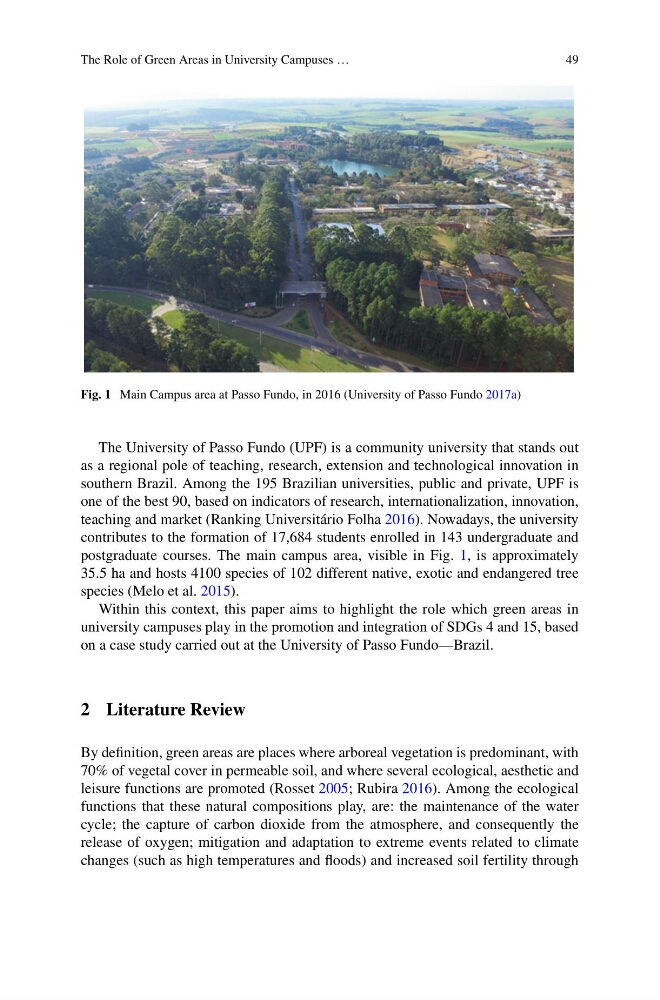
Fig. 1 Main Campus area at Passo Fundo, in 2016 (University of Passo Fundo 2017a)
The University of Passo Fundo (UPF) is a community university that stands out
as a regional pole of teaching, research, extension and technological innovation in
southern Brazil. Among the 195 Brazilian universities, public and private, UPF is
one of the best 90, based on indicators of research, internationalization, innovation,
teaching and market (Ranking Universitário Folha 2016). Nowadays, the university
contributes to the formation of 17,684 students enrolled in 143 undergraduate and
postgraduate courses. The main campus area, visible in Fig. 1, is approximately
35.5 ha and hosts 4100 species of 102 different native, exotic and endangered tree
species (Melo et al. 2015).
Within this context, this paper aims to highlight the role which green areas in
university campuses play in the promotion and integration of SDGs 4 and 15, based
on a case study carried out at the University of Passo Fundo—Brazil.
2 Literature Review
By definition, green areas are places where arboreal vegetation is predominant, with
70% of vegetal cover in permeable soil, and where several ecological, aesthetic and
leisure functions are promoted (Rosset 2005; Rubira 2016). Among the ecological
functions that these natural compositions play, are: the maintenance of the water
cycle; the capture of carbon dioxide from the atmosphere, and consequently the
release of oxygen; mitigation and adaptation to extreme events related to climate
changes (such as high temperatures and floods) and increased soil fertility through
49
Fig. 1 Main Campus area at Passo Fundo, in 2016 (University of Passo Fundo 2017a)
The University of Passo Fundo (UPF) is a community university that stands out
as a regional pole of teaching, research, extension and technological innovation in
southern Brazil. Among the 195 Brazilian universities, public and private, UPF is
one of the best 90, based on indicators of research, internationalization, innovation,
teaching and market (Ranking Universitário Folha 2016). Nowadays, the university
contributes to the formation of 17,684 students enrolled in 143 undergraduate and
postgraduate courses. The main campus area, visible in Fig. 1, is approximately
35.5 ha and hosts 4100 species of 102 different native, exotic and endangered tree
species (Melo et al. 2015).
Within this context, this paper aims to highlight the role which green areas in
university campuses play in the promotion and integration of SDGs 4 and 15, based
on a case study carried out at the University of Passo Fundo—Brazil.
2 Literature Review
By definition, green areas are places where arboreal vegetation is predominant, with
70% of vegetal cover in permeable soil, and where several ecological, aesthetic and
leisure functions are promoted (Rosset 2005; Rubira 2016). Among the ecological
functions that these natural compositions play, are: the maintenance of the water
cycle; the capture of carbon dioxide from the atmosphere, and consequently the
release of oxygen; mitigation and adaptation to extreme events related to climate
changes (such as high temperatures and floods) and increased soil fertility through