

Education for Sustainable Development: The STEM …
575
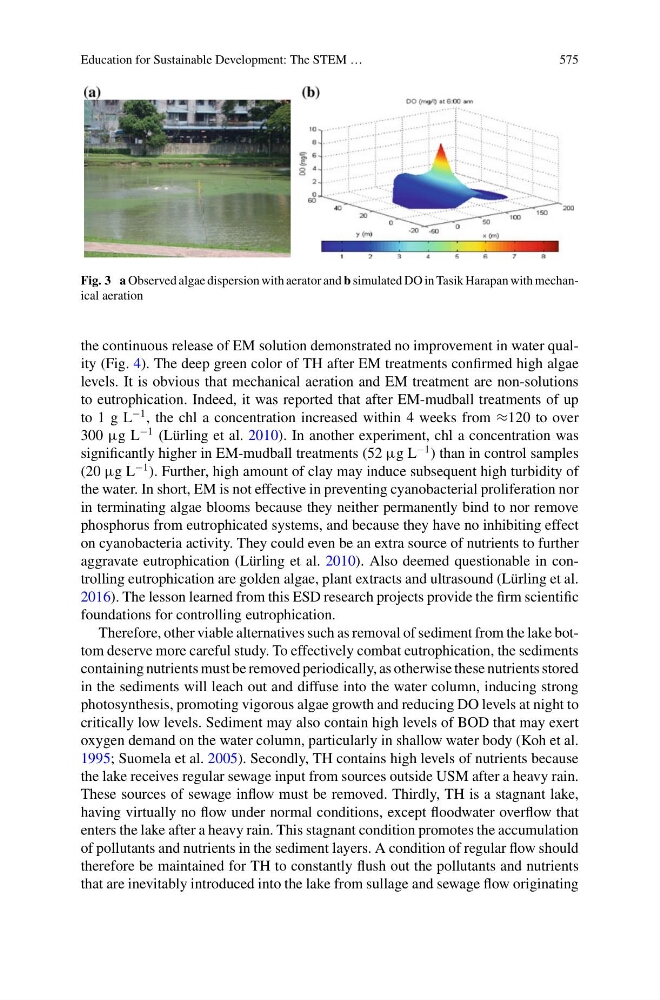
Fig. 3 a Observed algae dispersion with aerator and b simulated DO in Tasik Harapan with mechanical aeration
the continuous release of EM solution demonstrated no improvement in water quality (Fig. 4). The deep green color of TH after EM treatments confirmed high algae
levels. It is obvious that mechanical aeration and EM treatment are non-solutions
to eutrophication. Indeed, it was reported that after EM-mudball treatments of up
to 1 g L
−1 , the chl a concentration increased within 4 weeks from ≈120 to over
300 µg L
−1 (Lürling et al. 2010). In another experiment, chl a concentration was
significantly higher in EM-mudball treatments (52 µg L
−1 ) than in control samples
(20 µg L
−1 ). Further, high amount of clay may induce subsequent high turbidity of
the water. In short, EM is not effective in preventing cyanobacterial proliferation nor
in terminating algae blooms because they neither permanently bind to nor remove
phosphorus from eutrophicated systems, and because they have no inhibiting effect
on cyanobacteria activity. They could even be an extra source of nutrients to further
aggravate eutrophication (Lürling et al. 2010). Also deemed questionable in controlling eutrophication are golden algae, plant extracts and ultrasound (Lürling et al.
2016). The lesson learned from this ESD research projects provide the firm scientific
foundations for controlling eutrophication.
Therefore, other viable alternatives such as removal of sediment from the lake bottom deserve more careful study. To effectively combat eutrophication, the sediments
containing nutrients must be removed periodically, as otherwise these nutrients stored
in the sediments will leach out and diffuse into the water column, inducing strong
photosynthesis, promoting vigorous algae growth and reducing DO levels at night to
critically low levels. Sediment may also contain high levels of BOD that may exert
oxygen demand on the water column, particularly in shallow water body (Koh et al.
1995; Suomela et al. 2005). Secondly, TH contains high levels of nutrients because
the lake receives regular sewage input from sources outside USM after a heavy rain.
These sources of sewage inflow must be removed. Thirdly, TH is a stagnant lake,
having virtually no flow under normal conditions, except floodwater overflow that
enters the lake after a heavy rain. This stagnant condition promotes the accumulation
of pollutants and nutrients in the sediment layers. A condition of regular flow should
therefore be maintained for TH to constantly flush out the pollutants and nutrients
that are inevitably introduced into the lake from sullage and sewage flow originating
575
Fig. 3 a Observed algae dispersion with aerator and b simulated DO in Tasik Harapan with mechanical aeration
the continuous release of EM solution demonstrated no improvement in water quality (Fig. 4). The deep green color of TH after EM treatments confirmed high algae
levels. It is obvious that mechanical aeration and EM treatment are non-solutions
to eutrophication. Indeed, it was reported that after EM-mudball treatments of up
to 1 g L
−1 , the chl a concentration increased within 4 weeks from ≈120 to over
300 µg L
−1 (Lürling et al. 2010). In another experiment, chl a concentration was
significantly higher in EM-mudball treatments (52 µg L
−1 ) than in control samples
(20 µg L
−1 ). Further, high amount of clay may induce subsequent high turbidity of
the water. In short, EM is not effective in preventing cyanobacterial proliferation nor
in terminating algae blooms because they neither permanently bind to nor remove
phosphorus from eutrophicated systems, and because they have no inhibiting effect
on cyanobacteria activity. They could even be an extra source of nutrients to further
aggravate eutrophication (Lürling et al. 2010). Also deemed questionable in controlling eutrophication are golden algae, plant extracts and ultrasound (Lürling et al.
2016). The lesson learned from this ESD research projects provide the firm scientific
foundations for controlling eutrophication.
Therefore, other viable alternatives such as removal of sediment from the lake bottom deserve more careful study. To effectively combat eutrophication, the sediments
containing nutrients must be removed periodically, as otherwise these nutrients stored
in the sediments will leach out and diffuse into the water column, inducing strong
photosynthesis, promoting vigorous algae growth and reducing DO levels at night to
critically low levels. Sediment may also contain high levels of BOD that may exert
oxygen demand on the water column, particularly in shallow water body (Koh et al.
1995; Suomela et al. 2005). Secondly, TH contains high levels of nutrients because
the lake receives regular sewage input from sources outside USM after a heavy rain.
These sources of sewage inflow must be removed. Thirdly, TH is a stagnant lake,
having virtually no flow under normal conditions, except floodwater overflow that
enters the lake after a heavy rain. This stagnant condition promotes the accumulation
of pollutants and nutrients in the sediment layers. A condition of regular flow should
therefore be maintained for TH to constantly flush out the pollutants and nutrients
that are inevitably introduced into the lake from sullage and sewage flow originating