

558
J. Jodoin and J. Singer
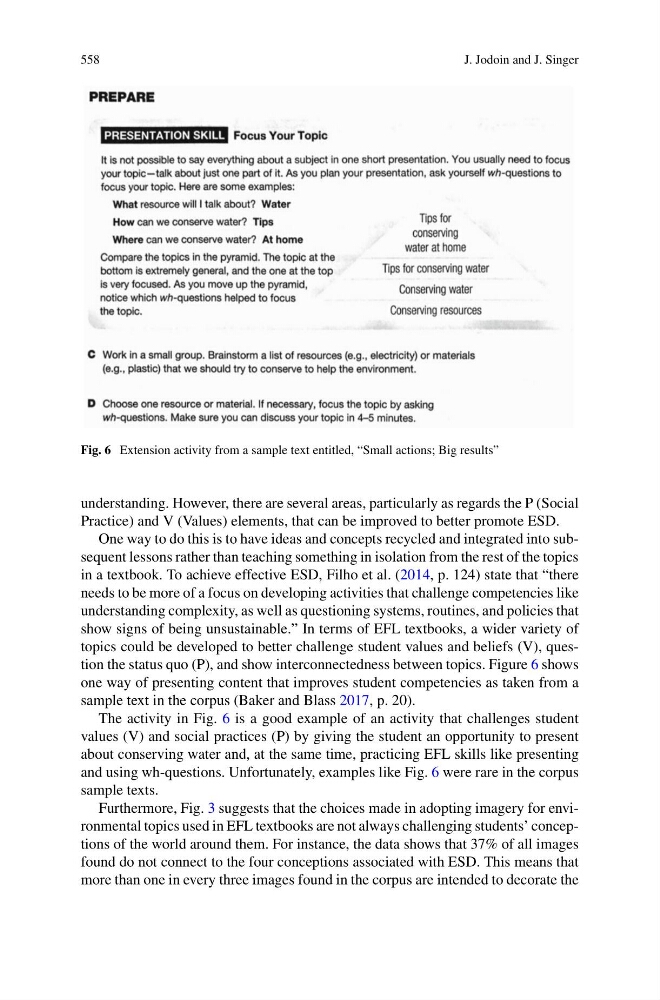
Fig. 6 Extension activity from a sample text entitled, “Small actions; Big results”
understanding. However, there are several areas, particularly as regards the P (Social
Practice) and V (Values) elements, that can be improved to better promote ESD.
One way to do this is to have ideas and concepts recycled and integrated into subsequent lessons rather than teaching something in isolation from the rest of the topics
in a textbook. To achieve effective ESD, Filho et al. (2014, p. 124) state that “there
needs to be more of a focus on developing activities that challenge competencies like
understanding complexity, as well as questioning systems, routines, and policies that
show signs of being unsustainable.” In terms of EFL textbooks, a wider variety of
topics could be developed to better challenge student values and beliefs (V), question the status quo (P), and show interconnectedness between topics. Figure 6 shows
one way of presenting content that improves student competencies as taken from a
sample text in the corpus (Baker and Blass 2017, p. 20).
The activity in Fig. 6 is a good example of an activity that challenges student
values (V) and social practices (P) by giving the student an opportunity to present
about conserving water and, at the same time, practicing EFL skills like presenting
and using wh-questions. Unfortunately, examples like Fig. 6 were rare in the corpus
sample texts.
Furthermore, Fig. 3 suggests that the choices made in adopting imagery for environmental topics used in EFL textbooks are not always challenging students’ conceptions of the world around them. For instance, the data shows that 37% of all images
found do not connect to the four conceptions associated with ESD. This means that
more than one in every three images found in the corpus are intended to decorate the
J. Jodoin and J. Singer
Fig. 6 Extension activity from a sample text entitled, “Small actions; Big results”
understanding. However, there are several areas, particularly as regards the P (Social
Practice) and V (Values) elements, that can be improved to better promote ESD.
One way to do this is to have ideas and concepts recycled and integrated into subsequent lessons rather than teaching something in isolation from the rest of the topics
in a textbook. To achieve effective ESD, Filho et al. (2014, p. 124) state that “there
needs to be more of a focus on developing activities that challenge competencies like
understanding complexity, as well as questioning systems, routines, and policies that
show signs of being unsustainable.” In terms of EFL textbooks, a wider variety of
topics could be developed to better challenge student values and beliefs (V), question the status quo (P), and show interconnectedness between topics. Figure 6 shows
one way of presenting content that improves student competencies as taken from a
sample text in the corpus (Baker and Blass 2017, p. 20).
The activity in Fig. 6 is a good example of an activity that challenges student
values (V) and social practices (P) by giving the student an opportunity to present
about conserving water and, at the same time, practicing EFL skills like presenting
and using wh-questions. Unfortunately, examples like Fig. 6 were rare in the corpus
sample texts.
Furthermore, Fig. 3 suggests that the choices made in adopting imagery for environmental topics used in EFL textbooks are not always challenging students’ conceptions of the world around them. For instance, the data shows that 37% of all images
found do not connect to the four conceptions associated with ESD. This means that
more than one in every three images found in the corpus are intended to decorate the