

490
W. Kanchanamukda and L. Falvey
Thaksin University
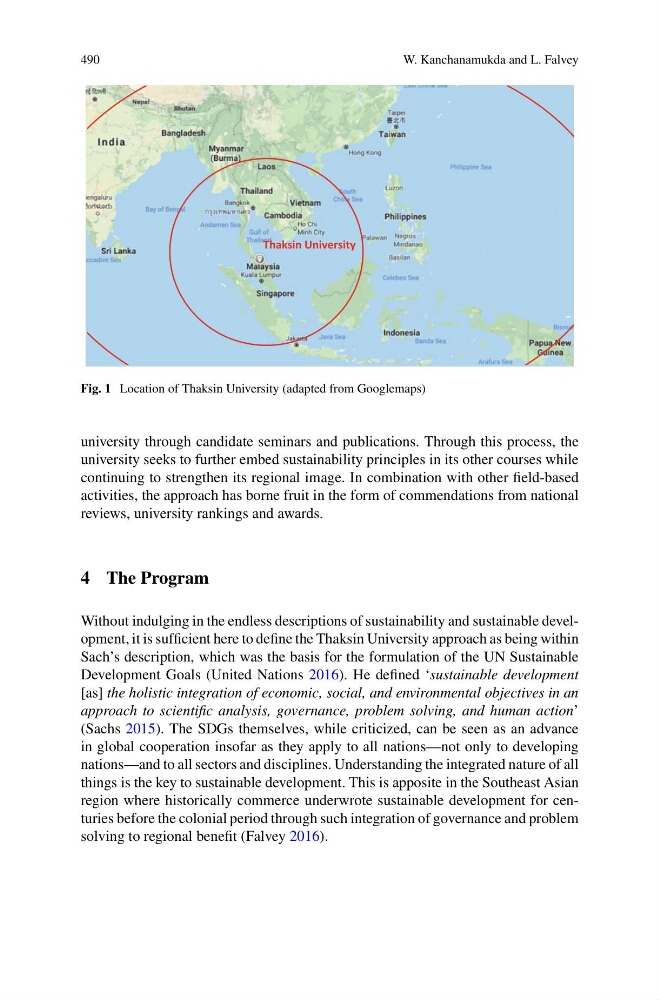
Fig. 1 Location of Thaksin University (adapted from Googlemaps)
university through candidate seminars and publications. Through this process, the
university seeks to further embed sustainability principles in its other courses while
continuing to strengthen its regional image. In combination with other field-based
activities, the approach has borne fruit in the form of commendations from national
reviews, university rankings and awards.
4 The Program
Without indulging in the endless descriptions of sustainability and sustainable development, it is sufficient here to define the Thaksin University approach as being within
Sach’s description, which was the basis for the formulation of the UN Sustainable
Development Goals (United Nations 2016). He defined ‘sustainable development
[as] the holistic integration of economic, social, and environmental objectives in an
approach to scientific analysis, governance, problem solving, and human action’
(Sachs 2015). The SDGs themselves, while criticized, can be seen as an advance
in global cooperation insofar as they apply to all nations—not only to developing
nations—and to all sectors and disciplines. Understanding the integrated nature of all
things is the key to sustainable development. This is apposite in the Southeast Asian
region where historically commerce underwrote sustainable development for centuries before the colonial period through such integration of governance and problem
solving to regional benefit (Falvey 2016).
W. Kanchanamukda and L. Falvey
Thaksin University
Fig. 1 Location of Thaksin University (adapted from Googlemaps)
university through candidate seminars and publications. Through this process, the
university seeks to further embed sustainability principles in its other courses while
continuing to strengthen its regional image. In combination with other field-based
activities, the approach has borne fruit in the form of commendations from national
reviews, university rankings and awards.
4 The Program
Without indulging in the endless descriptions of sustainability and sustainable development, it is sufficient here to define the Thaksin University approach as being within
Sach’s description, which was the basis for the formulation of the UN Sustainable
Development Goals (United Nations 2016). He defined ‘sustainable development
[as] the holistic integration of economic, social, and environmental objectives in an
approach to scientific analysis, governance, problem solving, and human action’
(Sachs 2015). The SDGs themselves, while criticized, can be seen as an advance
in global cooperation insofar as they apply to all nations—not only to developing
nations—and to all sectors and disciplines. Understanding the integrated nature of all
things is the key to sustainable development. This is apposite in the Southeast Asian
region where historically commerce underwrote sustainable development for centuries before the colonial period through such integration of governance and problem
solving to regional benefit (Falvey 2016).