

36
A. L. Salvia and L. L. Brandli
0
1
2
3
4
5
6
7
8
Applied Energy
Journal of Cleaner Production
Energy Conversion and Management
Energy
Renewable and Sustainable Energy Reviews
Renewable Energy
Energy Policy
Energy and Buildings
Building and Environment
Solar Energy
Inter. Journal of Hydrogen Energy
Applied Thermal Engineering
Energies
Sustainability
Inter. Journal of Sustainability in Higher Education
5-Year Impact Factor
Impact Factor 2016
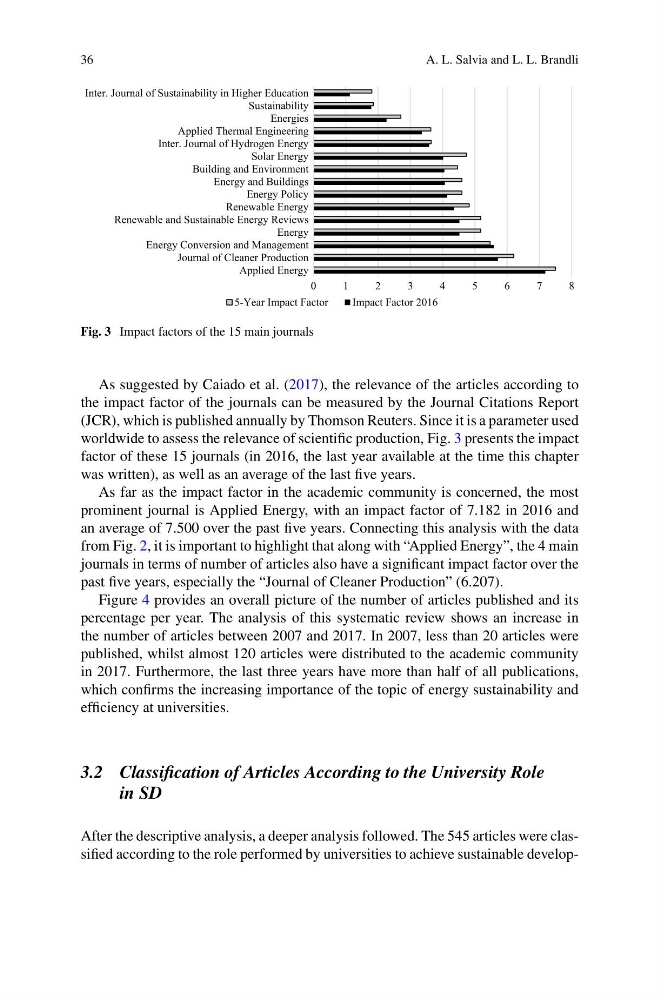
Fig. 3 Impact factors of the 15 main journals
As suggested by Caiado et al. (2017), the relevance of the articles according to
the impact factor of the journals can be measured by the Journal Citations Report
(JCR), which is published annually by Thomson Reuters. Since it is a parameter used
worldwide to assess the relevance of scientific production, Fig. 3 presents the impact
factor of these 15 journals (in 2016, the last year available at the time this chapter
was written), as well as an average of the last five years.
As far as the impact factor in the academic community is concerned, the most
prominent journal is Applied Energy, with an impact factor of 7.182 in 2016 and
an average of 7.500 over the past five years. Connecting this analysis with the data
from Fig. 2, it is important to highlight that along with “Applied Energy”, the 4 main
journals in terms of number of articles also have a significant impact factor over the
past five years, especially the “Journal of Cleaner Production” (6.207).
Figure 4 provides an overall picture of the number of articles published and its
percentage per year. The analysis of this systematic review shows an increase in
the number of articles between 2007 and 2017. In 2007, less than 20 articles were
published, whilst almost 120 articles were distributed to the academic community
in 2017. Furthermore, the last three years have more than half of all publications,
which confirms the increasing importance of the topic of energy sustainability and
efficiency at universities.
3.2 Classification of Articles According to the University Role
in SD
After the descriptive analysis, a deeper analysis followed. The 545 articles were classified according to the role performed by universities to achieve sustainable develop-
A. L. Salvia and L. L. Brandli
0
1
2
3
4
5
6
7
8
Applied Energy
Journal of Cleaner Production
Energy Conversion and Management
Energy
Renewable and Sustainable Energy Reviews
Renewable Energy
Energy Policy
Energy and Buildings
Building and Environment
Solar Energy
Inter. Journal of Hydrogen Energy
Applied Thermal Engineering
Energies
Sustainability
Inter. Journal of Sustainability in Higher Education
5-Year Impact Factor
Impact Factor 2016
Fig. 3 Impact factors of the 15 main journals
As suggested by Caiado et al. (2017), the relevance of the articles according to
the impact factor of the journals can be measured by the Journal Citations Report
(JCR), which is published annually by Thomson Reuters. Since it is a parameter used
worldwide to assess the relevance of scientific production, Fig. 3 presents the impact
factor of these 15 journals (in 2016, the last year available at the time this chapter
was written), as well as an average of the last five years.
As far as the impact factor in the academic community is concerned, the most
prominent journal is Applied Energy, with an impact factor of 7.182 in 2016 and
an average of 7.500 over the past five years. Connecting this analysis with the data
from Fig. 2, it is important to highlight that along with “Applied Energy”, the 4 main
journals in terms of number of articles also have a significant impact factor over the
past five years, especially the “Journal of Cleaner Production” (6.207).
Figure 4 provides an overall picture of the number of articles published and its
percentage per year. The analysis of this systematic review shows an increase in
the number of articles between 2007 and 2017. In 2007, less than 20 articles were
published, whilst almost 120 articles were distributed to the academic community
in 2017. Furthermore, the last three years have more than half of all publications,
which confirms the increasing importance of the topic of energy sustainability and
efficiency at universities.
3.2 Classification of Articles According to the University Role
in SD
After the descriptive analysis, a deeper analysis followed. The 545 articles were classified according to the role performed by universities to achieve sustainable develop-