

Training Competencies for Sustainable Thinking Through …
367
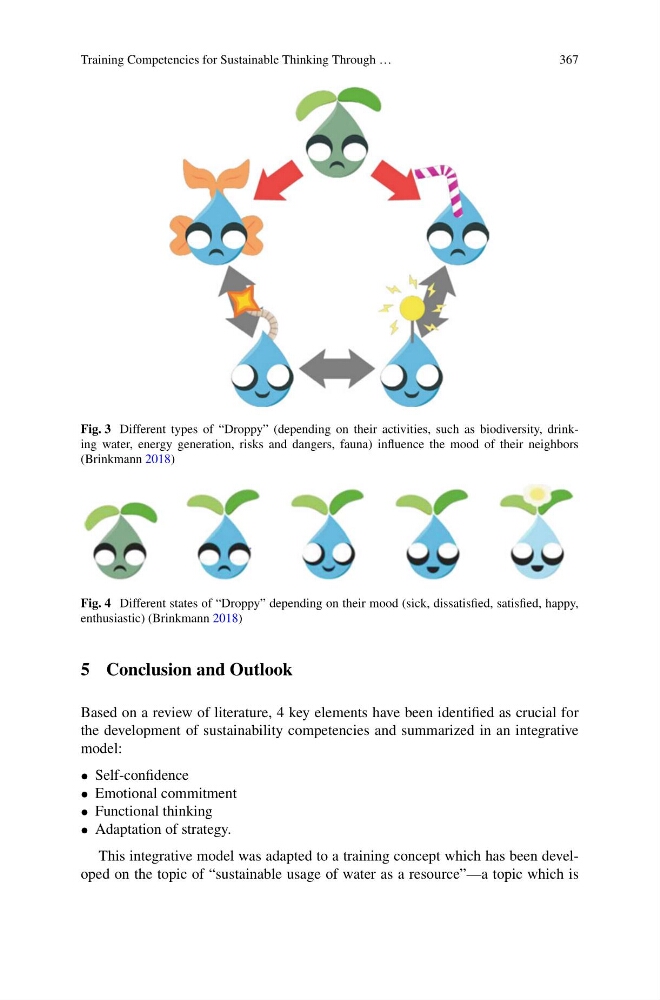
Fig. 3 Different types of “Droppy” (depending on their activities, such as biodiversity, drinking water, energy generation, risks and dangers, fauna) influence the mood of their neighbors
(Brinkmann 2018)
Fig. 4 Different states of “Droppy” depending on their mood (sick, dissatisfied, satisfied, happy,
enthusiastic) (Brinkmann 2018)
5 Conclusion and Outlook
Based on a review of literature, 4 key elements have been identified as crucial for
the development of sustainability competencies and summarized in an integrative
model:
• Self-confidence
• Emotional commitment
• Functional thinking
• Adaptation of strategy.
This integrative model was adapted to a training concept which has been developed on the topic of “sustainable usage of water as a resource”—a topic which is
367
Fig. 3 Different types of “Droppy” (depending on their activities, such as biodiversity, drinking water, energy generation, risks and dangers, fauna) influence the mood of their neighbors
(Brinkmann 2018)
Fig. 4 Different states of “Droppy” depending on their mood (sick, dissatisfied, satisfied, happy,
enthusiastic) (Brinkmann 2018)
5 Conclusion and Outlook
Based on a review of literature, 4 key elements have been identified as crucial for
the development of sustainability competencies and summarized in an integrative
model:
• Self-confidence
• Emotional commitment
• Functional thinking
• Adaptation of strategy.
This integrative model was adapted to a training concept which has been developed on the topic of “sustainable usage of water as a resource”—a topic which is