

362
U. Starker et al.
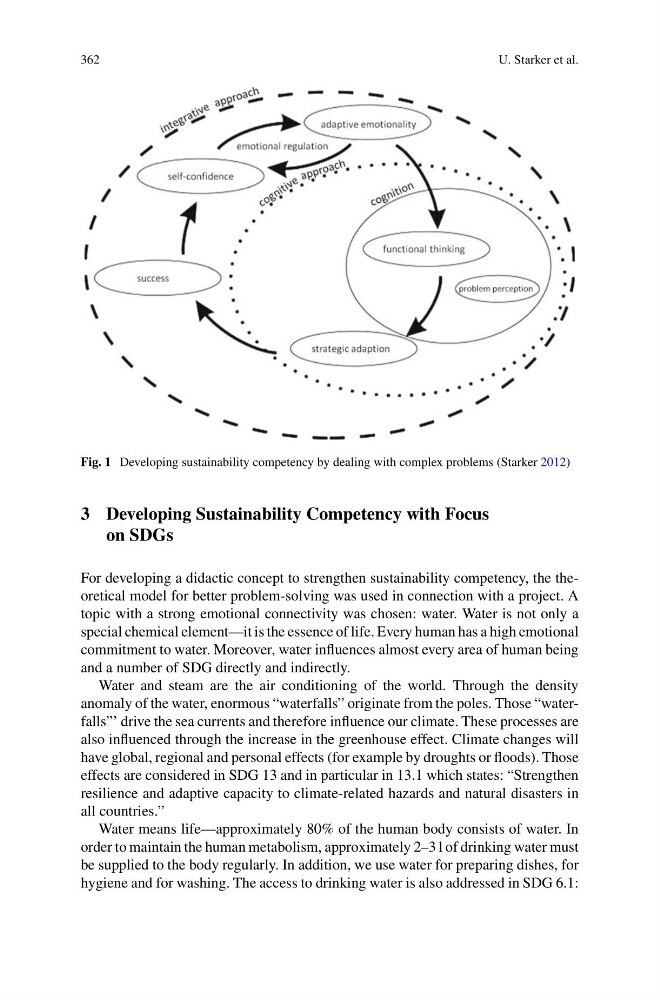
Fig. 1 Developing sustainability competency by dealing with complex problems (Starker 2012)
3 Developing Sustainability Competency with Focus
on SDGs
For developing a didactic concept to strengthen sustainability competency, the theoretical model for better problem-solving was used in connection with a project. A
topic with a strong emotional connectivity was chosen: water. Water is not only a
special chemical element—it is the essence of life. Every human has a high emotional
commitment to water. Moreover, water influences almost every area of human being
and a number of SDG directly and indirectly.
Water and steam are the air conditioning of the world. Through the density
anomaly of the water, enormous “waterfalls” originate from the poles. Those “waterfalls”’ drive the sea currents and therefore influence our climate. These processes are
also influenced through the increase in the greenhouse effect. Climate changes will
have global, regional and personal effects (for example by droughts or floods). Those
effects are considered in SDG 13 and in particular in 13.1 which states: “Strengthen
resilience and adaptive capacity to climate-related hazards and natural disasters in
all countries.”
Water means life—approximately 80% of the human body consists of water. In
order to maintain the human metabolism, approximately 2–3 l of drinking water must
be supplied to the body regularly. In addition, we use water for preparing dishes, for
hygiene and for washing. The access to drinking water is also addressed in SDG 6.1:
U. Starker et al.
Fig. 1 Developing sustainability competency by dealing with complex problems (Starker 2012)
3 Developing Sustainability Competency with Focus
on SDGs
For developing a didactic concept to strengthen sustainability competency, the theoretical model for better problem-solving was used in connection with a project. A
topic with a strong emotional connectivity was chosen: water. Water is not only a
special chemical element—it is the essence of life. Every human has a high emotional
commitment to water. Moreover, water influences almost every area of human being
and a number of SDG directly and indirectly.
Water and steam are the air conditioning of the world. Through the density
anomaly of the water, enormous “waterfalls” originate from the poles. Those “waterfalls”’ drive the sea currents and therefore influence our climate. These processes are
also influenced through the increase in the greenhouse effect. Climate changes will
have global, regional and personal effects (for example by droughts or floods). Those
effects are considered in SDG 13 and in particular in 13.1 which states: “Strengthen
resilience and adaptive capacity to climate-related hazards and natural disasters in
all countries.”
Water means life—approximately 80% of the human body consists of water. In
order to maintain the human metabolism, approximately 2–3 l of drinking water must
be supplied to the body regularly. In addition, we use water for preparing dishes, for
hygiene and for washing. The access to drinking water is also addressed in SDG 6.1: