

352
O. Ahel and K. Lingenau
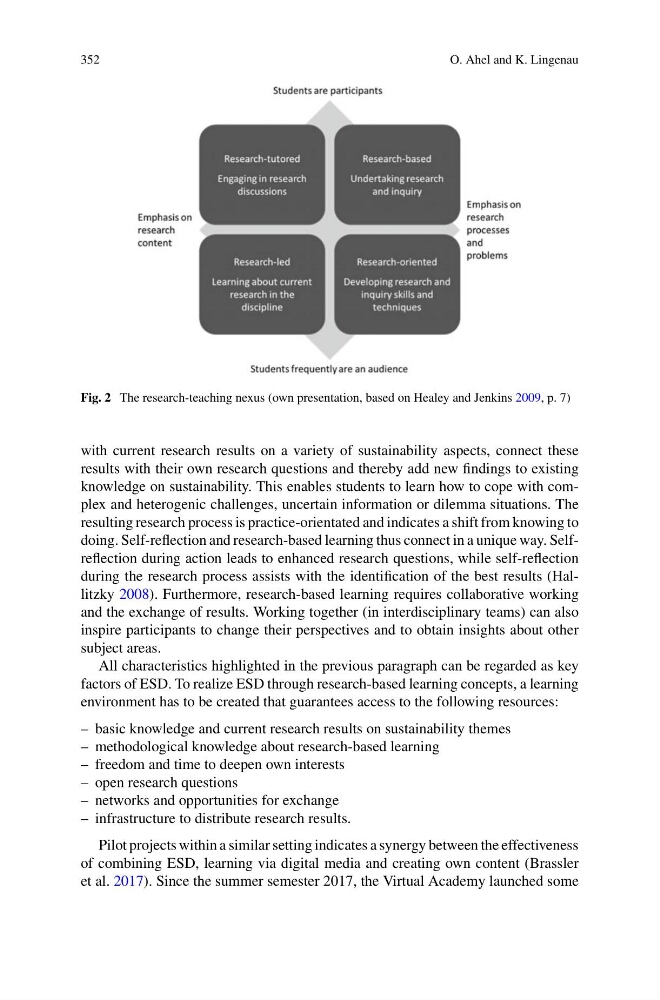
Fig. 2 The research-teaching nexus (own presentation, based on Healey and Jenkins 2009, p. 7)
with current research results on a variety of sustainability aspects, connect these
results with their own research questions and thereby add new findings to existing
knowledge on sustainability. This enables students to learn how to cope with complex and heterogenic challenges, uncertain information or dilemma situations. The
resulting research process is practice-orientated and indicates a shift from knowing to
doing. Self-reflection and research-based learning thus connect in a unique way. Selfreflection during action leads to enhanced research questions, while self-reflection
during the research process assists with the identification of the best results (Hallitzky 2008). Furthermore, research-based learning requires collaborative working
and the exchange of results. Working together (in interdisciplinary teams) can also
inspire participants to change their perspectives and to obtain insights about other
subject areas.
All characteristics highlighted in the previous paragraph can be regarded as key
factors of ESD. To realize ESD through research-based learning concepts, a learning
environment has to be created that guarantees access to the following resources:
– basic knowledge and current research results on sustainability themes
– methodological knowledge about research-based learning
– freedom and time to deepen own interests
– open research questions
– networks and opportunities for exchange
– infrastructure to distribute research results.
Pilot projects within a similar setting indicates a synergy between the effectiveness
of combining ESD, learning via digital media and creating own content (Brassler
et al. 2017). Since the summer semester 2017, the Virtual Academy launched some
O. Ahel and K. Lingenau
Fig. 2 The research-teaching nexus (own presentation, based on Healey and Jenkins 2009, p. 7)
with current research results on a variety of sustainability aspects, connect these
results with their own research questions and thereby add new findings to existing
knowledge on sustainability. This enables students to learn how to cope with complex and heterogenic challenges, uncertain information or dilemma situations. The
resulting research process is practice-orientated and indicates a shift from knowing to
doing. Self-reflection and research-based learning thus connect in a unique way. Selfreflection during action leads to enhanced research questions, while self-reflection
during the research process assists with the identification of the best results (Hallitzky 2008). Furthermore, research-based learning requires collaborative working
and the exchange of results. Working together (in interdisciplinary teams) can also
inspire participants to change their perspectives and to obtain insights about other
subject areas.
All characteristics highlighted in the previous paragraph can be regarded as key
factors of ESD. To realize ESD through research-based learning concepts, a learning
environment has to be created that guarantees access to the following resources:
– basic knowledge and current research results on sustainability themes
– methodological knowledge about research-based learning
– freedom and time to deepen own interests
– open research questions
– networks and opportunities for exchange
– infrastructure to distribute research results.
Pilot projects within a similar setting indicates a synergy between the effectiveness
of combining ESD, learning via digital media and creating own content (Brassler
et al. 2017). Since the summer semester 2017, the Virtual Academy launched some