

EDS Integrated Approach for Sustainability (EDS-IA) …
295
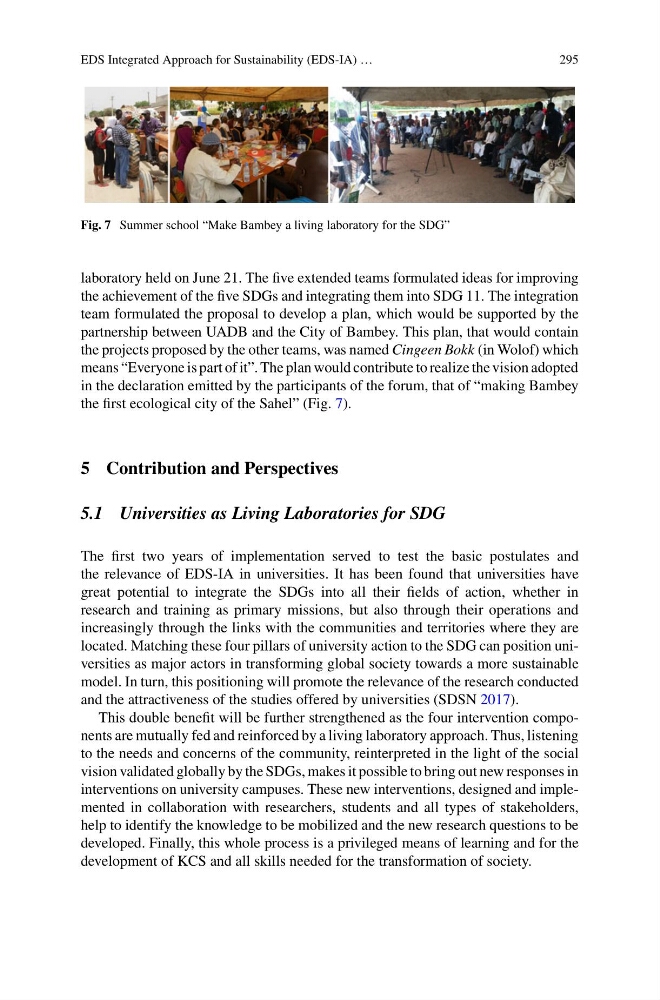
Fig. 7 Summer school “Make Bambey a living laboratory for the SDG”
laboratory held on June 21. The five extended teams formulated ideas for improving
the achievement of the five SDGs and integrating them into SDG 11. The integration
team formulated the proposal to develop a plan, which would be supported by the
partnership between UADB and the City of Bambey. This plan, that would contain
the projects proposed by the other teams, was named Cingeen Bokk (in Wolof) which
means “Everyone is part of it”. The plan would contribute to realize the vision adopted
in the declaration emitted by the participants of the forum, that of “making Bambey
the first ecological city of the Sahel” (Fig. 7).
5 Contribution and Perspectives
5.1 Universities as Living Laboratories for SDG
The first two years of implementation served to test the basic postulates and
the relevance of EDS-IA in universities. It has been found that universities have
great potential to integrate the SDGs into all their fields of action, whether in
research and training as primary missions, but also through their operations and
increasingly through the links with the communities and territories where they are
located. Matching these four pillars of university action to the SDG can position universities as major actors in transforming global society towards a more sustainable
model. In turn, this positioning will promote the relevance of the research conducted
and the attractiveness of the studies offered by universities (SDSN 2017).
This double benefit will be further strengthened as the four intervention components are mutually fed and reinforced by a living laboratory approach. Thus, listening
to the needs and concerns of the community, reinterpreted in the light of the social
vision validated globally by the SDGs, makes it possible to bring out new responses in
interventions on university campuses. These new interventions, designed and implemented in collaboration with researchers, students and all types of stakeholders,
help to identify the knowledge to be mobilized and the new research questions to be
developed. Finally, this whole process is a privileged means of learning and for the
development of KCS and all skills needed for the transformation of society.
295
Fig. 7 Summer school “Make Bambey a living laboratory for the SDG”
laboratory held on June 21. The five extended teams formulated ideas for improving
the achievement of the five SDGs and integrating them into SDG 11. The integration
team formulated the proposal to develop a plan, which would be supported by the
partnership between UADB and the City of Bambey. This plan, that would contain
the projects proposed by the other teams, was named Cingeen Bokk (in Wolof) which
means “Everyone is part of it”. The plan would contribute to realize the vision adopted
in the declaration emitted by the participants of the forum, that of “making Bambey
the first ecological city of the Sahel” (Fig. 7).
5 Contribution and Perspectives
5.1 Universities as Living Laboratories for SDG
The first two years of implementation served to test the basic postulates and
the relevance of EDS-IA in universities. It has been found that universities have
great potential to integrate the SDGs into all their fields of action, whether in
research and training as primary missions, but also through their operations and
increasingly through the links with the communities and territories where they are
located. Matching these four pillars of university action to the SDG can position universities as major actors in transforming global society towards a more sustainable
model. In turn, this positioning will promote the relevance of the research conducted
and the attractiveness of the studies offered by universities (SDSN 2017).
This double benefit will be further strengthened as the four intervention components are mutually fed and reinforced by a living laboratory approach. Thus, listening
to the needs and concerns of the community, reinterpreted in the light of the social
vision validated globally by the SDGs, makes it possible to bring out new responses in
interventions on university campuses. These new interventions, designed and implemented in collaboration with researchers, students and all types of stakeholders,
help to identify the knowledge to be mobilized and the new research questions to be
developed. Finally, this whole process is a privileged means of learning and for the
development of KCS and all skills needed for the transformation of society.