

256
G. Sonetti and P. Lombardi
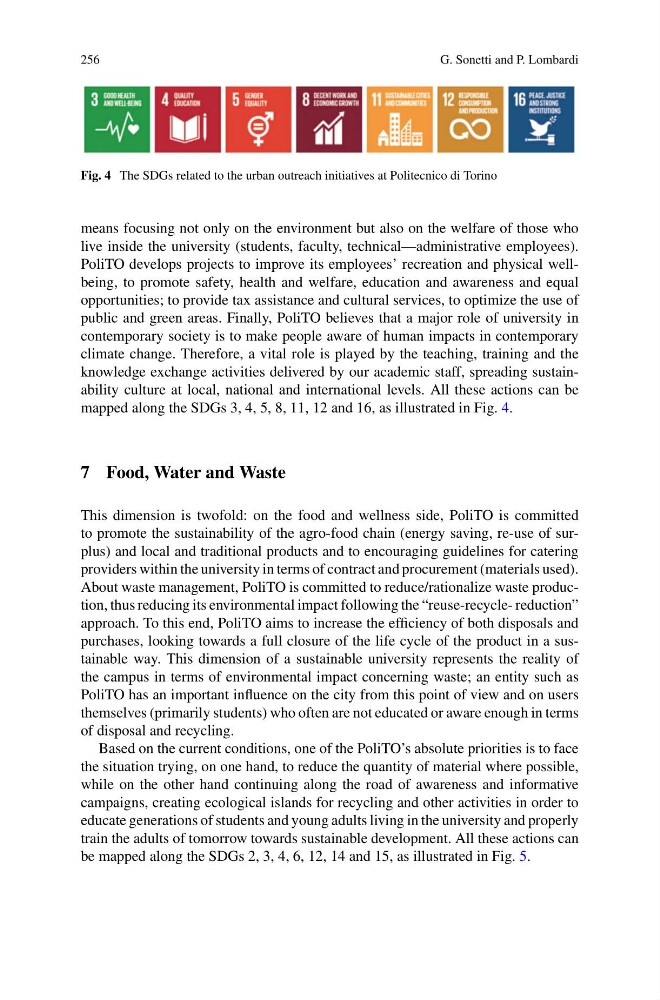
Fig. 4 The SDGs related to the urban outreach initiatives at Politecnico di Torino
means focusing not only on the environment but also on the welfare of those who
live inside the university (students, faculty, technical—administrative employees).
PoliTO develops projects to improve its employees’ recreation and physical wellbeing, to promote safety, health and welfare, education and awareness and equal
opportunities; to provide tax assistance and cultural services, to optimize the use of
public and green areas. Finally, PoliTO believes that a major role of university in
contemporary society is to make people aware of human impacts in contemporary
climate change. Therefore, a vital role is played by the teaching, training and the
knowledge exchange activities delivered by our academic staff, spreading sustainability culture at local, national and international levels. All these actions can be
mapped along the SDGs 3, 4, 5, 8, 11, 12 and 16, as illustrated in Fig. 4.
7 Food, Water and Waste
This dimension is twofold: on the food and wellness side, PoliTO is committed
to promote the sustainability of the agro-food chain (energy saving, re-use of surplus) and local and traditional products and to encouraging guidelines for catering
providers within the university in terms of contract and procurement (materials used).
About waste management, PoliTO is committed to reduce/rationalize waste production, thus reducing its environmental impact following the “reuse-recycle- reduction”
approach. To this end, PoliTO aims to increase the efficiency of both disposals and
purchases, looking towards a full closure of the life cycle of the product in a sustainable way. This dimension of a sustainable university represents the reality of
the campus in terms of environmental impact concerning waste; an entity such as
PoliTO has an important influence on the city from this point of view and on users
themselves (primarily students) who often are not educated or aware enough in terms
of disposal and recycling.
Based on the current conditions, one of the PoliTO’s absolute priorities is to face
the situation trying, on one hand, to reduce the quantity of material where possible,
while on the other hand continuing along the road of awareness and informative
campaigns, creating ecological islands for recycling and other activities in order to
educate generations of students and young adults living in the university and properly
train the adults of tomorrow towards sustainable development. All these actions can
be mapped along the SDGs 2, 3, 4, 6, 12, 14 and 15, as illustrated in Fig. 5.
G. Sonetti and P. Lombardi
Fig. 4 The SDGs related to the urban outreach initiatives at Politecnico di Torino
means focusing not only on the environment but also on the welfare of those who
live inside the university (students, faculty, technical—administrative employees).
PoliTO develops projects to improve its employees’ recreation and physical wellbeing, to promote safety, health and welfare, education and awareness and equal
opportunities; to provide tax assistance and cultural services, to optimize the use of
public and green areas. Finally, PoliTO believes that a major role of university in
contemporary society is to make people aware of human impacts in contemporary
climate change. Therefore, a vital role is played by the teaching, training and the
knowledge exchange activities delivered by our academic staff, spreading sustainability culture at local, national and international levels. All these actions can be
mapped along the SDGs 3, 4, 5, 8, 11, 12 and 16, as illustrated in Fig. 4.
7 Food, Water and Waste
This dimension is twofold: on the food and wellness side, PoliTO is committed
to promote the sustainability of the agro-food chain (energy saving, re-use of surplus) and local and traditional products and to encouraging guidelines for catering
providers within the university in terms of contract and procurement (materials used).
About waste management, PoliTO is committed to reduce/rationalize waste production, thus reducing its environmental impact following the “reuse-recycle- reduction”
approach. To this end, PoliTO aims to increase the efficiency of both disposals and
purchases, looking towards a full closure of the life cycle of the product in a sustainable way. This dimension of a sustainable university represents the reality of
the campus in terms of environmental impact concerning waste; an entity such as
PoliTO has an important influence on the city from this point of view and on users
themselves (primarily students) who often are not educated or aware enough in terms
of disposal and recycling.
Based on the current conditions, one of the PoliTO’s absolute priorities is to face
the situation trying, on one hand, to reduce the quantity of material where possible,
while on the other hand continuing along the road of awareness and informative
campaigns, creating ecological islands for recycling and other activities in order to
educate generations of students and young adults living in the university and properly
train the adults of tomorrow towards sustainable development. All these actions can
be mapped along the SDGs 2, 3, 4, 6, 12, 14 and 15, as illustrated in Fig. 5.