

176
D. Fam et al.
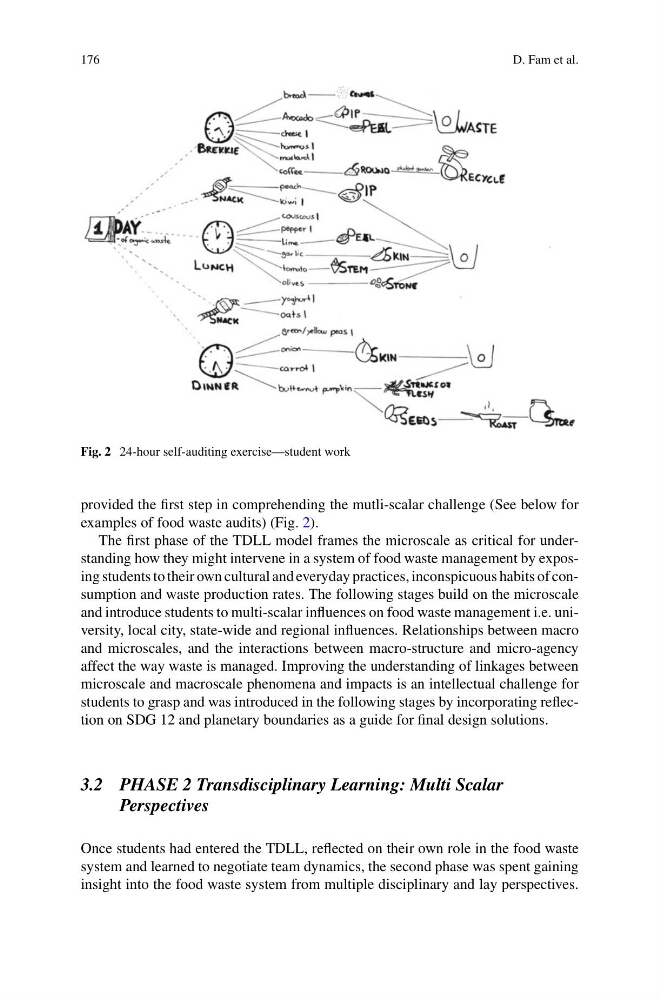
Fig. 2 24-hour self-auditing exercise—student work
provided the first step in comprehending the mutli-scalar challenge (See below for
examples of food waste audits) (Fig. 2).
The first phase of the TDLL model frames the microscale as critical for understanding how they might intervene in a system of food waste management by exposing students to their own cultural and everyday practices, inconspicuous habits of consumption and waste production rates. The following stages build on the microscale
and introduce students to multi-scalar influences on food waste management i.e. university, local city, state-wide and regional influences. Relationships between macro
and microscales, and the interactions between macro-structure and micro-agency
affect the way waste is managed. Improving the understanding of linkages between
microscale and macroscale phenomena and impacts is an intellectual challenge for
students to grasp and was introduced in the following stages by incorporating reflection on SDG 12 and planetary boundaries as a guide for final design solutions.
3.2 PHASE 2 Transdisciplinary Learning: Multi Scalar
Perspectives
Once students had entered the TDLL, reflected on their own role in the food waste
system and learned to negotiate team dynamics, the second phase was spent gaining
insight into the food waste system from multiple disciplinary and lay perspectives.
D. Fam et al.
Fig. 2 24-hour self-auditing exercise—student work
provided the first step in comprehending the mutli-scalar challenge (See below for
examples of food waste audits) (Fig. 2).
The first phase of the TDLL model frames the microscale as critical for understanding how they might intervene in a system of food waste management by exposing students to their own cultural and everyday practices, inconspicuous habits of consumption and waste production rates. The following stages build on the microscale
and introduce students to multi-scalar influences on food waste management i.e. university, local city, state-wide and regional influences. Relationships between macro
and microscales, and the interactions between macro-structure and micro-agency
affect the way waste is managed. Improving the understanding of linkages between
microscale and macroscale phenomena and impacts is an intellectual challenge for
students to grasp and was introduced in the following stages by incorporating reflection on SDG 12 and planetary boundaries as a guide for final design solutions.
3.2 PHASE 2 Transdisciplinary Learning: Multi Scalar
Perspectives
Once students had entered the TDLL, reflected on their own role in the food waste
system and learned to negotiate team dynamics, the second phase was spent gaining
insight into the food waste system from multiple disciplinary and lay perspectives.