

32
C. B. Manjula et al.
6 Ganesha Idol Immersion Statistics
According to the News in Times of India (https://timesofindia.indiatimes.com/city/
bengaluru/good-news-not-many-pop-idols-this-time/articleshow/65817329.cms)
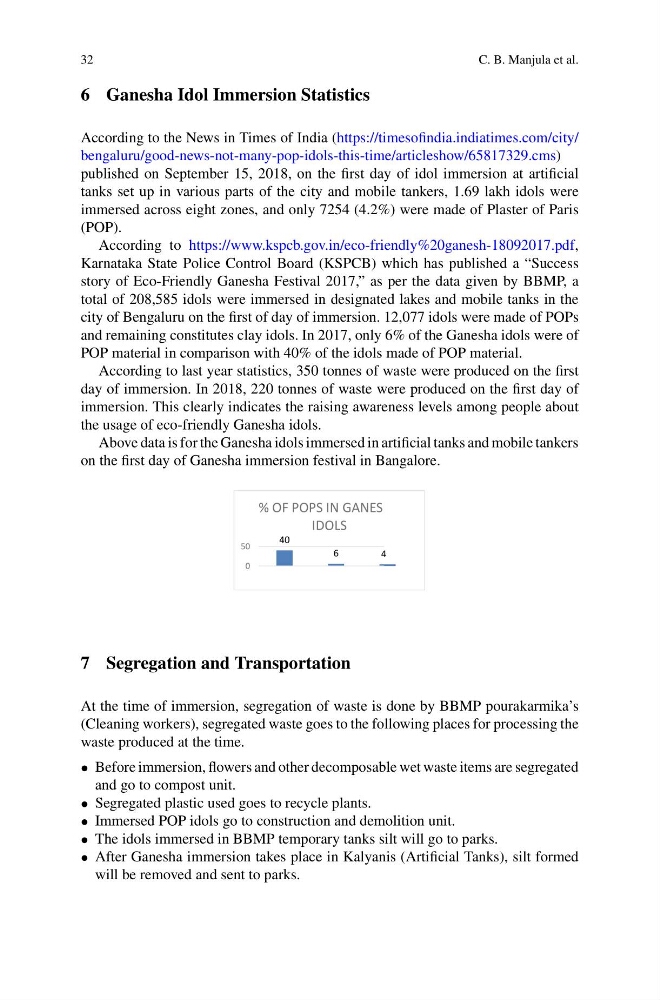
published on September 15, 2018, on the first day of idol immersion at artificial
tanks set up in various parts of the city and mobile tankers, 1.69 lakh idols were
immersed across eight zones, and only 7254 (4.2%) were made of Plaster of Paris
(POP).
According to https://www.kspcb.gov.in/eco-friendly%20ganesh-18092017.pdf,
Karnataka State Police Control Board (KSPCB) which has published a “Success
story of Eco-Friendly Ganesha Festival 2017,” as per the data given by BBMP, a
total of 208,585 idols were immersed in designated lakes and mobile tanks in the
city of Bengaluru on the first of day of immersion. 12,077 idols were made of POPs
and remaining constitutes clay idols. In 2017, only 6% of the Ganesha idols were of
POP material in comparison with 40% of the idols made of POP material.
According to last year statistics, 350 tonnes of waste were produced on the first
day of immersion. In 2018, 220 tonnes of waste were produced on the first day of
immersion. This clearly indicates the raising awareness levels among people about
the usage of eco-friendly Ganesha idols.
Above data is for the Ganesha idols immersed in artificial tanks and mobile tankers
on the first day of Ganesha immersion festival in Bangalore.
40
6
4
0
50
% OF POPS IN GANES
IDOLS
7 Segregation and Transportation
At the time of immersion, segregation of waste is done by BBMP pourakarmika’s
(Cleaning workers), segregated waste goes to the following places for processing the
waste produced at the time.
• Before immersion, flowers and other decomposable wet waste items are segregated
and go to compost unit.
• Segregated plastic used goes to recycle plants.
• Immersed POP idols go to construction and demolition unit.
• The idols immersed in BBMP temporary tanks silt will go to parks.
• After Ganesha immersion takes place in Kalyanis (Artificial Tanks), silt formed
will be removed and sent to parks.
C. B. Manjula et al.
6 Ganesha Idol Immersion Statistics
According to the News in Times of India (https://timesofindia.indiatimes.com/city/
bengaluru/good-news-not-many-pop-idols-this-time/articleshow/65817329.cms)
published on September 15, 2018, on the first day of idol immersion at artificial
tanks set up in various parts of the city and mobile tankers, 1.69 lakh idols were
immersed across eight zones, and only 7254 (4.2%) were made of Plaster of Paris
(POP).
According to https://www.kspcb.gov.in/eco-friendly%20ganesh-18092017.pdf,
Karnataka State Police Control Board (KSPCB) which has published a “Success
story of Eco-Friendly Ganesha Festival 2017,” as per the data given by BBMP, a
total of 208,585 idols were immersed in designated lakes and mobile tanks in the
city of Bengaluru on the first of day of immersion. 12,077 idols were made of POPs
and remaining constitutes clay idols. In 2017, only 6% of the Ganesha idols were of
POP material in comparison with 40% of the idols made of POP material.
According to last year statistics, 350 tonnes of waste were produced on the first
day of immersion. In 2018, 220 tonnes of waste were produced on the first day of
immersion. This clearly indicates the raising awareness levels among people about
the usage of eco-friendly Ganesha idols.
Above data is for the Ganesha idols immersed in artificial tanks and mobile tankers
on the first day of Ganesha immersion festival in Bangalore.
40
6
4
0
50
% OF POPS IN GANES
IDOLS
7 Segregation and Transportation
At the time of immersion, segregation of waste is done by BBMP pourakarmika’s
(Cleaning workers), segregated waste goes to the following places for processing the
waste produced at the time.
• Before immersion, flowers and other decomposable wet waste items are segregated
and go to compost unit.
• Segregated plastic used goes to recycle plants.
• Immersed POP idols go to construction and demolition unit.
• The idols immersed in BBMP temporary tanks silt will go to parks.
• After Ganesha immersion takes place in Kalyanis (Artificial Tanks), silt formed
will be removed and sent to parks.