

‘To Study Information, Education, and Communication (IEC) …
21
(Model-1)
SWACHHATA RATH and
IEC CAMPAIGN
Awareness
Households, Markets And
Institutions
Community
Partnership
Team of Manpower
Skilled/ Unskilled/Rag-pickers
Household Waste Disposal Management System
Transport and
Disposal of Waste
Training Services for
Waste Segregation at
Household Level
Waste
Collection at
Door Stapes
Waste
Generation
by Society
INSPECTION
TEAM
INSPECTION
TEAM
CLEAN CITY: SWACHCHH BHARAT
Primary/Secondary/Ngos/Cbos
Etc.
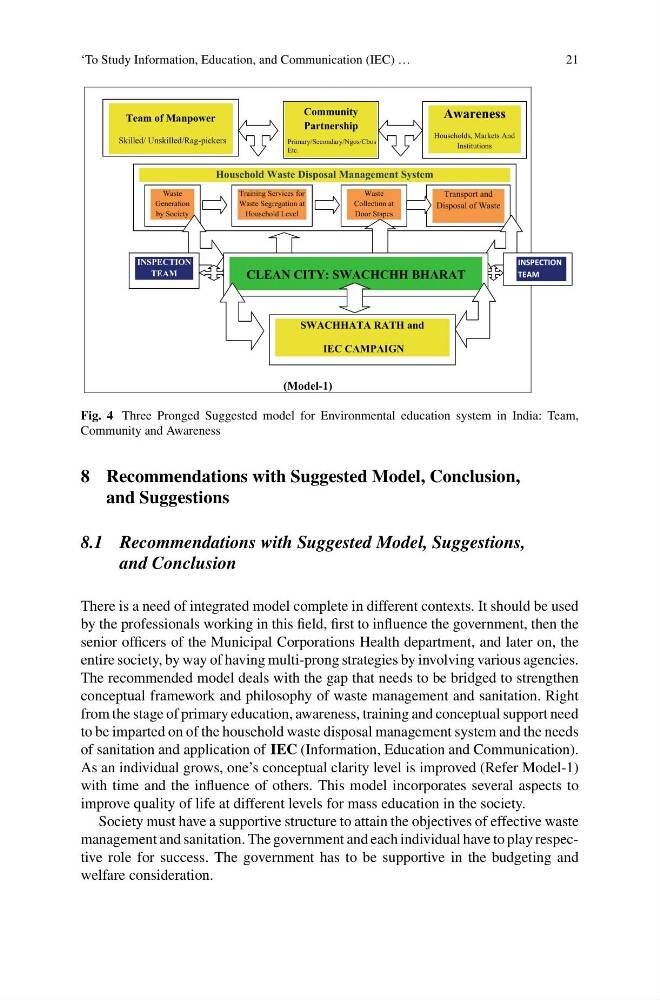
Fig. 4 Three Pronged Suggested model for Environmental education system in India: Team,
Community and Awareness
8 Recommendations with Suggested Model, Conclusion,
and Suggestions
8.1 Recommendations with Suggested Model, Suggestions,
and Conclusion
There is a need of integrated model complete in different contexts. It should be used
by the professionals working in this field, first to influence the government, then the
senior officers of the Municipal Corporations Health department, and later on, the
entire society, by way of having multi-prong strategies by involving various agencies.
The recommended model deals with the gap that needs to be bridged to strengthen
conceptual framework and philosophy of waste management and sanitation. Right
from the stage of primary education, awareness, training and conceptual support need
to be imparted on of the household waste disposal management system and the needs
of sanitation and application of IEC (Information, Education and Communication).
As an individual grows, one’s conceptual clarity level is improved (Refer Model-1)
with time and the influence of others. This model incorporates several aspects to
improve quality of life at different levels for mass education in the society.
Society must have a supportive structure to attain the objectives of effective waste
management and sanitation. The government and each individual have to play respective role for success. The government has to be supportive in the budgeting and
welfare consideration.
21
(Model-1)
SWACHHATA RATH and
IEC CAMPAIGN
Awareness
Households, Markets And
Institutions
Community
Partnership
Team of Manpower
Skilled/ Unskilled/Rag-pickers
Household Waste Disposal Management System
Transport and
Disposal of Waste
Training Services for
Waste Segregation at
Household Level
Waste
Collection at
Door Stapes
Waste
Generation
by Society
INSPECTION
TEAM
INSPECTION
TEAM
CLEAN CITY: SWACHCHH BHARAT
Primary/Secondary/Ngos/Cbos
Etc.
Fig. 4 Three Pronged Suggested model for Environmental education system in India: Team,
Community and Awareness
8 Recommendations with Suggested Model, Conclusion,
and Suggestions
8.1 Recommendations with Suggested Model, Suggestions,
and Conclusion
There is a need of integrated model complete in different contexts. It should be used
by the professionals working in this field, first to influence the government, then the
senior officers of the Municipal Corporations Health department, and later on, the
entire society, by way of having multi-prong strategies by involving various agencies.
The recommended model deals with the gap that needs to be bridged to strengthen
conceptual framework and philosophy of waste management and sanitation. Right
from the stage of primary education, awareness, training and conceptual support need
to be imparted on of the household waste disposal management system and the needs
of sanitation and application of IEC (Information, Education and Communication).
As an individual grows, one’s conceptual clarity level is improved (Refer Model-1)
with time and the influence of others. This model incorporates several aspects to
improve quality of life at different levels for mass education in the society.
Society must have a supportive structure to attain the objectives of effective waste
management and sanitation. The government and each individual have to play respective role for success. The government has to be supportive in the budgeting and
welfare consideration.