

270
time in fish boxes sea water is added to the boxes and the water is to be changed
every 12 h (Gurmani and Krishnamurthy 1994).
The processing methods of different sea cucumber types are different due to differences in the thickness and softness of the body walls and the degree of water
retention after cooking. There may be differences in the processing of commercial
processors according to their own experience (Purcell et al. 2016). The cut made on
sea cucumbers (to remove guts and aid drying) should be in different locations on
the body for different species. Both black teatfish (Holothuria whitmaei) and white
teatfish (H. fuscogilva) should be cut on the dorsal side, while other species that
attain large sizes (i.e. H. fuscopunctata, Thelenota ananas and T. anax), should be
cut on the ventral side. In both instances, the cut should stop short of the anus and
mouth. For most other species, the general practice among processors is to make a
small longitudinal cut (i.e. 2–3 cm) on the ventral surface at the anus (Purcell
et al. 2016).
4.3.4.1 Salting of Sea Cucumber
Salting is a method used to protect sea cucumbers. It is one of the oldest methods
used in the preservation of foods. In this method, salt or salt water is used. It is
reported that the estimated ratio of salt to sea cucumber is usually 1–3 (Purcell
2014). Salting is carried out for dehydration in sea cucumbers prior to drying
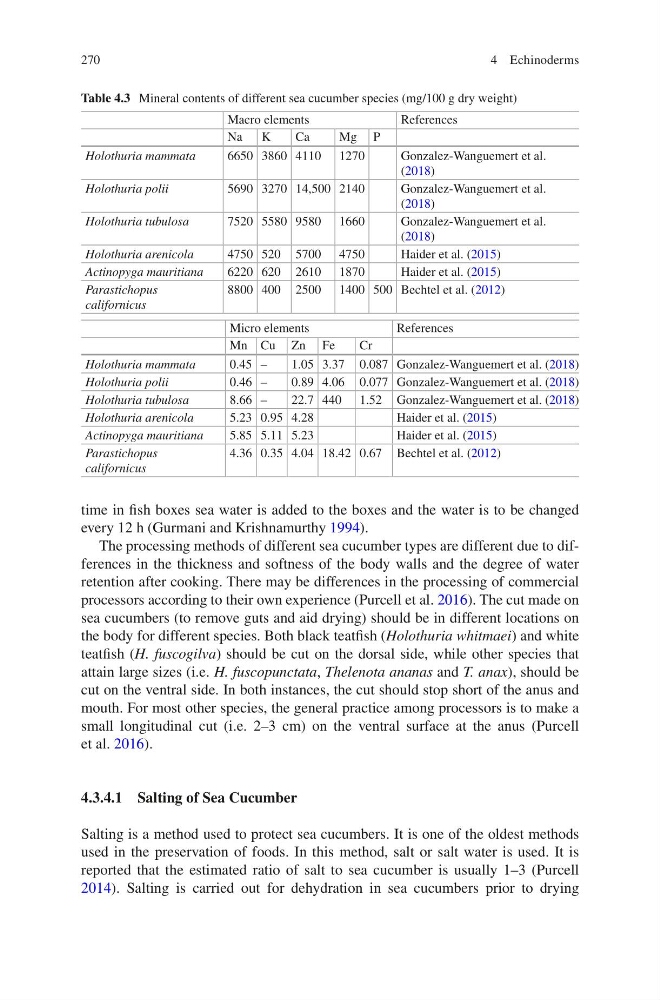
Table 4.3 Mineral contents of different sea cucumber species (mg/100 g dry weight)
Macro elements
References
Na
K
Ca
Mg P
Holothuria mammata
6650 3860 4110 1270
Gonzalez-Wanguemert et al.
(2018)
Holothuria polii
5690 3270 14,500 2140
Gonzalez-Wanguemert et al.
(2018)
Holothuria tubulosa
7520 5580 9580 1660
Gonzalez-Wanguemert et al.
(2018)
Holothuria arenicola
4750 520 5700 4750
Haider et al. (2015)
Actinopyga mauritiana
6220 620 2610 1870
Haider et al. (2015)
Parastichopus
californicus
8800 400 2500 1400 500 Bechtel et al. (2012)
Micro elements
References
Mn Cu Zn Fe
Cr
Holothuria mammata
0.45 –
1.05 3.37 0.087 Gonzalez-Wanguemert et al. (2018)
Holothuria polii
0.46 –
0.89 4.06 0.077 Gonzalez-Wanguemert et al. (2018)
Holothuria tubulosa
8.66 –
22.7 440 1.52 Gonzalez-Wanguemert et al. (2018)
Holothuria arenicola
5.23 0.95 4.28
Haider et al. (2015)
Actinopyga mauritiana
5.85 5.11 5.23
Haider et al. (2015)
Parastichopus
californicus
4.36 0.35 4.04 18.42 0.67 Bechtel et al. (2012)
4 Echinoderms
time in fish boxes sea water is added to the boxes and the water is to be changed
every 12 h (Gurmani and Krishnamurthy 1994).
The processing methods of different sea cucumber types are different due to differences in the thickness and softness of the body walls and the degree of water
retention after cooking. There may be differences in the processing of commercial
processors according to their own experience (Purcell et al. 2016). The cut made on
sea cucumbers (to remove guts and aid drying) should be in different locations on
the body for different species. Both black teatfish (Holothuria whitmaei) and white
teatfish (H. fuscogilva) should be cut on the dorsal side, while other species that
attain large sizes (i.e. H. fuscopunctata, Thelenota ananas and T. anax), should be
cut on the ventral side. In both instances, the cut should stop short of the anus and
mouth. For most other species, the general practice among processors is to make a
small longitudinal cut (i.e. 2–3 cm) on the ventral surface at the anus (Purcell
et al. 2016).
4.3.4.1 Salting of Sea Cucumber
Salting is a method used to protect sea cucumbers. It is one of the oldest methods
used in the preservation of foods. In this method, salt or salt water is used. It is
reported that the estimated ratio of salt to sea cucumber is usually 1–3 (Purcell
2014). Salting is carried out for dehydration in sea cucumbers prior to drying
Table 4.3 Mineral contents of different sea cucumber species (mg/100 g dry weight)
Macro elements
References
Na
K
Ca
Mg P
Holothuria mammata
6650 3860 4110 1270
Gonzalez-Wanguemert et al.
(2018)
Holothuria polii
5690 3270 14,500 2140
Gonzalez-Wanguemert et al.
(2018)
Holothuria tubulosa
7520 5580 9580 1660
Gonzalez-Wanguemert et al.
(2018)
Holothuria arenicola
4750 520 5700 4750
Haider et al. (2015)
Actinopyga mauritiana
6220 620 2610 1870
Haider et al. (2015)
Parastichopus
californicus
8800 400 2500 1400 500 Bechtel et al. (2012)
Micro elements
References
Mn Cu Zn Fe
Cr
Holothuria mammata
0.45 –
1.05 3.37 0.087 Gonzalez-Wanguemert et al. (2018)
Holothuria polii
0.46 –
0.89 4.06 0.077 Gonzalez-Wanguemert et al. (2018)
Holothuria tubulosa
8.66 –
22.7 440 1.52 Gonzalez-Wanguemert et al. (2018)
Holothuria arenicola
5.23 0.95 4.28
Haider et al. (2015)
Actinopyga mauritiana
5.85 5.11 5.23
Haider et al. (2015)
Parastichopus
californicus
4.36 0.35 4.04 18.42 0.67 Bechtel et al. (2012)
4 Echinoderms