

187
During gonad maturation, concentrations of lipid and protein vary (ArellanoMartínez et al. 2004).
It was reported that the tissue fatty composition of scallops is affected by both
intrinsic (phylogeny, age, sex, reproductive cycle) and external factors (diet, temperature, salinity, and depth). Even among different organs of pectinids, it has been
reported that the composition of fatty acids varies (Grahl-Nielsen et al. 2010).
3.1.4.2 Post-harvest Quality Changes in Scallops
After death, as in fish, scallops go through steps as rigor-mortis, post-rigor, autolysis, and bacterial degradation (Ocano-Higuera et al. 2006). These changes are
mainly affected by storage temperatures. In case of temperature abuse, the freshness
of the scallop is lost rapidly.
Fresh sea scallops should have whitish meat, very little liquid, and a fresh, even
slightly sweetish, odour. Bay scallops should have meat that may be creamy white,
light tan or pinkish; should be practically free of liquid; and should have a fresh
odour (Dean 2000).
Two postmortem changes have been reported in the scallop (Placopecten magellanicus) muscle. One of these is the accumulation of hypoxanthine (Hx), the nucleotide degradation product, and the other is the production of octopine, the final
product of glycogen degradation (Hiltz and Dyer 1970).
Indices of quality based on nucleotide degradation (hypoxanthine and K value)
have received special attention for monitoring the freshness of fishery products during handling and processing (Ocano-Higuera et al. 2006; Pacheco-Aguilar et al.
2008). The concentration of major adenine nucleotides and their related compounds
in post-mortem muscle correlates well with the loss of freshness in a wide range of
fish. Adenosine triphosphate (ATP) degradation in invertebrates proceeds via adenosine in lieu of Inosine monophosphate (IMP). Regardless of the species and muscle type, ATP decreases rapidly within the first 24 h post-mortem. In fish muscle,
ATP is metabolized as ATP (adenosine triphosphate) → ADP (adenosine diphosphate) → AMP (adenosine monophosphate) → IMP (inosine monophosphate) →
HxR (inosine) → Hx (hypoxantine). Changes in Adenosine triphosphate (ATP) in
scallop adductor muscle stored at 5, 0 and −3 °C were investigated and a slow
decrease in ATP was observed during storage at 5 °C and a rapid decrease at −3 °C
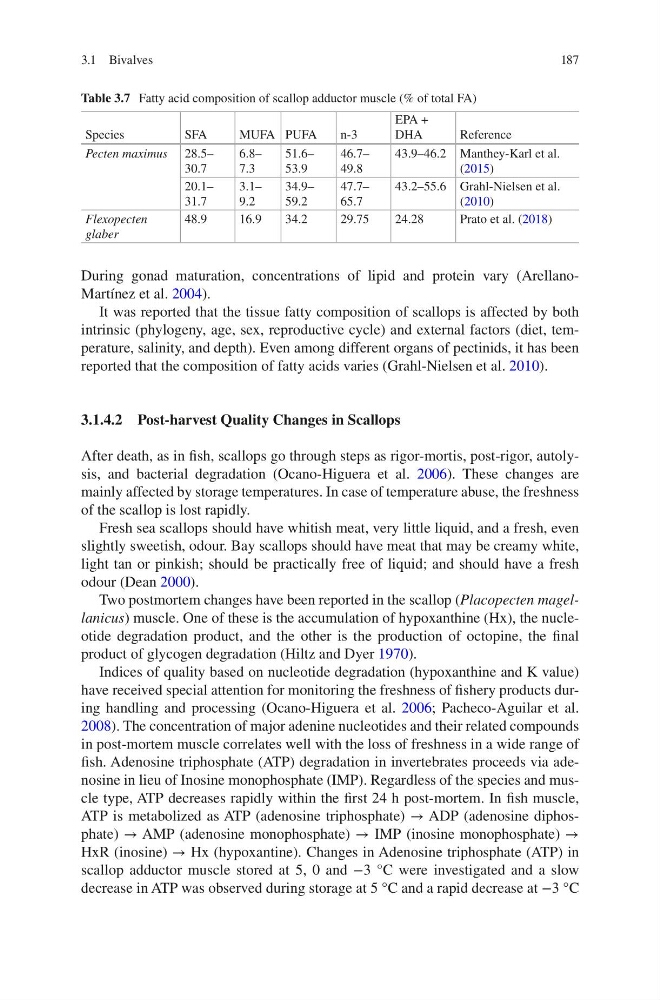
Table 3.7 Fatty acid composition of scallop adductor muscle (% of total FA)
Species
SFA
MUFA PUFA
n-3
EPA +
DHA
Reference
Pecten maximus 28.5–
30.7
6.8–
7.3
51.6–
53.9
46.7–
49.8
43.9–46.2 Manthey-Karl et al.
(2015)
20.1–
31.7
3.1–
9.2
34.9–
59.2
47.7–
65.7
43.2–55.6 Grahl-Nielsen et al.
(2010)
Flexopecten
glaber
48.9
16.9
34.2
29.75
24.28
Prato et al. (2018)
3.1 Bivalves
During gonad maturation, concentrations of lipid and protein vary (ArellanoMartínez et al. 2004).
It was reported that the tissue fatty composition of scallops is affected by both
intrinsic (phylogeny, age, sex, reproductive cycle) and external factors (diet, temperature, salinity, and depth). Even among different organs of pectinids, it has been
reported that the composition of fatty acids varies (Grahl-Nielsen et al. 2010).
3.1.4.2 Post-harvest Quality Changes in Scallops
After death, as in fish, scallops go through steps as rigor-mortis, post-rigor, autolysis, and bacterial degradation (Ocano-Higuera et al. 2006). These changes are
mainly affected by storage temperatures. In case of temperature abuse, the freshness
of the scallop is lost rapidly.
Fresh sea scallops should have whitish meat, very little liquid, and a fresh, even
slightly sweetish, odour. Bay scallops should have meat that may be creamy white,
light tan or pinkish; should be practically free of liquid; and should have a fresh
odour (Dean 2000).
Two postmortem changes have been reported in the scallop (Placopecten magellanicus) muscle. One of these is the accumulation of hypoxanthine (Hx), the nucleotide degradation product, and the other is the production of octopine, the final
product of glycogen degradation (Hiltz and Dyer 1970).
Indices of quality based on nucleotide degradation (hypoxanthine and K value)
have received special attention for monitoring the freshness of fishery products during handling and processing (Ocano-Higuera et al. 2006; Pacheco-Aguilar et al.
2008). The concentration of major adenine nucleotides and their related compounds
in post-mortem muscle correlates well with the loss of freshness in a wide range of
fish. Adenosine triphosphate (ATP) degradation in invertebrates proceeds via adenosine in lieu of Inosine monophosphate (IMP). Regardless of the species and muscle type, ATP decreases rapidly within the first 24 h post-mortem. In fish muscle,
ATP is metabolized as ATP (adenosine triphosphate) → ADP (adenosine diphosphate) → AMP (adenosine monophosphate) → IMP (inosine monophosphate) →
HxR (inosine) → Hx (hypoxantine). Changes in Adenosine triphosphate (ATP) in
scallop adductor muscle stored at 5, 0 and −3 °C were investigated and a slow
decrease in ATP was observed during storage at 5 °C and a rapid decrease at −3 °C
Table 3.7 Fatty acid composition of scallop adductor muscle (% of total FA)
Species
SFA
MUFA PUFA
n-3
EPA +
DHA
Reference
Pecten maximus 28.5–
30.7
6.8–
7.3
51.6–
53.9
46.7–
49.8
43.9–46.2 Manthey-Karl et al.
(2015)
20.1–
31.7
3.1–
9.2
34.9–
59.2
47.7–
65.7
43.2–55.6 Grahl-Nielsen et al.
(2010)
Flexopecten
glaber
48.9
16.9
34.2
29.75
24.28
Prato et al. (2018)
3.1 Bivalves