

74
To save time, obtain precise results, and improve our understanding about microbial
community structure and functions, an integrated methodology may also be adopted.
Nowadays, the microbiome is a burgeoning area of research under all scientific
disciplines such as plant, animal, and medical science. The microbiome is ubiquitous in nature and is involved in the various underlying mechanisms of life, regulating the health of soil, plants, and humans under normal and extreme environments.
Furthermore, certain innovations in the microbial world are indicating new directions that lead to the huge complexity under microbiome research. To obtain a clear
picture of the microbiome, we have to keep these points under consideration when
conducting any microbiome study. (i) Recently, microorganisms such as
Paenibacillus sp. have been reported to establish a negative interaction and change
the environmental pH to an extent that is lethal to other microbial communities in
similar habitats (Ratzke et al. 2018). This phenomenon, known as ecological suicide, has a major role in the structure, evolution, interaction, and functions of microbial communities under diverse ecosystems. (ii) The microbial community has an
intertwined microbial network retaining keystone taxa that act as the driver of
microbiome structure and function (Banerjee et al. 2018). For example, agricultural
soils have various keystone taxa belonging to Gemmatimonas, Acidobacteria GP17,
Xanthomonadales, Rhizobiales, Burkholderiales, Solirubrobacterales, and
Verrucomicrobia, which regulate microbial communities and the dynamics of many
-10
-5
0
5
10
15
20
ARISA
TRFLP
Microarray
DGGE
Metatranscriptomics
Metaproteomics
Metagenomics
SCG
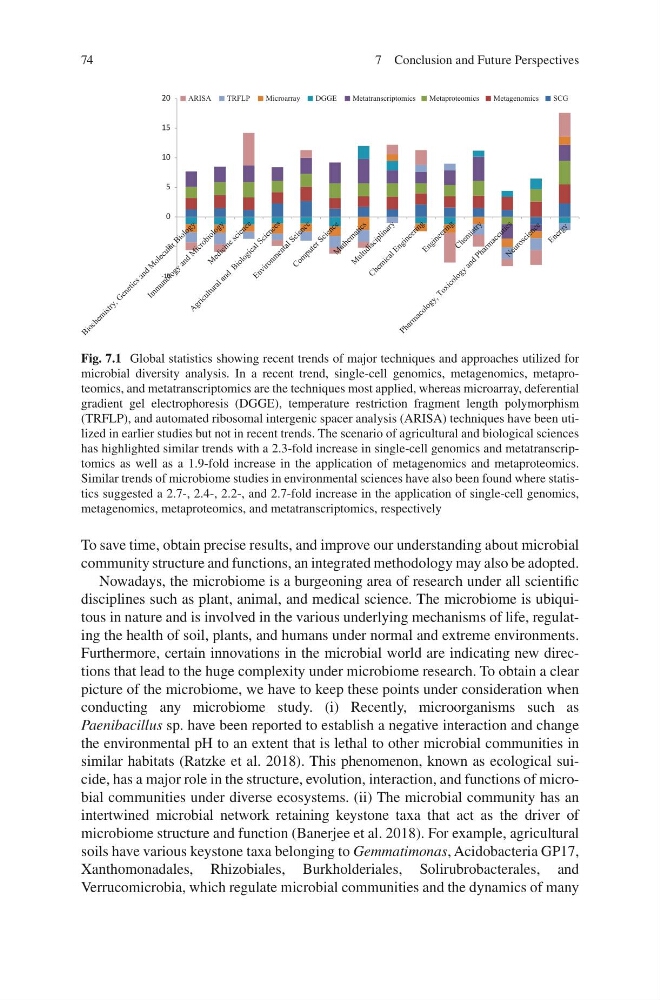
Fig. 7.1 Global statistics showing recent trends of major techniques and approaches utilized for
microbial diversity analysis. In a recent trend, single-cell genomics, metagenomics, metaproteomics, and metatranscriptomics are the techniques most applied, whereas microarray, deferential
gradient gel electrophoresis (DGGE), temperature restriction fragment length polymorphism
(TRFLP), and automated ribosomal intergenic spacer analysis (ARISA) techniques have been utilized in earlier studies but not in recent trends. The scenario of agricultural and biological sciences
has highlighted similar trends with a 2.3-fold increase in single-cell genomics and metatranscriptomics as well as a 1.9-fold increase in the application of metagenomics and metaproteomics.
Similar trends of microbiome studies in environmental sciences have also been found where statistics suggested a 2.7-, 2.4-, 2.2-, and 2.7-fold increase in the application of single-cell genomics,
metagenomics, metaproteomics, and metatranscriptomics, respectively
7 Conclusion and Future Perspectives
To save time, obtain precise results, and improve our understanding about microbial
community structure and functions, an integrated methodology may also be adopted.
Nowadays, the microbiome is a burgeoning area of research under all scientific
disciplines such as plant, animal, and medical science. The microbiome is ubiquitous in nature and is involved in the various underlying mechanisms of life, regulating the health of soil, plants, and humans under normal and extreme environments.
Furthermore, certain innovations in the microbial world are indicating new directions that lead to the huge complexity under microbiome research. To obtain a clear
picture of the microbiome, we have to keep these points under consideration when
conducting any microbiome study. (i) Recently, microorganisms such as
Paenibacillus sp. have been reported to establish a negative interaction and change
the environmental pH to an extent that is lethal to other microbial communities in
similar habitats (Ratzke et al. 2018). This phenomenon, known as ecological suicide, has a major role in the structure, evolution, interaction, and functions of microbial communities under diverse ecosystems. (ii) The microbial community has an
intertwined microbial network retaining keystone taxa that act as the driver of
microbiome structure and function (Banerjee et al. 2018). For example, agricultural
soils have various keystone taxa belonging to Gemmatimonas, Acidobacteria GP17,
Xanthomonadales, Rhizobiales, Burkholderiales, Solirubrobacterales, and
Verrucomicrobia, which regulate microbial communities and the dynamics of many
-10
-5
0
5
10
15
20
ARISA
TRFLP
Microarray
DGGE
Metatranscriptomics
Metaproteomics
Metagenomics
SCG
Fig. 7.1 Global statistics showing recent trends of major techniques and approaches utilized for
microbial diversity analysis. In a recent trend, single-cell genomics, metagenomics, metaproteomics, and metatranscriptomics are the techniques most applied, whereas microarray, deferential
gradient gel electrophoresis (DGGE), temperature restriction fragment length polymorphism
(TRFLP), and automated ribosomal intergenic spacer analysis (ARISA) techniques have been utilized in earlier studies but not in recent trends. The scenario of agricultural and biological sciences
has highlighted similar trends with a 2.3-fold increase in single-cell genomics and metatranscriptomics as well as a 1.9-fold increase in the application of metagenomics and metaproteomics.
Similar trends of microbiome studies in environmental sciences have also been found where statistics suggested a 2.7-, 2.4-, 2.2-, and 2.7-fold increase in the application of single-cell genomics,
metagenomics, metaproteomics, and metatranscriptomics, respectively
7 Conclusion and Future Perspectives