

45
ticular system with significant and clear-cut interpretations. Taxonomic analysis
under metagenomics by classifying a set of anonymous DNA reads is another area
to resolve while investigating any soil entity (Fig. 4.3). Several computational tools
were developed for this purpose: PhymmBL uses a hybrid approach combining an
interpolated Markov model framework with similarity-based BLAST search (Brady
and Salzberg 2009), MEGAN uses the lowest common ancestor of the top three
nearest neighbours based on similarity search (Huson et al. 2007), and AMPHORA
infers a phylogenetic tree based on a pair-wise similarity matrix. These tools indeed
represent significant improvements for classifying DNA reads (Wu and Eisen 2008).
For example, most of these tools are not good at handling novel taxonomic groups,
require huge amount of computational power, and are not accurate enough.
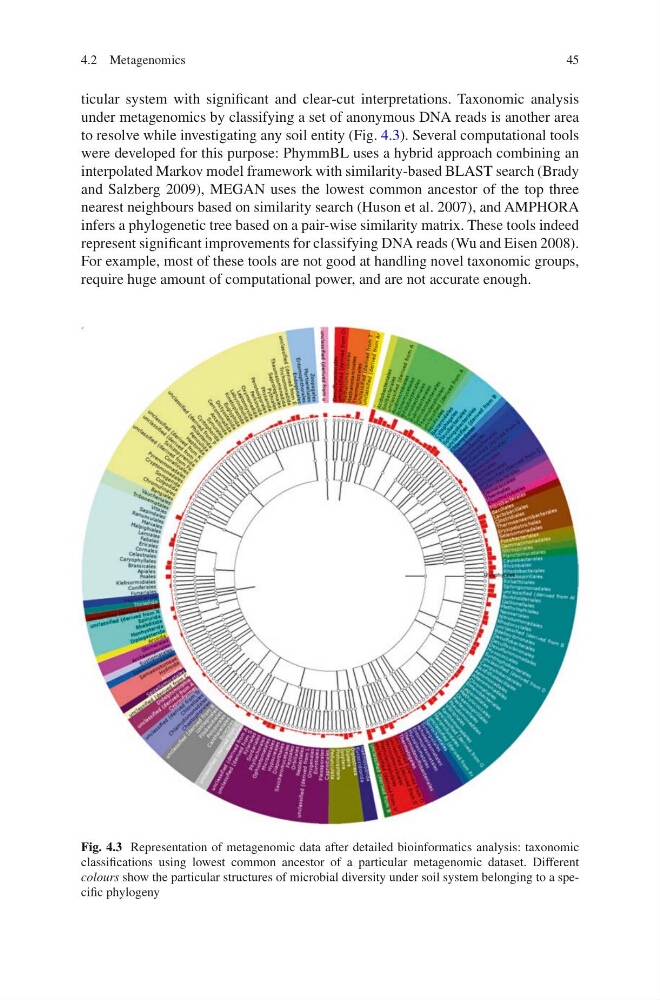
Fig. 4.3 Representation of metagenomic data after detailed bioinformatics analysis: taxonomic
classifications using lowest common ancestor of a particular metagenomic dataset. Different
colours show the particular structures of microbial diversity under soil system belonging to a specific phylogeny
4.2 Metagenomics
ticular system with significant and clear-cut interpretations. Taxonomic analysis
under metagenomics by classifying a set of anonymous DNA reads is another area
to resolve while investigating any soil entity (Fig. 4.3). Several computational tools
were developed for this purpose: PhymmBL uses a hybrid approach combining an
interpolated Markov model framework with similarity-based BLAST search (Brady
and Salzberg 2009), MEGAN uses the lowest common ancestor of the top three
nearest neighbours based on similarity search (Huson et al. 2007), and AMPHORA
infers a phylogenetic tree based on a pair-wise similarity matrix. These tools indeed
represent significant improvements for classifying DNA reads (Wu and Eisen 2008).
For example, most of these tools are not good at handling novel taxonomic groups,
require huge amount of computational power, and are not accurate enough.
Fig. 4.3 Representation of metagenomic data after detailed bioinformatics analysis: taxonomic
classifications using lowest common ancestor of a particular metagenomic dataset. Different
colours show the particular structures of microbial diversity under soil system belonging to a specific phylogeny
4.2 Metagenomics