

depends on several factors including the intrinsic reactivity of the warhead and the
target nucleophile, but also the accurate positioning of both reactive groups in terms
of distance and angle to favor the reaction. The appropriate measure for the overall
efficiency of the two-step binding event is the quotient k inact /K I that is the secondorder rate constant of covalent target inactivation [12]. The above descriptions refer
to (quasi)-irreversible binders where the rate constant of covalent bond cleavage
(denoted here as k rev ) approximates zero. However, k rev can vary over a large range
for covalent-reversible ligands, whose binding kinetics shall not be further discussed
here. An in-depth description of the binding kinetics of both covalent-reversible and
irreversible ligands is beyond the scope of this chapter and can be found elsewhere
[8, 12, 13]. However, it should be noted that although k inact /K I is the recommended
potency measure for irreversible covalent inhibitors, the bulk of literature in the
protein kinase field still relies on IC 50 data which is much easier to obtain. Comparing covalent inhibitors on the basis of apparent IC 50 values can be useful to deduce
early SAR within a series provided that all compounds were tested in the same assay
system under identical conditions. Nevertheless, it should be kept in mind that
apparent IC 50 values, which are determined at a single point in time, do neither
provide a quantitative picture of a covalent inhibitor’s overall efficiency nor allow
for the deconvolution of contributions from reversible and covalent binding. Thus,
caution should be exercised when comparing covalent inhibitors merely on the basis
of IC 50 data [13].
As mentioned before, the by-far most common residues to be addressed by TCIs
are non-catalytic cysteines. The cysteine side chain (pK a % 8.5) [14] can readily be
deprotonated to form a strongly nucleophilic thiolate which has a much higher
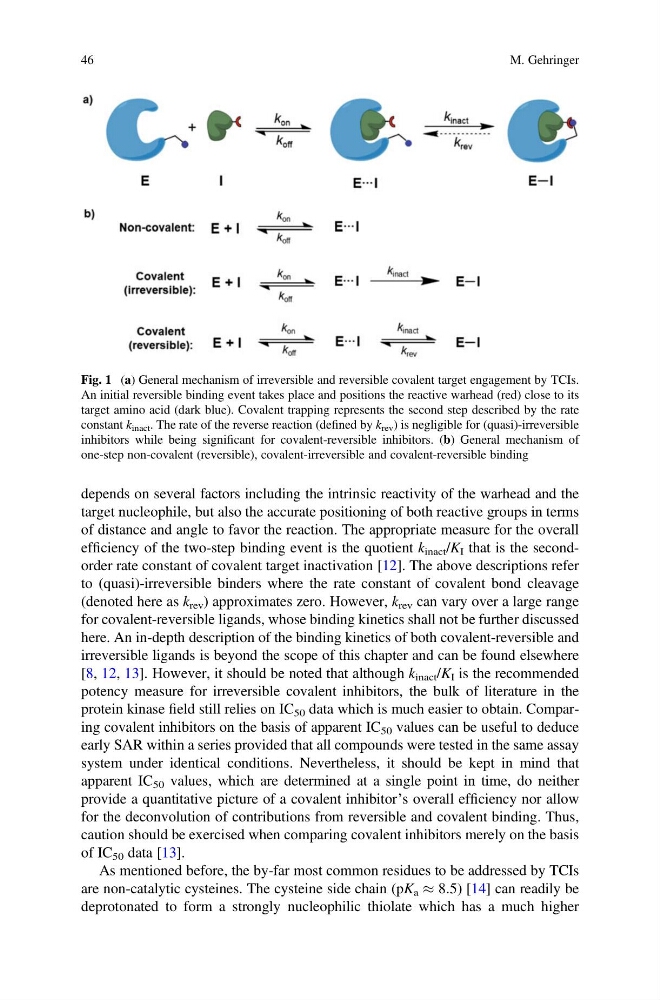
Fig. 1 (a) General mechanism of irreversible and reversible covalent target engagement by TCIs.
An initial reversible binding event takes place and positions the reactive warhead (red) close to its
target amino acid (dark blue). Covalent trapping represents the second step described by the rate
constant k inact . The rate of the reverse reaction (defined by k rev ) is negligible for (quasi)-irreversible
inhibitors while being significant for covalent-reversible inhibitors. (b) General mechanism of
one-step non-covalent (reversible), covalent-irreversible and covalent-reversible binding
46
M. Gehringer
target nucleophile, but also the accurate positioning of both reactive groups in terms
of distance and angle to favor the reaction. The appropriate measure for the overall
efficiency of the two-step binding event is the quotient k inact /K I that is the secondorder rate constant of covalent target inactivation [12]. The above descriptions refer
to (quasi)-irreversible binders where the rate constant of covalent bond cleavage
(denoted here as k rev ) approximates zero. However, k rev can vary over a large range
for covalent-reversible ligands, whose binding kinetics shall not be further discussed
here. An in-depth description of the binding kinetics of both covalent-reversible and
irreversible ligands is beyond the scope of this chapter and can be found elsewhere
[8, 12, 13]. However, it should be noted that although k inact /K I is the recommended
potency measure for irreversible covalent inhibitors, the bulk of literature in the
protein kinase field still relies on IC 50 data which is much easier to obtain. Comparing covalent inhibitors on the basis of apparent IC 50 values can be useful to deduce
early SAR within a series provided that all compounds were tested in the same assay
system under identical conditions. Nevertheless, it should be kept in mind that
apparent IC 50 values, which are determined at a single point in time, do neither
provide a quantitative picture of a covalent inhibitor’s overall efficiency nor allow
for the deconvolution of contributions from reversible and covalent binding. Thus,
caution should be exercised when comparing covalent inhibitors merely on the basis
of IC 50 data [13].
As mentioned before, the by-far most common residues to be addressed by TCIs
are non-catalytic cysteines. The cysteine side chain (pK a % 8.5) [14] can readily be
deprotonated to form a strongly nucleophilic thiolate which has a much higher
Fig. 1 (a) General mechanism of irreversible and reversible covalent target engagement by TCIs.
An initial reversible binding event takes place and positions the reactive warhead (red) close to its
target amino acid (dark blue). Covalent trapping represents the second step described by the rate
constant k inact . The rate of the reverse reaction (defined by k rev ) is negligible for (quasi)-irreversible
inhibitors while being significant for covalent-reversible inhibitors. (b) General mechanism of
one-step non-covalent (reversible), covalent-irreversible and covalent-reversible binding
46
M. Gehringer