

researchers from Novartis found this compound to be an unexpectedly
weak suppressor of γ c -cytokine-induced STAT phosphorylation, they conducted
further experiments investigating IL-2 signaling in engineered cells reconstituted
with “kinase-dead” and “analog-sensitive” JAK1 and JAK3 mutants. Their results
challenged the notion that selective JAK3 inhibition would effectively block STAT
phosphorylation to promote immunosuppression; they concluded that JAK1 was
dominant over JAK3 in the γ c -cytokine signaling [29]. According to their model,
JAK3 is primarily responsible for the phosphorylation and (full) activation of JAK1.
Consequently, they suggested that JAK1 inhibition would be indispensable for
efficient suppression of immune response. Complementary results, however, were
obtained from Thorarensen et al. at Pfizer [30]. They showed that JAK inhibitors
undergo a potency shift eroding JAK3 selectivity, when moving from isolated
biochemical to cellular systems. Biochemical assays usually apply ATP concentrations close to the enzyme’s K m value, while cellular ATP concentrations are much
higher, generally in the low millimolar range [31]. The observed shift in potency is
caused by the higher ATP affinity of JAK3 relative to other JAKs, an effect that is
especially pronounced when comparing JAK3 with JAK1. Consequently,
NIBR3049 was found to be a much less potent JAK3 inhibitor at cellular ATP
concentrations suggesting that the lack of efficacy observed in the aforementioned
study resulted from NIBR3049’s insufficient inhibitory potency in cells rather than
from its selectivity for JAK3. These conflicting results fueled a discussion on
whether selective JAK3 inhibition would be sufficient to block STAT phosphorylation and thereby downstream signaling as is required for immunosuppression in vivo
[16, 30, 32]. To finally end this debate, highly isoform-selective JAK3 inhibitors
with sufficient cellular potency needed to be developed.
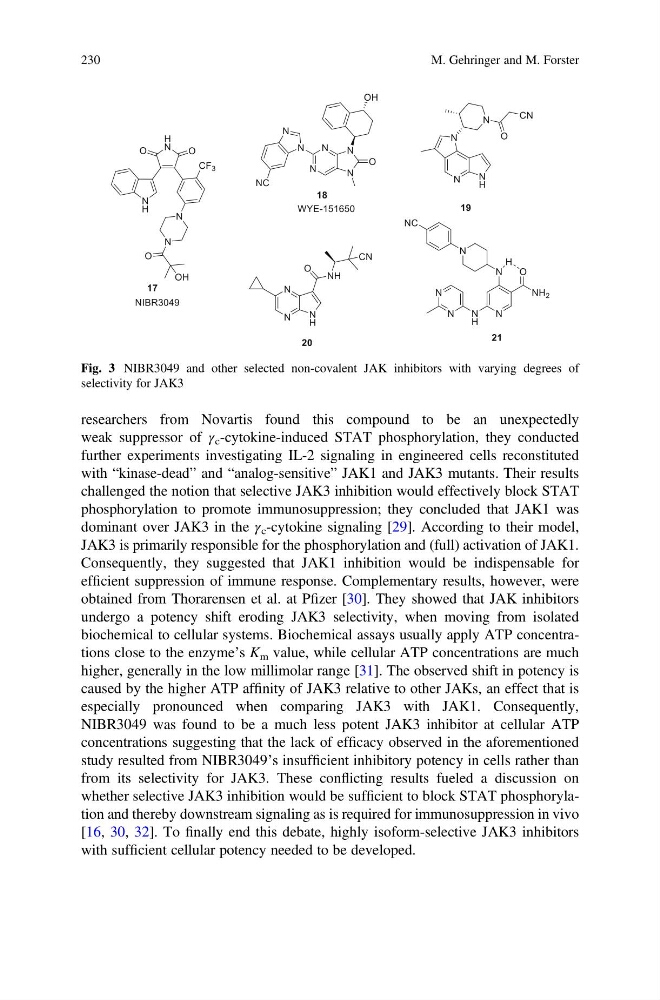
Fig. 3 NIBR3049 and other selected non-covalent JAK inhibitors with varying degrees of
selectivity for JAK3
230
M. Gehringer and M. Forster
weak suppressor of γ c -cytokine-induced STAT phosphorylation, they conducted
further experiments investigating IL-2 signaling in engineered cells reconstituted
with “kinase-dead” and “analog-sensitive” JAK1 and JAK3 mutants. Their results
challenged the notion that selective JAK3 inhibition would effectively block STAT
phosphorylation to promote immunosuppression; they concluded that JAK1 was
dominant over JAK3 in the γ c -cytokine signaling [29]. According to their model,
JAK3 is primarily responsible for the phosphorylation and (full) activation of JAK1.
Consequently, they suggested that JAK1 inhibition would be indispensable for
efficient suppression of immune response. Complementary results, however, were
obtained from Thorarensen et al. at Pfizer [30]. They showed that JAK inhibitors
undergo a potency shift eroding JAK3 selectivity, when moving from isolated
biochemical to cellular systems. Biochemical assays usually apply ATP concentrations close to the enzyme’s K m value, while cellular ATP concentrations are much
higher, generally in the low millimolar range [31]. The observed shift in potency is
caused by the higher ATP affinity of JAK3 relative to other JAKs, an effect that is
especially pronounced when comparing JAK3 with JAK1. Consequently,
NIBR3049 was found to be a much less potent JAK3 inhibitor at cellular ATP
concentrations suggesting that the lack of efficacy observed in the aforementioned
study resulted from NIBR3049’s insufficient inhibitory potency in cells rather than
from its selectivity for JAK3. These conflicting results fueled a discussion on
whether selective JAK3 inhibition would be sufficient to block STAT phosphorylation and thereby downstream signaling as is required for immunosuppression in vivo
[16, 30, 32]. To finally end this debate, highly isoform-selective JAK3 inhibitors
with sufficient cellular potency needed to be developed.
Fig. 3 NIBR3049 and other selected non-covalent JAK inhibitors with varying degrees of
selectivity for JAK3
230
M. Gehringer and M. Forster