

84
8 Chemisorption
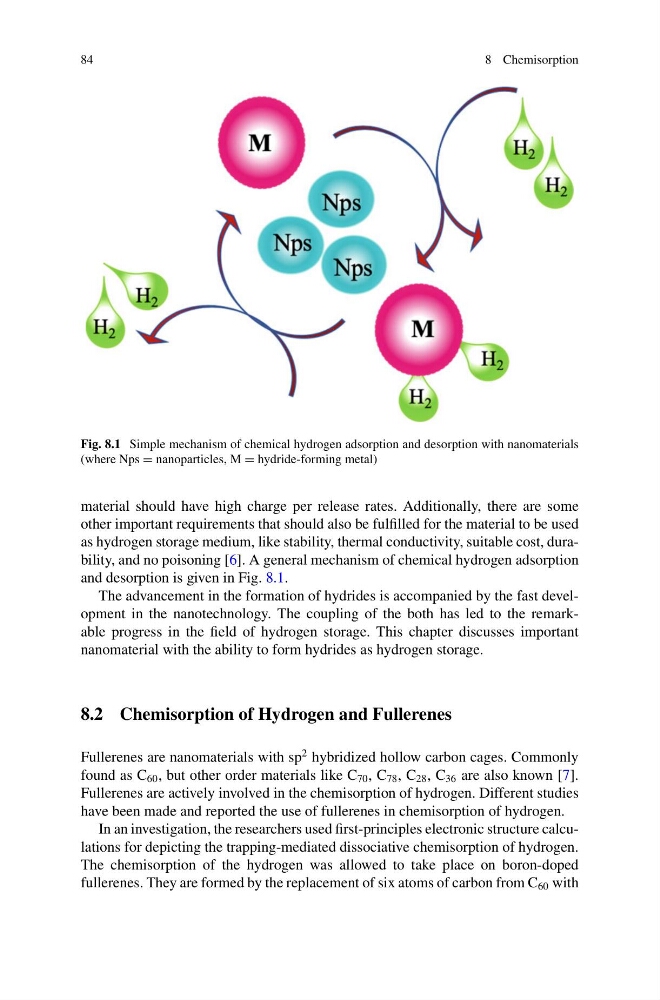
Fig. 8.1 Simple mechanism of chemical hydrogen adsorption and desorption with nanomaterials
(where Nps = nanoparticles, M = hydride-forming metal)
material should have high charge per release rates. Additionally, there are some
other important requirements that should also be fulfilled for the material to be used
as hydrogen storage medium, like stability, thermal conductivity, suitable cost, durability, and no poisoning [6]. A general mechanism of chemical hydrogen adsorption
and desorption is given in Fig. 8.1.
The advancement in the formation of hydrides is accompanied by the fast development in the nanotechnology. The coupling of the both has led to the remarkable progress in the field of hydrogen storage. This chapter discusses important
nanomaterial with the ability to form hydrides as hydrogen storage.
8.2 Chemisorption of Hydrogen and Fullerenes
Fullerenes are nanomaterials with sp
2 hybridized hollow carbon cages. Commonly
found as C 60 , but other order materials like C 70 , C 78 , C 28 , C 36 are also known [7].
Fullerenes are actively involved in the chemisorption of hydrogen. Different studies
have been made and reported the use of fullerenes in chemisorption of hydrogen.
In an investigation, the researchers used first-principles electronic structure calculations for depicting the trapping-mediated dissociative chemisorption of hydrogen.
The chemisorption of the hydrogen was allowed to take place on boron-doped
fullerenes. They are formed by the replacement of six atoms of carbon from C 60 with
8 Chemisorption
Fig. 8.1 Simple mechanism of chemical hydrogen adsorption and desorption with nanomaterials
(where Nps = nanoparticles, M = hydride-forming metal)
material should have high charge per release rates. Additionally, there are some
other important requirements that should also be fulfilled for the material to be used
as hydrogen storage medium, like stability, thermal conductivity, suitable cost, durability, and no poisoning [6]. A general mechanism of chemical hydrogen adsorption
and desorption is given in Fig. 8.1.
The advancement in the formation of hydrides is accompanied by the fast development in the nanotechnology. The coupling of the both has led to the remarkable progress in the field of hydrogen storage. This chapter discusses important
nanomaterial with the ability to form hydrides as hydrogen storage.
8.2 Chemisorption of Hydrogen and Fullerenes
Fullerenes are nanomaterials with sp
2 hybridized hollow carbon cages. Commonly
found as C 60 , but other order materials like C 70 , C 78 , C 28 , C 36 are also known [7].
Fullerenes are actively involved in the chemisorption of hydrogen. Different studies
have been made and reported the use of fullerenes in chemisorption of hydrogen.
In an investigation, the researchers used first-principles electronic structure calculations for depicting the trapping-mediated dissociative chemisorption of hydrogen.
The chemisorption of the hydrogen was allowed to take place on boron-doped
fullerenes. They are formed by the replacement of six atoms of carbon from C 60 with