

7.5 Physisorption of Hydrogen and Metallic Nanomaterials
79
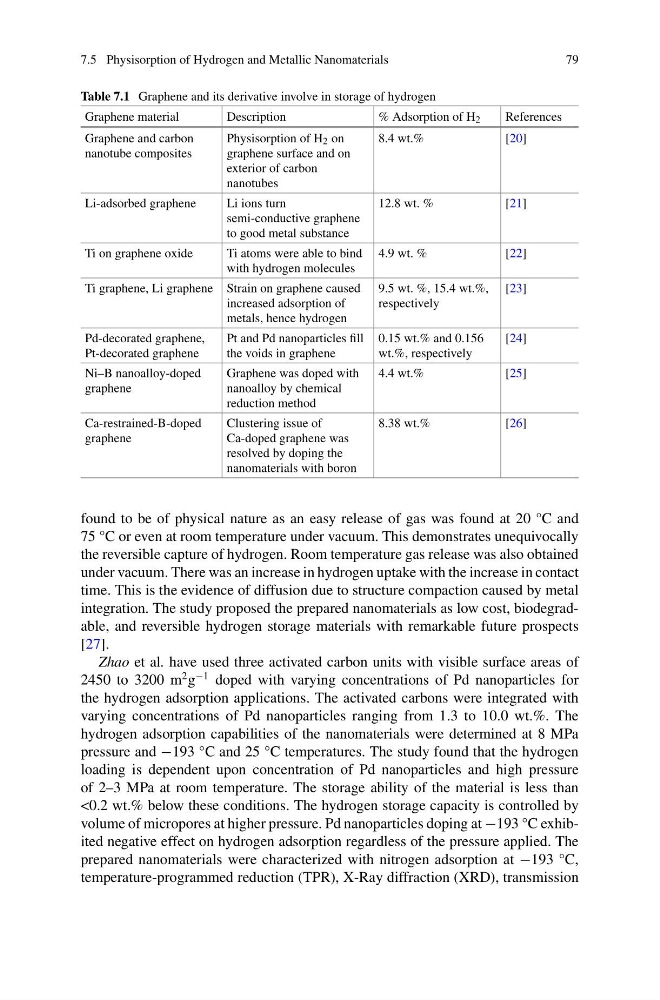
Table 7.1 Graphene and its derivative involve in storage of hydrogen
Graphene material
Description
% Adsorption of H 2
References
Graphene and carbon
nanotube composites
Physisorption of H 2 on
graphene surface and on
exterior of carbon
nanotubes
8.4 wt.%
[20]
Li-adsorbed graphene
Li ions turn
semi-conductive graphene
to good metal substance
12.8 wt. %
[21]
Ti on graphene oxide
Ti atoms were able to bind
with hydrogen molecules
4.9 wt. %
[22]
Ti graphene, Li graphene Strain on graphene caused
increased adsorption of
metals, hence hydrogen
9.5 wt. %, 15.4 wt.%,
respectively
[23]
Pd-decorated graphene,
Pt-decorated graphene
Pt and Pd nanoparticles fill
the voids in graphene
0.15 wt.% and 0.156
wt.%, respectively
[24]
Ni–B nanoalloy-doped
graphene
Graphene was doped with
nanoalloy by chemical
reduction method
4.4 wt.%
[25]
Ca-restrained-B-doped
graphene
Clustering issue of
Ca-doped graphene was
resolved by doping the
nanomaterials with boron
8.38 wt.%
[26]
found to be of physical nature as an easy release of gas was found at 20 °C and
75 °C or even at room temperature under vacuum. This demonstrates unequivocally
the reversible capture of hydrogen. Room temperature gas release was also obtained
under vacuum. There was an increase in hydrogen uptake with the increase in contact
time. This is the evidence of diffusion due to structure compaction caused by metal
integration. The study proposed the prepared nanomaterials as low cost, biodegradable, and reversible hydrogen storage materials with remarkable future prospects
[27].
Zhao et al. have used three activated carbon units with visible surface areas of
2450 to 3200 m
2 g
−1 doped with varying concentrations of Pd nanoparticles for
the hydrogen adsorption applications. The activated carbons were integrated with
varying concentrations of Pd nanoparticles ranging from 1.3 to 10.0 wt.%. The
hydrogen adsorption capabilities of the nanomaterials were determined at 8 MPa
pressure and −193 °C and 25 °C temperatures. The study found that the hydrogen
loading is dependent upon concentration of Pd nanoparticles and high pressure
of 2–3 MPa at room temperature. The storage ability of the material is less than
<0.2 wt.% below these conditions. The hydrogen storage capacity is controlled by
volume of micropores at higher pressure. Pd nanoparticles doping at −193 °C exhibited negative effect on hydrogen adsorption regardless of the pressure applied. The
prepared nanomaterials were characterized with nitrogen adsorption at −193 °C,
temperature-programmed reduction (TPR), X-Ray diffraction (XRD), transmission
79
Table 7.1 Graphene and its derivative involve in storage of hydrogen
Graphene material
Description
% Adsorption of H 2
References
Graphene and carbon
nanotube composites
Physisorption of H 2 on
graphene surface and on
exterior of carbon
nanotubes
8.4 wt.%
[20]
Li-adsorbed graphene
Li ions turn
semi-conductive graphene
to good metal substance
12.8 wt. %
[21]
Ti on graphene oxide
Ti atoms were able to bind
with hydrogen molecules
4.9 wt. %
[22]
Ti graphene, Li graphene Strain on graphene caused
increased adsorption of
metals, hence hydrogen
9.5 wt. %, 15.4 wt.%,
respectively
[23]
Pd-decorated graphene,
Pt-decorated graphene
Pt and Pd nanoparticles fill
the voids in graphene
0.15 wt.% and 0.156
wt.%, respectively
[24]
Ni–B nanoalloy-doped
graphene
Graphene was doped with
nanoalloy by chemical
reduction method
4.4 wt.%
[25]
Ca-restrained-B-doped
graphene
Clustering issue of
Ca-doped graphene was
resolved by doping the
nanomaterials with boron
8.38 wt.%
[26]
found to be of physical nature as an easy release of gas was found at 20 °C and
75 °C or even at room temperature under vacuum. This demonstrates unequivocally
the reversible capture of hydrogen. Room temperature gas release was also obtained
under vacuum. There was an increase in hydrogen uptake with the increase in contact
time. This is the evidence of diffusion due to structure compaction caused by metal
integration. The study proposed the prepared nanomaterials as low cost, biodegradable, and reversible hydrogen storage materials with remarkable future prospects
[27].
Zhao et al. have used three activated carbon units with visible surface areas of
2450 to 3200 m
2 g
−1 doped with varying concentrations of Pd nanoparticles for
the hydrogen adsorption applications. The activated carbons were integrated with
varying concentrations of Pd nanoparticles ranging from 1.3 to 10.0 wt.%. The
hydrogen adsorption capabilities of the nanomaterials were determined at 8 MPa
pressure and −193 °C and 25 °C temperatures. The study found that the hydrogen
loading is dependent upon concentration of Pd nanoparticles and high pressure
of 2–3 MPa at room temperature. The storage ability of the material is less than
<0.2 wt.% below these conditions. The hydrogen storage capacity is controlled by
volume of micropores at higher pressure. Pd nanoparticles doping at −193 °C exhibited negative effect on hydrogen adsorption regardless of the pressure applied. The
prepared nanomaterials were characterized with nitrogen adsorption at −193 °C,
temperature-programmed reduction (TPR), X-Ray diffraction (XRD), transmission