

74
7 Physisorption
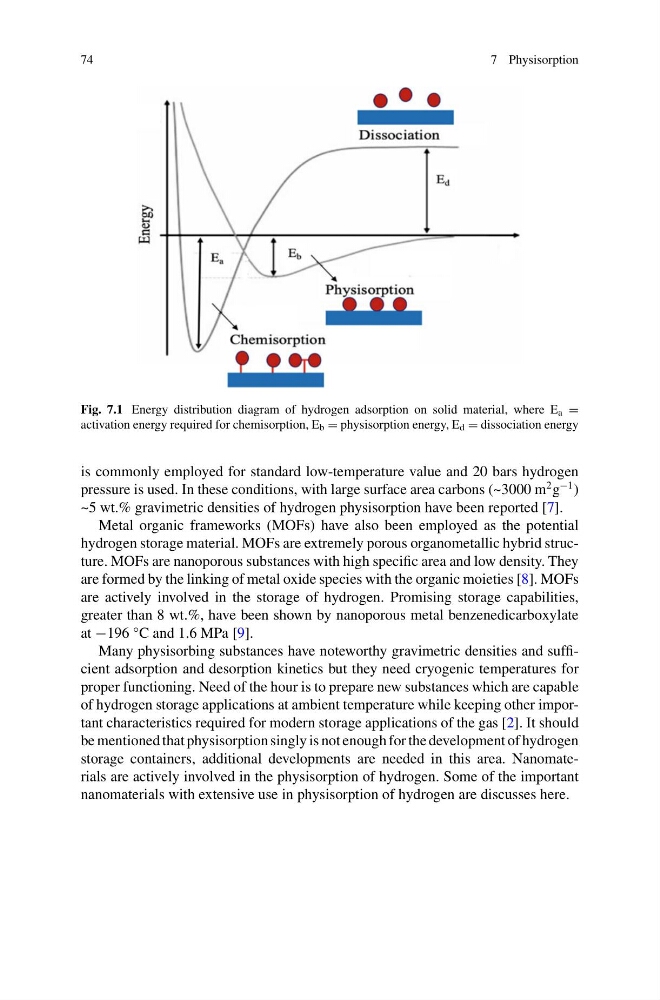
Fig. 7.1 Energy distribution diagram of hydrogen adsorption on solid material, where E a =
activation energy required for chemisorption, E b = physisorption energy, E d = dissociation energy
is commonly employed for standard low-temperature value and 20 bars hydrogen
pressure is used. In these conditions, with large surface area carbons (~3000 m
2 g
−1 )
~5 wt.% gravimetric densities of hydrogen physisorption have been reported [7].
Metal organic frameworks (MOFs) have also been employed as the potential
hydrogen storage material. MOFs are extremely porous organometallic hybrid structure. MOFs are nanoporous substances with high specific area and low density. They
are formed by the linking of metal oxide species with the organic moieties [8]. MOFs
are actively involved in the storage of hydrogen. Promising storage capabilities,
greater than 8 wt.%, have been shown by nanoporous metal benzenedicarboxylate
at −196 °C and 1.6 MPa [9].
Many physisorbing substances have noteworthy gravimetric densities and sufficient adsorption and desorption kinetics but they need cryogenic temperatures for
proper functioning. Need of the hour is to prepare new substances which are capable
of hydrogen storage applications at ambient temperature while keeping other important characteristics required for modern storage applications of the gas [2]. It should
be mentioned that physisorption singly is not enough for the development of hydrogen
storage containers, additional developments are needed in this area. Nanomaterials are actively involved in the physisorption of hydrogen. Some of the important
nanomaterials with extensive use in physisorption of hydrogen are discusses here.
7 Physisorption
Fig. 7.1 Energy distribution diagram of hydrogen adsorption on solid material, where E a =
activation energy required for chemisorption, E b = physisorption energy, E d = dissociation energy
is commonly employed for standard low-temperature value and 20 bars hydrogen
pressure is used. In these conditions, with large surface area carbons (~3000 m
2 g
−1 )
~5 wt.% gravimetric densities of hydrogen physisorption have been reported [7].
Metal organic frameworks (MOFs) have also been employed as the potential
hydrogen storage material. MOFs are extremely porous organometallic hybrid structure. MOFs are nanoporous substances with high specific area and low density. They
are formed by the linking of metal oxide species with the organic moieties [8]. MOFs
are actively involved in the storage of hydrogen. Promising storage capabilities,
greater than 8 wt.%, have been shown by nanoporous metal benzenedicarboxylate
at −196 °C and 1.6 MPa [9].
Many physisorbing substances have noteworthy gravimetric densities and sufficient adsorption and desorption kinetics but they need cryogenic temperatures for
proper functioning. Need of the hour is to prepare new substances which are capable
of hydrogen storage applications at ambient temperature while keeping other important characteristics required for modern storage applications of the gas [2]. It should
be mentioned that physisorption singly is not enough for the development of hydrogen
storage containers, additional developments are needed in this area. Nanomaterials are actively involved in the physisorption of hydrogen. Some of the important
nanomaterials with extensive use in physisorption of hydrogen are discusses here.