

3.2 Steam Reforming
27
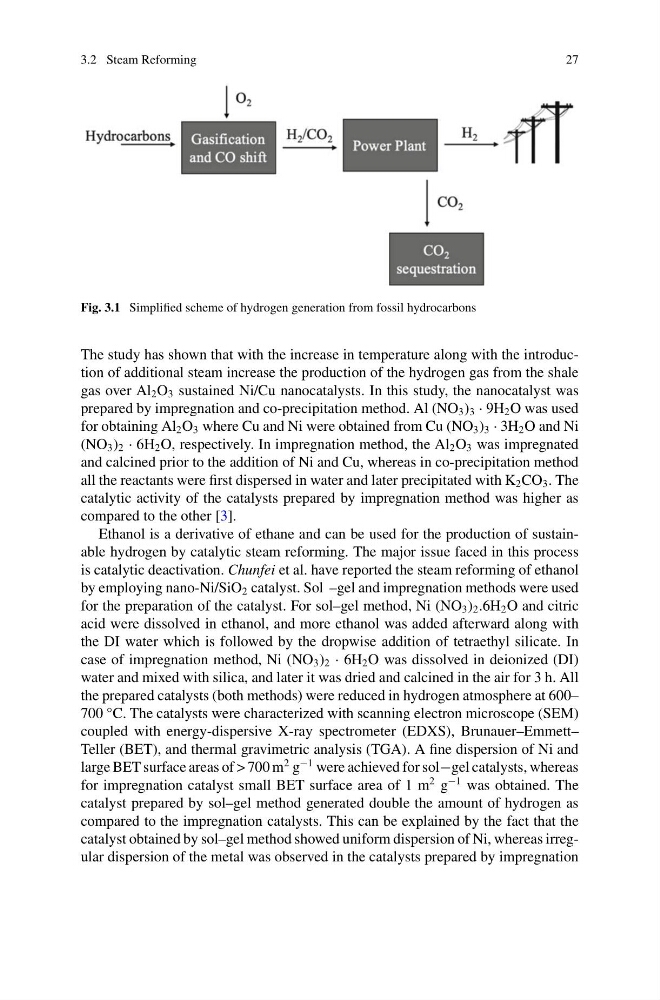
Fig. 3.1 Simplified scheme of hydrogen generation from fossil hydrocarbons
The study has shown that with the increase in temperature along with the introduction of additional steam increase the production of the hydrogen gas from the shale
gas over Al 2 O 3 sustained Ni/Cu nanocatalysts. In this study, the nanocatalyst was
prepared by impregnation and co-precipitation method. Al (NO 3 ) 3 · 9H 2 O was used
for obtaining Al 2 O 3 where Cu and Ni were obtained from Cu (NO 3 ) 3 · 3H 2 O and Ni
(NO 3 ) 2 · 6H 2 O, respectively. In impregnation method, the Al 2 O 3 was impregnated
and calcined prior to the addition of Ni and Cu, whereas in co-precipitation method
all the reactants were first dispersed in water and later precipitated with K 2 CO 3 . The
catalytic activity of the catalysts prepared by impregnation method was higher as
compared to the other [3].
Ethanol is a derivative of ethane and can be used for the production of sustainable hydrogen by catalytic steam reforming. The major issue faced in this process
is catalytic deactivation. Chunfei et al. have reported the steam reforming of ethanol
by employing nano-Ni/SiO 2 catalyst. Sol –gel and impregnation methods were used
for the preparation of the catalyst. For sol–gel method, Ni (NO 3 ) 2 .6H 2 O and citric
acid were dissolved in ethanol, and more ethanol was added afterward along with
the DI water which is followed by the dropwise addition of tetraethyl silicate. In
case of impregnation method, Ni (NO 3 ) 2 · 6H 2 O was dissolved in deionized (DI)
water and mixed with silica, and later it was dried and calcined in the air for 3 h. All
the prepared catalysts (both methods) were reduced in hydrogen atmosphere at 600–
700 °C. The catalysts were characterized with scanning electron microscope (SEM)
coupled with energy-dispersive X-ray spectrometer (EDXS), Brunauer–Emmett–
Teller (BET), and thermal gravimetric analysis (TGA). A fine dispersion of Ni and
large BET surface areas of > 700 m
2 g
−1 were achieved for sol−gel catalysts, whereas
for impregnation catalyst small BET surface area of 1 m
2 g
−1 was obtained. The
catalyst prepared by sol–gel method generated double the amount of hydrogen as
compared to the impregnation catalysts. This can be explained by the fact that the
catalyst obtained by sol–gel method showed uniform dispersion of Ni, whereas irregular dispersion of the metal was observed in the catalysts prepared by impregnation
27
Fig. 3.1 Simplified scheme of hydrogen generation from fossil hydrocarbons
The study has shown that with the increase in temperature along with the introduction of additional steam increase the production of the hydrogen gas from the shale
gas over Al 2 O 3 sustained Ni/Cu nanocatalysts. In this study, the nanocatalyst was
prepared by impregnation and co-precipitation method. Al (NO 3 ) 3 · 9H 2 O was used
for obtaining Al 2 O 3 where Cu and Ni were obtained from Cu (NO 3 ) 3 · 3H 2 O and Ni
(NO 3 ) 2 · 6H 2 O, respectively. In impregnation method, the Al 2 O 3 was impregnated
and calcined prior to the addition of Ni and Cu, whereas in co-precipitation method
all the reactants were first dispersed in water and later precipitated with K 2 CO 3 . The
catalytic activity of the catalysts prepared by impregnation method was higher as
compared to the other [3].
Ethanol is a derivative of ethane and can be used for the production of sustainable hydrogen by catalytic steam reforming. The major issue faced in this process
is catalytic deactivation. Chunfei et al. have reported the steam reforming of ethanol
by employing nano-Ni/SiO 2 catalyst. Sol –gel and impregnation methods were used
for the preparation of the catalyst. For sol–gel method, Ni (NO 3 ) 2 .6H 2 O and citric
acid were dissolved in ethanol, and more ethanol was added afterward along with
the DI water which is followed by the dropwise addition of tetraethyl silicate. In
case of impregnation method, Ni (NO 3 ) 2 · 6H 2 O was dissolved in deionized (DI)
water and mixed with silica, and later it was dried and calcined in the air for 3 h. All
the prepared catalysts (both methods) were reduced in hydrogen atmosphere at 600–
700 °C. The catalysts were characterized with scanning electron microscope (SEM)
coupled with energy-dispersive X-ray spectrometer (EDXS), Brunauer–Emmett–
Teller (BET), and thermal gravimetric analysis (TGA). A fine dispersion of Ni and
large BET surface areas of > 700 m
2 g
−1 were achieved for sol−gel catalysts, whereas
for impregnation catalyst small BET surface area of 1 m
2 g
−1 was obtained. The
catalyst prepared by sol–gel method generated double the amount of hydrogen as
compared to the impregnation catalysts. This can be explained by the fact that the
catalyst obtained by sol–gel method showed uniform dispersion of Ni, whereas irregular dispersion of the metal was observed in the catalysts prepared by impregnation