

22
2 Water Splitting Reactions and Nanotechnology
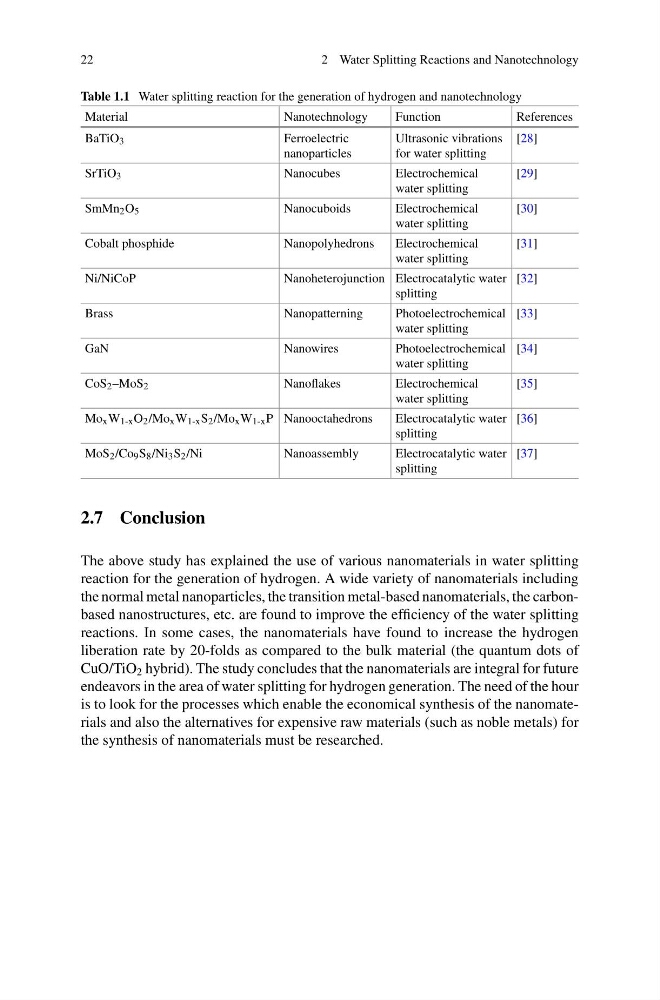
Table 1.1 Water splitting reaction for the generation of hydrogen and nanotechnology
Material
Nanotechnology
Function
References
BaTiO 3
Ferroelectric
nanoparticles
Ultrasonic vibrations
for water splitting
[28]
SrTiO 3
Nanocubes
Electrochemical
water splitting
[29]
SmMn 2 O 5
Nanocuboids
Electrochemical
water splitting
[30]
Cobalt phosphide
Nanopolyhedrons
Electrochemical
water splitting
[31]
Ni/NiCoP
Nanoheterojunction Electrocatalytic water
splitting
[32]
Brass
Nanopatterning
Photoelectrochemical
water splitting
[33]
GaN
Nanowires
Photoelectrochemical
water splitting
[34]
CoS 2 –MoS 2
Nanoflakes
Electrochemical
water splitting
[35]
Mo x W 1-x O 2 /Mo x W 1-x S 2 /Mo x W 1-x P Nanooctahedrons
Electrocatalytic water
splitting
[36]
MoS 2 /Co 9 S 8 /Ni 3 S 2 /Ni
Nanoassembly
Electrocatalytic water
splitting
[37]
2.7 Conclusion
The above study has explained the use of various nanomaterials in water splitting
reaction for the generation of hydrogen. A wide variety of nanomaterials including
the normal metal nanoparticles, the transition metal-based nanomaterials, the carbonbased nanostructures, etc. are found to improve the efficiency of the water splitting
reactions. In some cases, the nanomaterials have found to increase the hydrogen
liberation rate by 20-folds as compared to the bulk material (the quantum dots of
CuO/TiO 2 hybrid). The study concludes that the nanomaterials are integral for future
endeavors in the area of water splitting for hydrogen generation. The need of the hour
is to look for the processes which enable the economical synthesis of the nanomaterials and also the alternatives for expensive raw materials (such as noble metals) for
the synthesis of nanomaterials must be researched.
2 Water Splitting Reactions and Nanotechnology
Table 1.1 Water splitting reaction for the generation of hydrogen and nanotechnology
Material
Nanotechnology
Function
References
BaTiO 3
Ferroelectric
nanoparticles
Ultrasonic vibrations
for water splitting
[28]
SrTiO 3
Nanocubes
Electrochemical
water splitting
[29]
SmMn 2 O 5
Nanocuboids
Electrochemical
water splitting
[30]
Cobalt phosphide
Nanopolyhedrons
Electrochemical
water splitting
[31]
Ni/NiCoP
Nanoheterojunction Electrocatalytic water
splitting
[32]
Brass
Nanopatterning
Photoelectrochemical
water splitting
[33]
GaN
Nanowires
Photoelectrochemical
water splitting
[34]
CoS 2 –MoS 2
Nanoflakes
Electrochemical
water splitting
[35]
Mo x W 1-x O 2 /Mo x W 1-x S 2 /Mo x W 1-x P Nanooctahedrons
Electrocatalytic water
splitting
[36]
MoS 2 /Co 9 S 8 /Ni 3 S 2 /Ni
Nanoassembly
Electrocatalytic water
splitting
[37]
2.7 Conclusion
The above study has explained the use of various nanomaterials in water splitting
reaction for the generation of hydrogen. A wide variety of nanomaterials including
the normal metal nanoparticles, the transition metal-based nanomaterials, the carbonbased nanostructures, etc. are found to improve the efficiency of the water splitting
reactions. In some cases, the nanomaterials have found to increase the hydrogen
liberation rate by 20-folds as compared to the bulk material (the quantum dots of
CuO/TiO 2 hybrid). The study concludes that the nanomaterials are integral for future
endeavors in the area of water splitting for hydrogen generation. The need of the hour
is to look for the processes which enable the economical synthesis of the nanomaterials and also the alternatives for expensive raw materials (such as noble metals) for
the synthesis of nanomaterials must be researched.